
• Home » News »  How to Choose a Reliable Silicone Fluid Manufacturer

How to Choose a Reliable Silicone Fluid Manufacturer | Buying Guide

Selecting the right silicone fluid manufacturer is critical for ensuring consistent product quality, stable supply, and long-term business success. This guide explains how to evaluate silicone fluid suppliers based on product capability, quality control, technical support, certifications, and manufacturing reliability.
How to choose a reliable silicone fluid manufacturer with quality assurance, technical support, and industrial silicone fluid solutions

At Silico®, we work with industrial customers, distributors, and manufacturers worldwide to understand the changing requirements of high-performance silicone materials.

Based on practical experience in the organosilicon industry, this guide provides an objective framework to help buyers evaluate and select a reliable silicone fluid manufacturer for different industrial applications.

1. What Is Silicone Fluid and Why Does Supplier Selection Matter?

Silicone fluid, also known as silicone oil or PDMS (polydimethylsiloxane) fluid, is a versatile synthetic material widely used across multiple industries, including:

  • Automotive components
  • Electronics manufacturing
  • Industrial lubrication
  • Personal care products
  • Textile processing
  • Coatings and release agents
  • Rubber and plastic processing

Due to its unique molecular structure, silicone fluid provides excellent performance characteristics, including:

  • High thermal stability
  • Low surface tension
  • Excellent water repellency
  • Chemical resistance
  • Electrical insulation
  • Long service life

However, silicone fluid performance depends heavily on manufacturing technology, raw material quality, and production consistency.

Choosing an experienced silicone fluid manufacturer helps companies avoid problems such as:

  • Batch-to-batch variation
  • Unstable viscosity
  • Poor application performance
  • Supply interruptions
  • Increased production costs

A professional supplier should not only provide products but also offer technical support and reliable long-term cooperation.
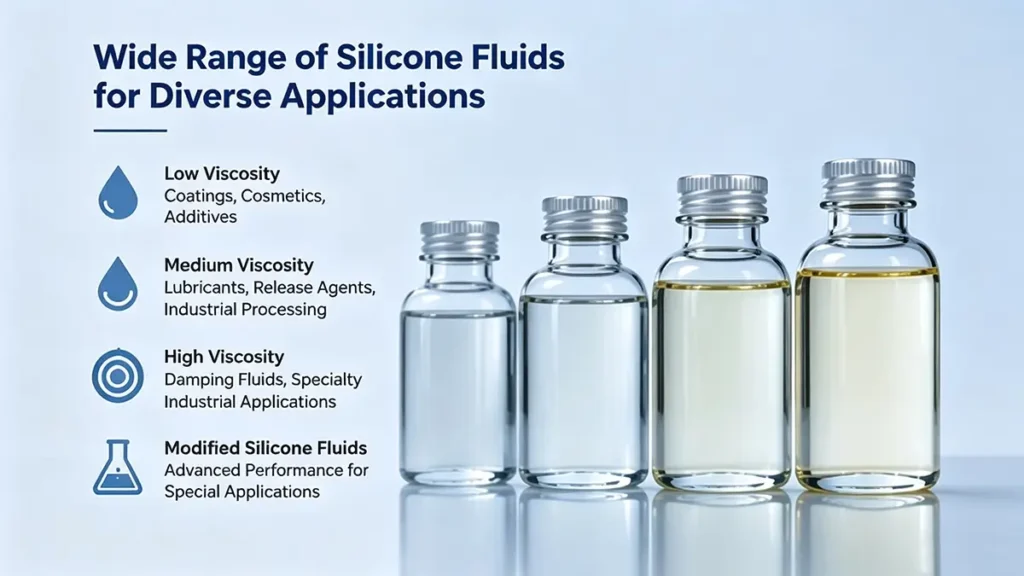
Different types of industrial silicone fluid including low viscosity, high viscosity, and modified silicone fluids for various applications

2. Understand Your Silicone Fluid Requirements First

Before selecting a silicone fluid supplier, buyers should clearly define their technical requirements.

The right silicone fluid depends on several factors:

2.1 Viscosity Requirement

Silicone fluids are commonly supplied in different viscosity grades, including:

Viscosity directly affects:

  • Flow behavior
  • Lubrication performance
  • Processing characteristics
  • Application efficiency

2.2 Application Environment

Customers should consider:
  • Operating temperature range
  • Chemical exposure
  • Mechanical requirements
  • Electrical requirements
  • Surface compatibility
For example:
  • Electronics applications may require excellent insulation and thermal stability.
  • Industrial lubricants may require low friction and long-term durability.
  • Coatings may require excellent spreading and release properties.

Understanding these factors allows manufacturers to recommend the most suitable industrial silicone fluid solution.

3. Evaluate Product Range and Manufacturing Capability

A reliable silicone fluid manufacturer should have a comprehensive product portfolio and strong production capability.

Important evaluation factors include:

3.1 Product Diversity

A professional manufacturer should provide:

Different industries require different silicone fluid characteristics.

For example:

3.2 Low Viscosity Silicone Fluid

Common applications:
  • Coatings
  • Cosmetics
  • Surface treatment

3.3 Medium Viscosity Silicone Fluid

Common applications:
  • Lubricants
  • Mold release agents
  • Industrial processing

3.4 High Viscosity Silicone Fluid

Common applications:
  • Damping systems
  • Specialty industrial applications

Manufacturers with strong technical capabilities can recommend suitable grades instead of simply offering standard products.

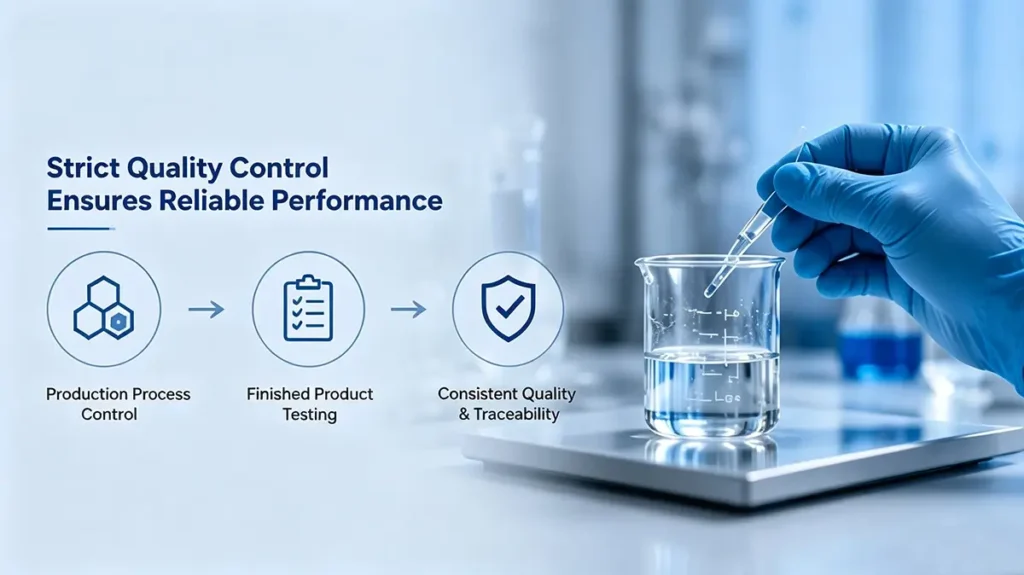
4. Check Quality Control and Testing Standards

Product consistency is one of the most important factors when selecting a silicone fluid manufacturer.

Industrial customers require reliable performance across every production batch.

A professional manufacturer should control quality through:

4.1 Raw Material Inspection

Including:
  • Purity verification
  • Supplier qualification
  • Material traceability

4.2 Production Process Control

Including:
  • Reaction conditions
  • Processing parameters
  • Filtration systems
  • Storage management

4.3 Finished Product Testing

Typical silicone fluid testing includes:
  • Viscosity testing
  • Appearance inspection
  • Density analysis
  • Volatile content testing
  • Performance evaluation

Reliable quality control ensures that silicone fluid performs consistently in demanding applications.
Silicone fluid manufacturing process with quality control testing, production inspection, and consistent product performance

5. Consider Production Capacity and Supply Stability

For global industrial customers, supply reliability is just as important as product quality.

A trustworthy silicone fluid supplier should have:
  • Stable manufacturing capacity
  • Professional production facilities
  • Efficient inventory management
  • Reliable delivery schedules
Before cooperation, buyers should evaluate:
  • Factory production capability
  • Lead times
  • Export experience
  • Packaging options
  • Emergency supply capability

A strong manufacturer can support both sample testing and long-term bulk orders.

6. Evaluate Technical Support and Customization Ability

Silicone fluid applications are highly specialized.

A professional supplier should provide technical assistance, including:
  • Product selection guidance
  • Viscosity recommendation
  • Application optimization
  • Customized solutions

Many industries require customized silicone fluids rather than standard products.

>Customization may include:
  • Specific viscosity grades
  • Special packaging
  • Modified silicone formulations
  • Application-focused solutions

At Silico®, technical cooperation focuses on helping customers identify suitable silicone materials based on their manufacturing requirements and performance expectations.

7. Review Certifications and Documentation

Reliable silicone fluid manufacturers should provide complete technical documentation.

Important documents include:
  • Technical Data Sheet (TDS)
  • Safety Data Sheet (SDS/MSDS)
  • Certificate of Analysis (COA)
  • Quality inspection reports
For international markets, buyers may also consider:
  • ISO quality systems
  • REACH compliance
  • RoHS requirements
  • Regional regulatory standards

Complete documentation demonstrates professional manufacturing management and supports global supply cooperation.

8. Assess Global Export Experience

Choosing an experienced international silicone oil manufacturer can reduce communication and logistics risks.

Export-experienced suppliers usually understand:
  • International shipping requirements
  • Export documentation
  • Packaging regulations
  • Customer service expectations
A manufacturer serving global markets is often better prepared to handle:
  • Different regional requirements
  • Large-volume orders
  • Long-term supply agreements

9. Why Price Should Not Be the Only Factor

Price is important, but it should not be the only decision factor.

The lowest-cost silicone fluid may result in:
  • Inconsistent quality
  • Limited technical support
  • Higher production risks
  • Additional testing costs
A better evaluation should consider total value, including:
  • Product consistency
  • Technical support
  • Delivery reliability
  • Documentation quality
  • Long-term cooperation capability

The best silicone fluid supplier helps customers improve efficiency and reduce overall operating costs.
10. Checklist for Choosing a Reliable Silicone Fluid Supplier

Before selecting a supplier, consider:
  • Does the company have professional silicone fluid manufacturing experience?
  • Can they provide different viscosity grades?
  • Do they have strict quality control procedures?
  • Can they provide TDS, SDS, and COA documents?
  • Do they support customized solutions?
  • Can they guarantee stable production capacity?
  • Do they have international export experience?
  • Can they provide technical application support?
  • A supplier meeting these requirements is more likely to become a reliable long-term partner.
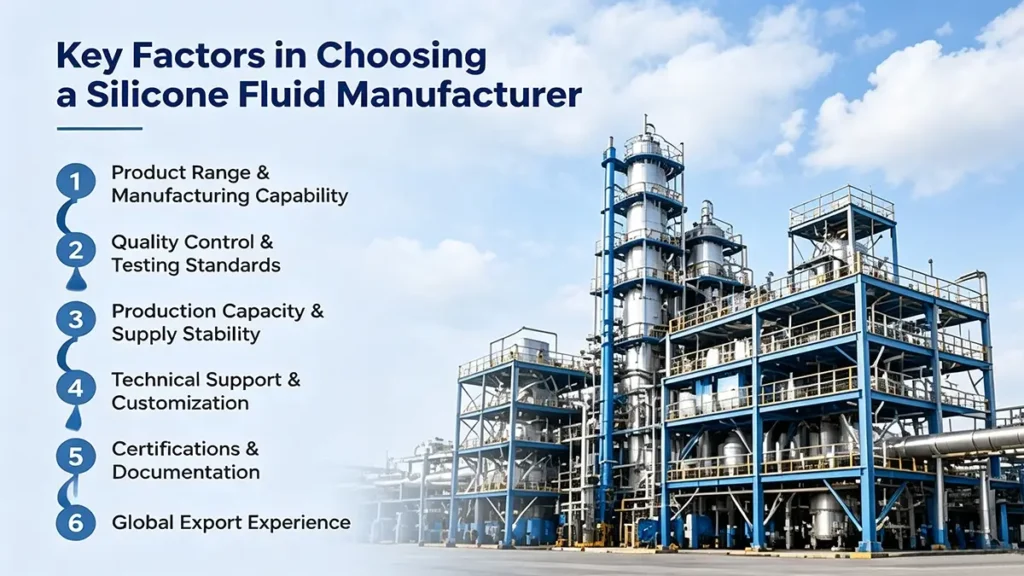
Key factors for selecting a silicone fluid supplier including manufacturing capability, certifications, customization, and technical support

Conclusion: Choosing the Right Silicone Fluid Partner

Selecting the right silicone fluid manufacturer is an important decision for companies that rely on consistent material performance.

A professional supplier should provide:
  • Advanced manufacturing capability
  • Stable product quality
  • Comprehensive technical support
  • Reliable delivery
  • International service experience

Whether you need PDMS silicone fluid, industrial silicone fluid, or customized silicone oil solutions, choosing the right manufacturing partner can improve product performance and strengthen your supply chain.

About Silico®

Silico® specializes in high-performance organosilicon materials, providing silicone fluids, modified silicone products, and customized silicone solutions for global industrial applications.

With a focus on consistent quality, technical innovation, and customer support, Silico® helps customers worldwide develop reliable solutions for coatings, lubrication, electronics, personal care, and advanced manufacturing industries.

Frequently Asked Questions

1. How do I choose a reliable silicone fluid manufacturer?

A reliable manufacturer should have proven production experience, strict quality control, stable supply capability, complete documentation, and technical support.

2. What is the difference between a silicone fluid manufacturer and a silicone fluid supplier?

A silicone fluid manufacturer produces materials directly through its own production facilities, while a supplier may distribute products from different manufacturers.

Working directly with a manufacturer often provides better customization options, technical communication, and supply control.

3. What viscosity grades are available for industrial silicone fluid?

Common viscosity grades include:

  • 10 cSt
  • 50 cSt
  • 100 cSt
  • 350 cSt
  • 1000 cSt

The correct viscosity depends on the final application requirements.

4. What documents should a silicone fluid supplier provide?

Professional suppliers usually provide:
  • TDS
  • SDS/MSDS
  • COA
  • Quality reports
  • Compliance documents when required

Popular Recommendations

Get a Catalog & Best Price​

  • Quick and helpful reply within 24 hours;
  • Tailored solutions provided for your project;
  • One-stop purchasing service.
  • © Copyright 2022 Silico® . All Rights Reserved
Scroll to Top