
2026-07-19

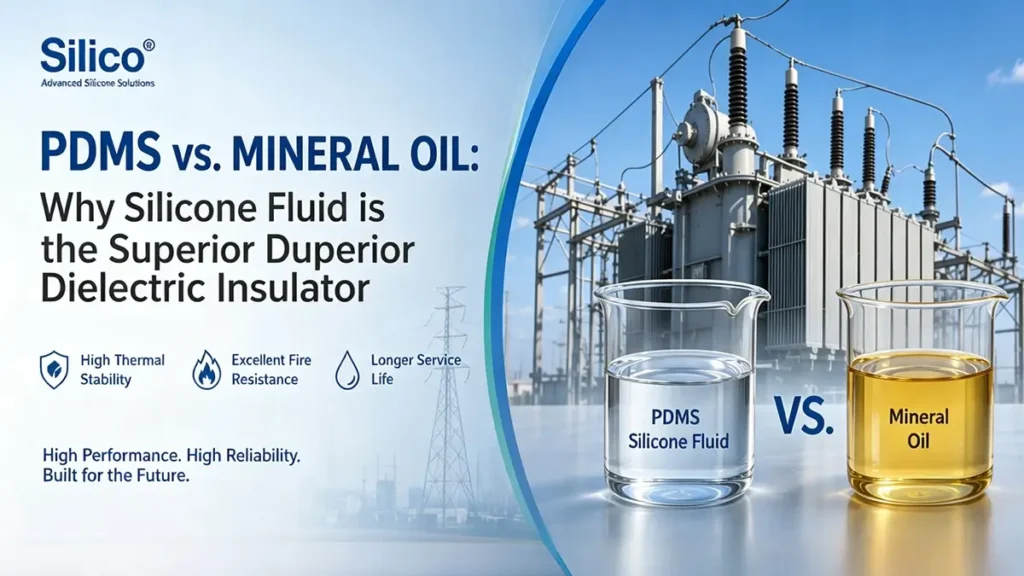
As modern electrical systems become more advanced, the demand for high-performance dielectric insulating fluids continues to increase. Traditional mineral oil has been widely used in transformers and electrical equipment for decades, but PDMS silicone fluid is becoming the preferred choice for high-voltage and high-temperature applications.
PDMS (Polydimethylsiloxane), commonly known as silicone oil or silicone fluid, offers superior dielectric strength, thermal stability, fire resistance, and oxidation performance compared with conventional mineral oil. These advantages make silicone dielectric fluid ideal for transformers, switchgear, electronic cooling systems, renewable energy equipment, and EV electrical systems.
As a professional supplier of advanced organosilicon materials, Silico® continues focusing on high-performance silicone fluid solutions for electrical insulation and industrial thermal management applications.
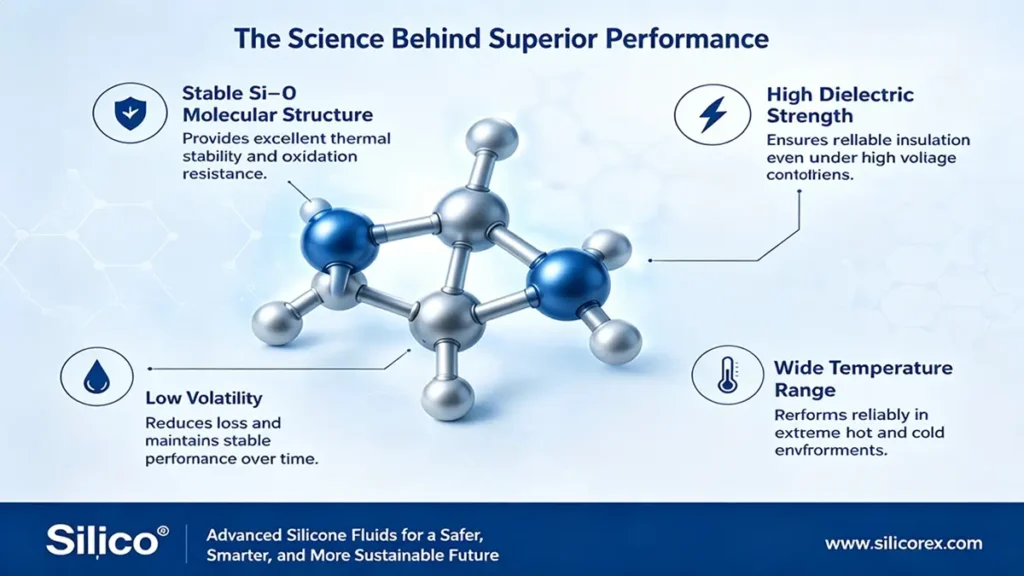
PDMS silicone fluid is a synthetic silicone polymer with a highly stable silicon-oxygen molecular structure. This unique structure provides excellent physical and electrical properties.
Key benefits of PDMS silicone oil include:
Because of these properties, silicone dielectric fluids are widely used in:
Compared with mineral transformer oil, PDMS silicone fluid provides more stable long-term performance under extreme operating conditions.
Mineral oil is a petroleum-based insulating fluid commonly used in transformers and electrical systems.
It remains popular because of:
However, mineral insulating oil also has several limitations:
As electrical equipment operates at higher temperatures and power densities, these limitations become more significant.
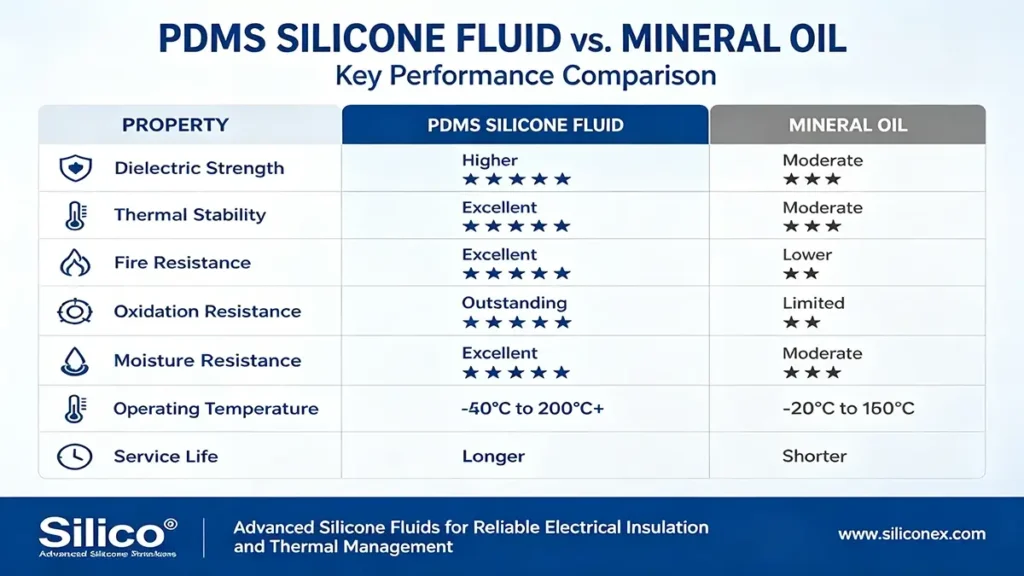
| Property | PDMS Silicone Fluid | Mineral Oil |
|---|---|---|
| Dielectric Strength | Higher | Moderate |
| Thermal Stability | Excellent | Moderate |
| Fire Resistance | Excellent | Lower |
| Oxidation Resistance | Outstanding | Limited |
| Moisture Resistance | Excellent | Moderate |
| Operating Temperature | −50 °C to 200 °C+ | −20 °C to 150 °C |
| Sludge Formation | Very low | Higher |
| Service Life | Longer | Shorter |
PDMS silicone fluid offers stronger dielectric insulation, helping reduce electrical breakdown risks and improve equipment safety.
This makes silicone transformer fluid suitable for:
High-temperature silicone fluid maintains stable viscosity and insulation performance even under extreme heat.
Unlike mineral oil, silicone dielectric fluid resists:
This leads to:
One of the biggest advantages of silicone transformer fluid is its high fire resistance.
Compared with mineral oil, PDMS silicone fluid provides:
This makes silicone dielectric fluids ideal for:
As global fire safety standards become stricter, demand for fire-resistant insulating fluids continues increasing.
Moisture contamination can reduce dielectric strength and accelerate transformer aging.
PDMS silicone fluid provides:
Mineral oils gradually oxidize during operation, causing sludge formation and reduced cooling efficiency.
Silicone dielectric fluids offer significantly better oxidation resistance, helping reduce:
Midway through the transition toward advanced transformer insulation technologies, Silico® continues supporting industrial customers with high-quality silicone fluid solutions for electrical insulation and thermal management applications.
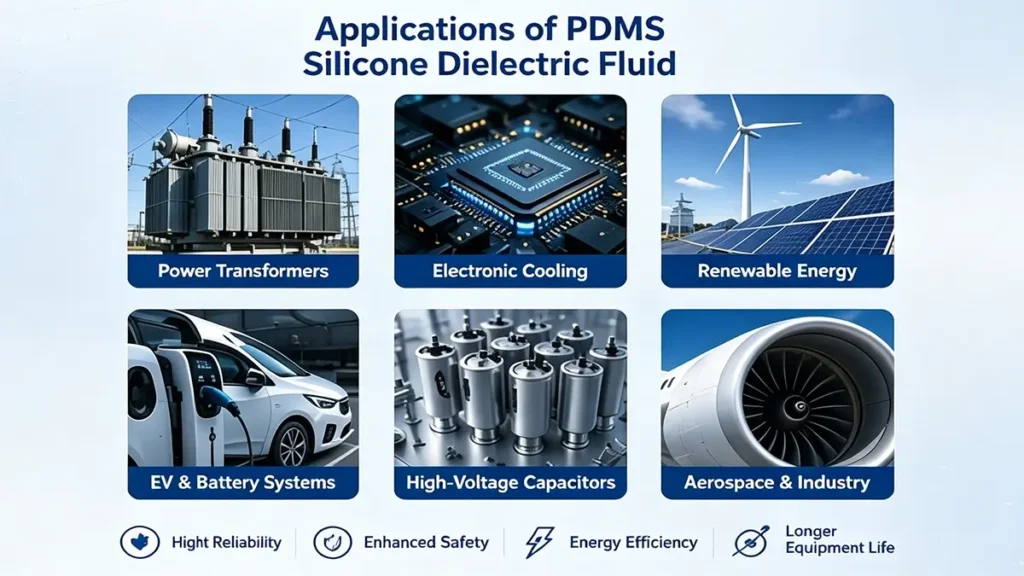
Because of their excellent electrical and thermal properties, PDMS silicone fluids are widely used in:
Electrical insulation and cooling systems.
Thermal management for high-performance electronics and AI data centers.
Wind turbine transformers and solar power equipment.
Electrical insulation and battery cooling applications.
Reliable operation under extreme temperatures and operating conditions.
As electrification and smart energy infrastructure continue expanding, silicone dielectric fluid demand is expected to grow rapidly.
Although PDMS silicone fluid has a higher upfront cost than mineral oil, it often provides lower long-term operational costs because of:
For critical electrical systems, these advantages often outweigh the higher initial investment.
The rapid growth of:
is driving demand for advanced dielectric cooling fluids and transformer insulation materials.
Modern electrical systems increasingly require insulating fluids with:
Toward the future of advanced silicone insulation technology, Silico® continues focusing on innovative silicone dielectric fluid solutions for modern industrial and electrical applications.
Compared with traditional mineral oil, PDMS silicone fluid offers clear advantages in dielectric insulation, thermal stability, fire resistance, and long-term operational reliability.
Silicone dielectric fluid provides:
As industries continue prioritizing electrical safety, energy efficiency, and high-performance insulation systems, PDMS silicone fluid is becoming the preferred dielectric insulating solution for modern electrical infrastructure.
PDMS silicone fluid offers higher dielectric strength, better thermal stability, superior fire resistance, and longer service life than mineral oil. It performs more reliably in high-voltage and high-temperature electrical systems.
PDMS dielectric silicone fluid typically provides high dielectric breakdown strength, making it suitable for transformers, switchgear, capacitors, and electrical insulation applications.
Yes. PDMS silicone fluid can replace mineral transformer oil in many applications, especially where higher safety, thermal stability, and long-term reliability are required.
Mineral oil oxidizes more easily under heat and oxygen exposure, which can cause sludge formation and reduced insulation performance. PDMS silicone fluid has much better oxidation resistance.
PDMS silicone fluid is widely used in: