


2026-09-19

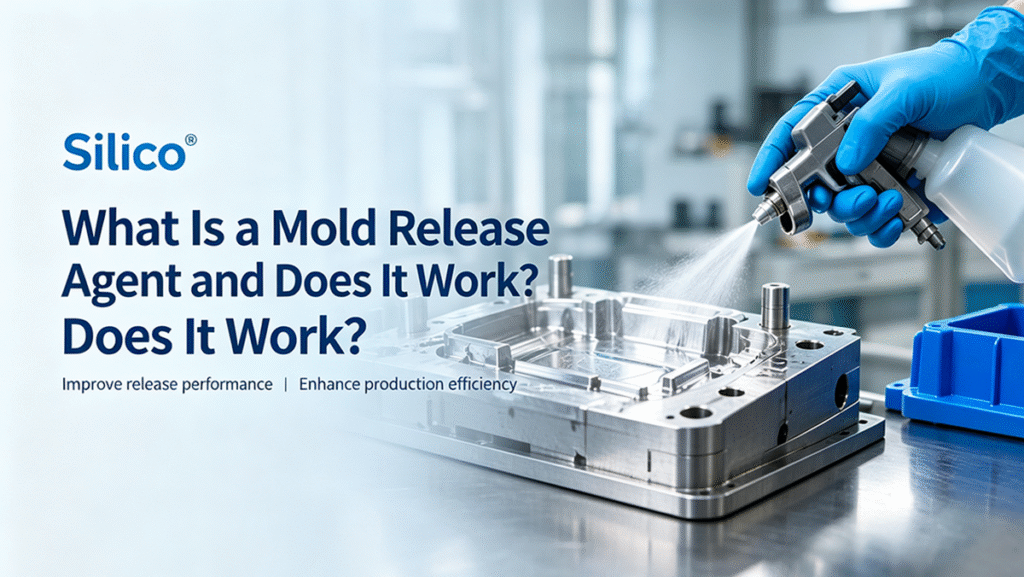
A mold release agent is a material applied to a mold surface to reduce adhesion between the mold and the material being molded. It helps the finished part separate cleanly from the tooling without sticking, tearing, deformation or excessive demolding force.
Mold release agents are used in plastic injection molding, rubber molding, polyurethane processing, composite manufacturing, die casting and other forming processes. Depending on the application, they may be water-based, solvent-based, silicone-based, silicone-free, sacrificial, semi-permanent or internal release systems.
For manufacturers evaluating silicone materials for release-agent formulations, Silico® provides silicone fluids, emulsions and related silicone materials for applications where release performance, formulation compatibility and processing conditions need to be considered together.
A mold release agent creates an intermediate interface between the mold and the molded material.
Its main functions are to:A release agent is not simply a lubricant. The release film must remain effective under the actual temperature, pressure, cycle time and material chemistry of the molding process.
A product that works well for one rubber compound may not provide the same performance with polyurethane, thermoplastics or epoxy composites.
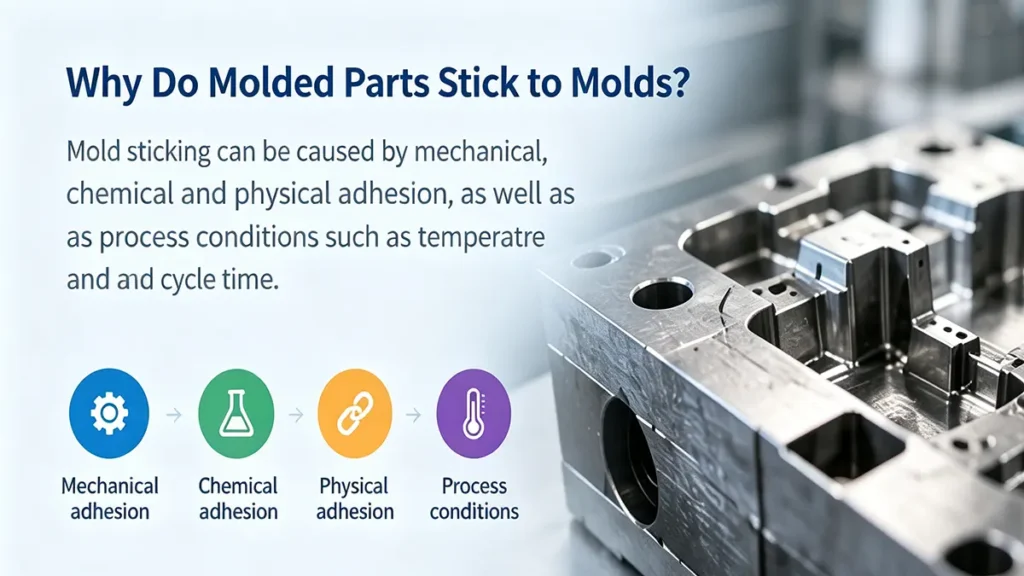
Mold sticking can result from several mechanisms.
Molding material can enter microscopic scratches, pores or surface irregularities and become mechanically locked after curing or cooling.
Reactive materials such as polyurethane, epoxy and some rubber compounds can interact with the mold surface or contaminants on the tooling.ay include:
Close contact between two surfaces creates intermolecular forces that can contribute to sticking.
Mold temperature, pressure, cycle time, material formulation and mold geometry all influence release performance.
Deep cavities, textured surfaces and undercuts can be particularly challenging because they increase contact area and make uniform release-agent coverage more difficult.
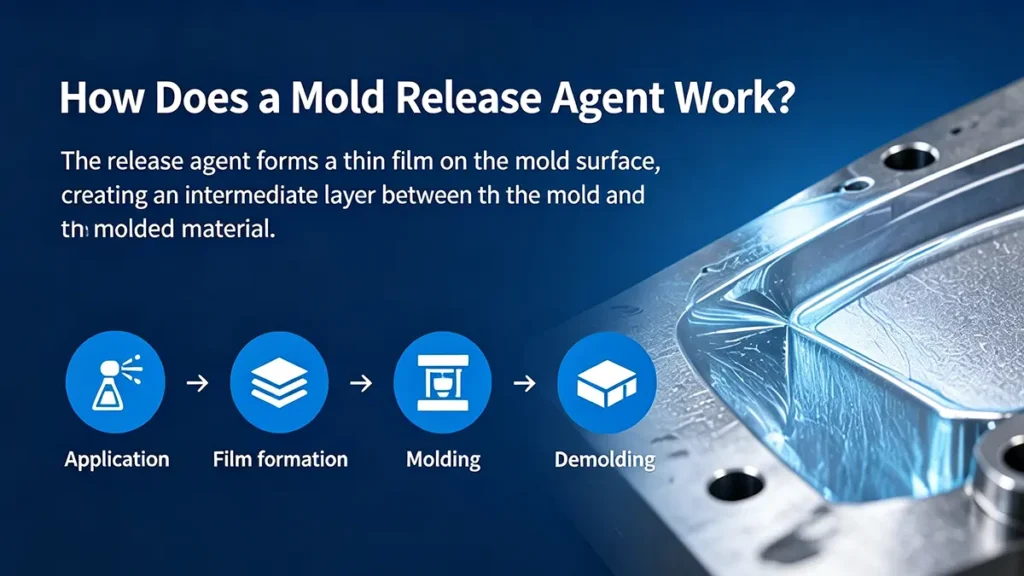
The basic structure is:
Mold surface → Release film → Molded material
The release agent forms a thin layer on the mold surface, preventing the molding material from making direct contact with the tooling.
A typical process is:
Application → Film formation → Molding → Demolding
For water-based products, water acts primarily as the carrier. After application, the water evaporates and the active release material remains on the mold surface.
For solvent-based systems, the organic solvent evaporates and leaves the active release components behind.
The objective is not to create the thickest possible coating. Uniform and sufficient coverage is generally more important than excessive application.
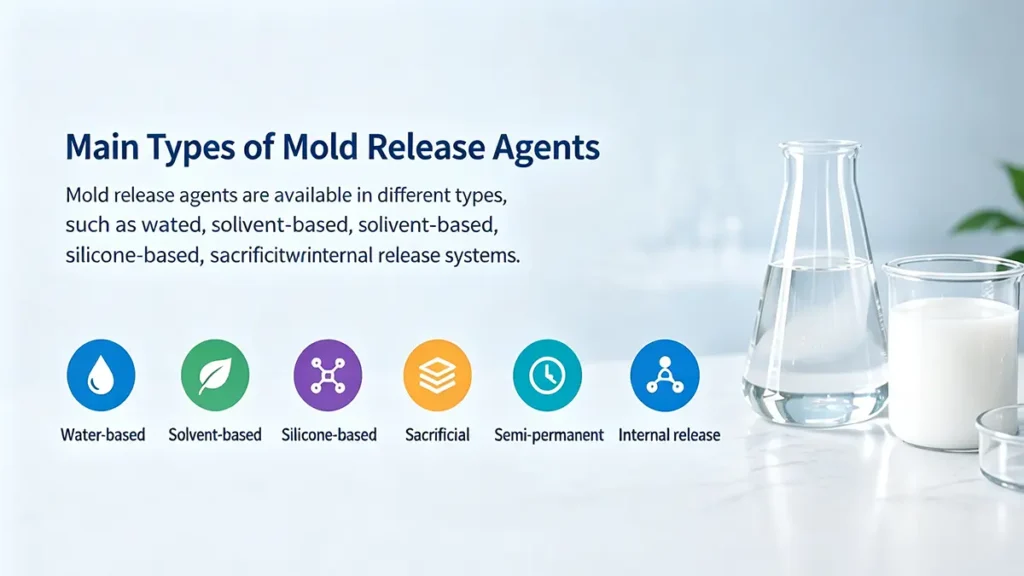
| Type | Basic Characteristics | Typical Considerations |
|---|---|---|
| Water-based | Water is the main carrier | Lower solvent emissions, evaporation time |
| Solvent-based | Uses organic solvent | Fast evaporation, strong wetting |
| Sacrificial | Film is consumed or transferred | Frequent application may be required |
| Semi-permanent | Film remains effective for multiple cycles | Lower application frequency |
| Internal release | Added to molding formulation | Release material migrates toward the interface |
| Silicone-based | Uses silicone chemistry | Low surface tension, good spreading and release |
| Silicone-free | Non-silicone release chemistry | Useful when painting or bonding follows molding |
No single category is universally superior. The correct choice depends on the complete molding process.
Water-based systems disperse or emulsify the active release components in water.
Potential advantages include:
Their main limitation is evaporation. Water generally requires sufficient time and/or mold temperature to leave the surface before molding.
Solvent-based products can provide rapid evaporation and efficient film formation.
They can be useful when:
The choice should therefore be based on drying behavior, release performance, environmental requirements and the downstream process, rather than simply choosing one carrier type over another.
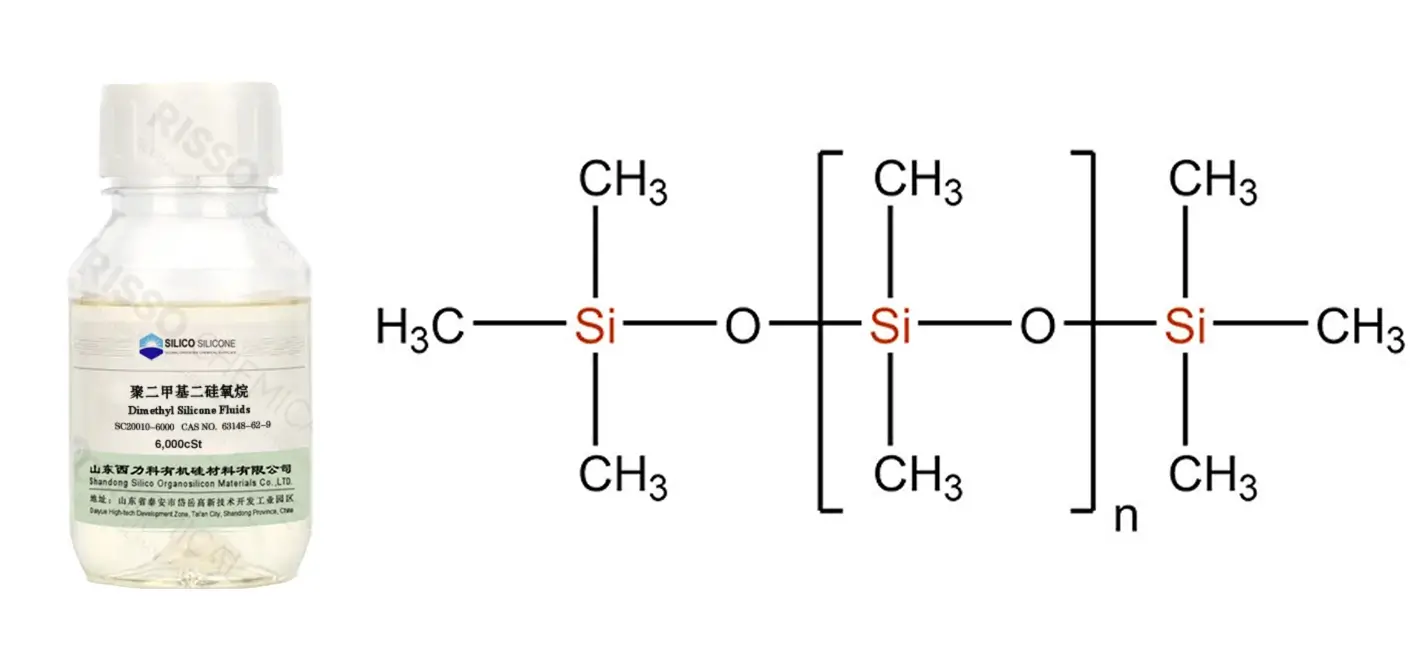
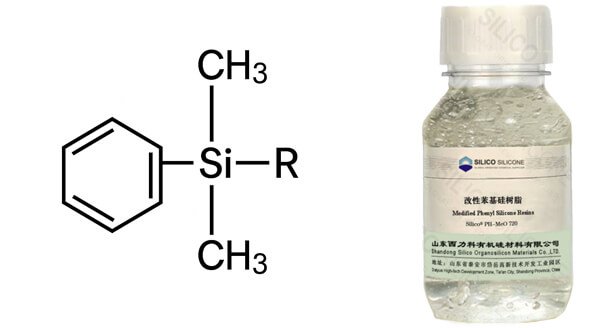
Silicone is widely used in mold release formulations because silicone materials generally have low surface tension, good spreading characteristics and useful thermal stability.
One of the most common silicone materials used in this field is PDMS (polydimethylsiloxane).
A silicone-based release formulation can create a thin silicone-rich layer between the mold and the molded material. This reduces adhesion and can also provide a slip effect during demolding.
However, “silicone mold release agent” does not describe one specific formulation.
Performance can vary with:For example, commercial silicone emulsions used for mold release are available with different active concentrations, including products around 35%, 50% and 60% active silicone. These values are product-specific rather than universal formulation standards.
For manufacturers comparing silicone fluids and emulsions for release applications, Silico® can provide technical information on silicone chemistry, viscosity, emulsion characteristics and formulation requirements to support product evaluation.
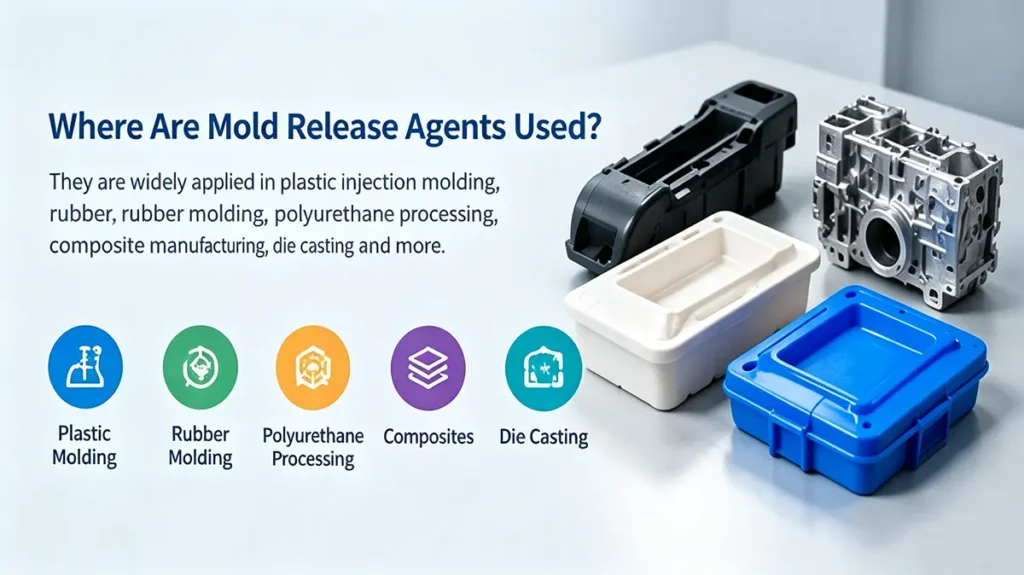
The appropriate release chemistry depends on the resin, mold temperature, geometry and required surface finish.
Rubber molding often requires good thermal stability and low mold buildup, particularly in repeated production cycles.
PU molding requires careful consideration of moisture and formulation compatibility. With water-based release systems, residual water can be important in reactive polyurethane processes.
Some composite tooling requires a complete cleaning, sealing and release system, particularly when the tooling surface is porous.
Specialized release systems are also used for aluminum, magnesium and zinc die casting, where release materials must withstand substantially higher thermal and mechanical stresses.
If the molded part will later be painted, printed, coated or bonded, release-agent transfer becomes particularly important.
A product that provides excellent demolding but interferes with paint or adhesive bonding may not be the correct choice for the overall process.
There is no universal application rate for mold release agents.
The appropriate concentration depends on the product, active chemistry, mold temperature, application method and production cycle.
For example, WACKER’s ELASTOSIL AUX MOULD RELEASE AGENT 32 specifies an aqueous solution of 0.1–1% for spray application on a hot mold and 1–2% for brush application. These figures apply to that particular product and should not be treated as an industry-wide standard.
The general principle is:
Apply enough material to achieve continuous, uniform coverage, but avoid unnecessary buildup.Excessive release agent can cause:
Testing should therefore focus on the minimum effective application level rather than maximum product consumption.
Possible causes include excessive application, incompatible chemistry, high active concentration or overly frequent application.
Uneven application can cause spots, gloss variation, transfer marks or other surface irregularities.
Silicone transfer can reduce surface energy and interfere with subsequent adhesion.
Where painting or bonding is critical, manufacturers may consider silicone-free or low-transfer release systems.
A release agent may perform well initially but lose effectiveness because the film is gradually removed or contaminated.
For production applications, evaluate not only the first demolding cycle but also:A mold release agent is a material applied to a mold surface to reduce adhesion between the tooling and the molded material, making demolding easier and more consistent.
It forms an interface between the mold and molded material. This layer reduces adhesion and can provide a slip effect that lowers demolding force.
Silicone systems commonly provide low surface tension and good release properties. Silicone-free systems may be preferred when subsequent painting, coating or adhesive bonding is particularly sensitive to surface contamination.
Not necessarily. Water-based systems can reduce organic solvent emissions, while solvent-based products can provide rapid evaporation and different wetting characteristics. The best choice depends on the molding process.
Sacrificial products may require frequent application, while semi-permanent systems can remain effective for multiple molding cycles. The exact frequency must be established through process testing and the supplier’s technical data.
Yes. Silicone transfer onto the molded surface can interfere with subsequent coating or adhesive bonding. This should be considered before selecting the release chemistry.
Usually not. Excessive application can increase buildup and surface contamination. A uniform, controlled film is generally preferable to a thick layer.
A mold release agent controls the interface between a mold and the material being processed. Its performance depends on much more than whether the product is labeled silicone, water-based or solvent-based.
The most important variables are:
Mold material + molded material + temperature + pressure + cycle time + geometry + application method + surface requirements
Silicone-based systems, particularly PDMS-based formulations, are widely used because of their low surface tension, spreading behavior and release performance. Water-based silicone emulsions provide another formulation route where reduced solvent use and controlled dilution are important.
For manufacturers and formulators evaluating silicone materials for mold release and related industrial applications, Silico® offers silicone fluids, emulsions and related materials that can be evaluated according to viscosity, chemistry, formulation compatibility and specific processing requirements.
The right release agent is ultimately the one that provides consistent demolding, acceptable mold cleanliness, the required surface finish and compatibility with the complete production process—not simply the product that gives the lowest initial sticking force.
If you want to know other questions about Sillcone Fluid, please contact us and we will provide professional answers.