Silicone Resin for Electrical Insulation: Properties and Applications
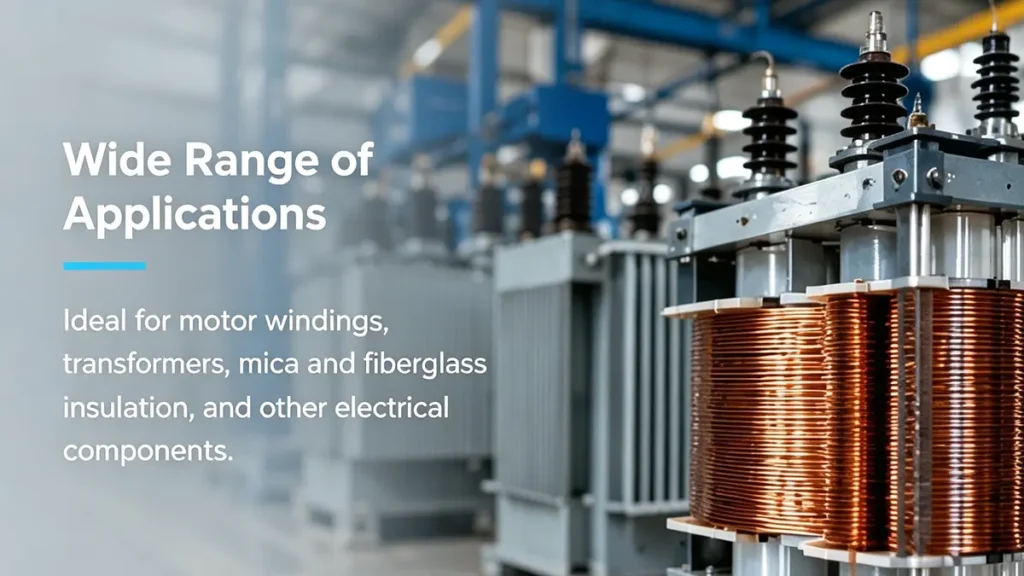
Silicone resin is widely used in electrical insulation systems where high-temperature resistance, dielectric performance, moisture resistance and long-term environmental durability are required. Typical applications include motor and generator windings, transformers, coils, mica insulation and fiberglass-based electrical components.
Compared with conventional organic resins, silicone resin can offer better resistance to elevated temperatures, thermal cycling, moisture and weathering. However, performance varies significantly with resin chemistry, curing method and insulation structure.
For manufacturers and electrical-material suppliers, Silico® provides silicone resin and related silicone materials for applications where thermal performance, electrical insulation and processing requirements need to be evaluated together.
Table of Contents
- 1. What Is Silicone Resin for Electrical Insulation?
- 2. Why Is Silicone Resin Used for Electrical Insulation?
- 3. Key Properties of Silicone Insulation Resin
- 4. Electrical Properties
- 5. Thermal Resistance
- 6. Moisture and Weather Resistance
- 7. Mechanical and Adhesion Properties
- 8. Silicone Resin for Motor and Generator Windings
- 9. Silicone Resin for Transformers and Coils
- 10. Silicone Resin for Mica and Fiberglass Insulation
- 11. Silicone Resin Impregnation Methods
- 12. How to Select Silicone Resin for Electrical Insulation
- 13. Silicone Resin vs. Conventional Organic Resins
- Frequently Asked Questions
- Conclusion
1. What Is Silicone Resin for Electrical Insulation?
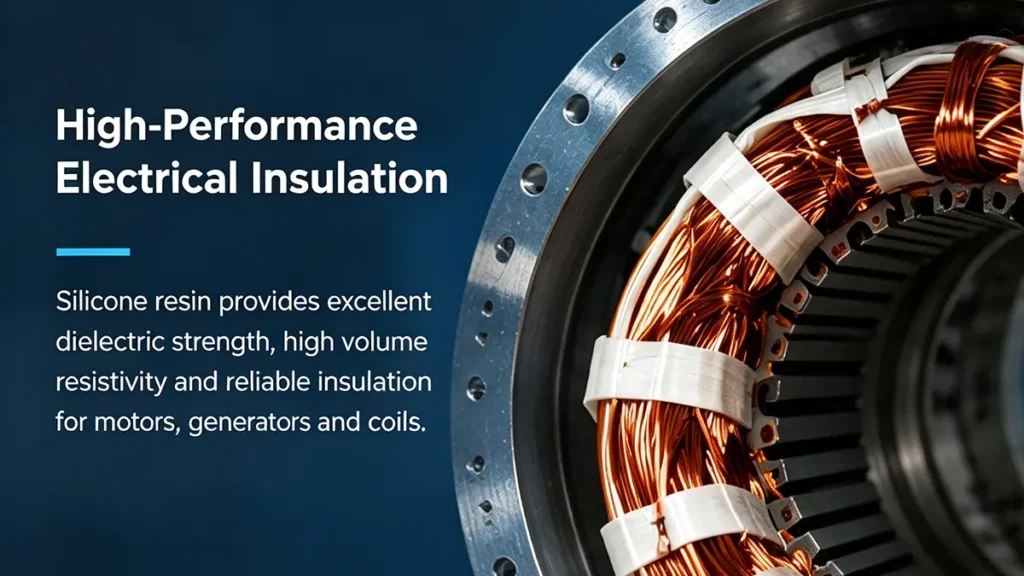
Silicone resin for electrical insulation is a crosslinkable polysiloxane-based material that forms a thermally stable, electrically insulating structure after curing.
Unlike silicone oils, which remain fluid, silicone resins are designed to form a crosslinked solid or durable coating.
Depending on the formulation, electrical silicone resins may contain:
- Methyl silicone structures
- Phenyl silicone structures
- Functional siloxanes
- Reactive silicone resins
- Silicone resin blends
These structural differences affect thermal stability, flexibility, adhesion, dielectric properties and curing behavior.
For example, Silico’s SILRES® H62 C is a heat-curing phenyl silicone resin developed for impregnation of electrical coils in motors and generators.
2. Why Is Silicone Resin Used for Electrical Insulation?
Electrical insulation must withstand much more than voltage.
During service, insulation may be exposed to:- High temperature
- Electrical stress
- Moisture
- Thermal cycling
- Vibration
- Chemicals
- UV radiation
- Contamination
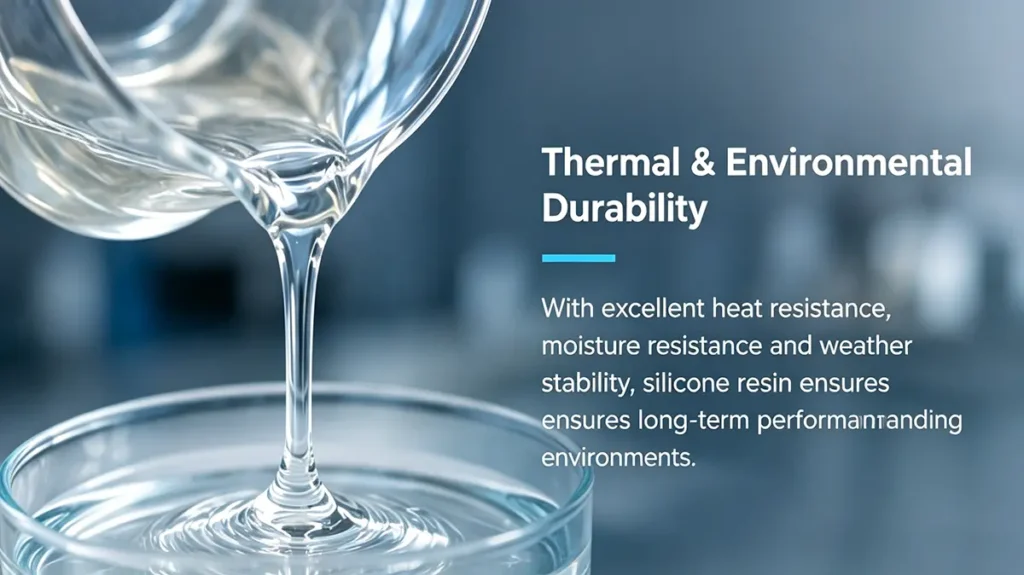
The siloxane backbone contributes to the thermal and environmental stability of silicone materials.
Silicone-based systems also provide good water repellency, which can help maintain surface insulation performance under humid or outdoor conditions.
For this reason, silicone resin is particularly useful in demanding applications such as motors, generators, transformers and electrical equipment exposed to elevated temperatures or harsh environments.
3. Key Properties of Silicone Insulation Resin
| Property | Importance |
|---|---|
| Dielectric strength | Resistance to electrical breakdown |
| Volume resistivity | Resistance to bulk current leakage |
| Dielectric constant | Influences electric-field distribution |
| Dissipation factor | Indicates dielectric energy loss |
| Thermal stability | Determines high-temperature capability |
| Adhesion | Maintains insulation integrity |
| Flexibility | Helps withstand thermal cycling |
| Moisture resistance | Protects electrical performance |
| Chemical resistance | Improves service durability |
| Curing behavior | Affects manufacturing efficiency |
| Viscosity | Determines penetration and impregnation behavior |
No single parameter determines whether a resin is suitable.
The electrical, thermal, mechanical and environmental properties must be considered together.
4. Electrical Properties
Dielectric Strength
Dielectric strength is the electric field required to cause electrical breakdown and is commonly expressed in kV/mm.
Published values vary according to resin chemistry, cure conditions, thickness, test method, moisture and defects.
For example, Silico reports approximately 27 kV/mm dielectric strength for cured SILRES® H60 under IEC 60243-1 testing conditions.
This is a product-specific value and should not be treated as a universal specification for silicone resin.
Volume Resistivity
Volume resistivity measures the resistance of the material to electrical conduction through its bulk.
High-quality insulating silicone systems can achieve very high volume resistivity, often in the range of approximately 10¹³–10¹⁵ Ω·cm, depending on formulation and test conditions.
Dielectric Constant and Dissipation Factor
Dielectric constant affects electric-field distribution and capacitance, while dissipation factor indicates dielectric losses.
Both parameters depend on:- Frequency
- Temperature
- Moisture
- Resin chemistry
- Cure state
For high-frequency or high-voltage applications, these parameters may require particular attention.
5. Thermal Resistance
High-temperature performance is one of the main reasons silicone resin is used in electrical insulation.
Silicone resin can maintain its structure at temperatures where some conventional organic insulation systems experience accelerated oxidation, embrittlement or degradation.
For example, Silico reports an RTI of 239°C for cured SILRES® H62 C and identifies the material for high-temperature electrical insulation applications.
Silico also reports SILRES® H60 for winding impregnation applications at temperatures up to approximately 200°C.
These values illustrate the thermal capability of specific silicone systems, but the thermal class of the complete insulation system should always be verified.
6. Moisture and Weather Resistance
Moisture can reduce surface resistance, increase leakage current and accelerate electrical insulation degradation.
Silicone resin offers several useful characteristics for environmental protection:- Low surface energy
- Water repellency
- Moisture resistance
- UV resistance
- Weather resistance
- Outdoor electrical equipment
- Motors and generators
- Railway equipment
- Transformers
- High-voltage components
However, environmental durability depends on the complete insulation structure, not only the resin.
Humidity, salt contamination, surface tracking, thermal cycling and electrical stress should be evaluated where relevant.
7. Mechanical and Adhesion Properties
Electrical insulation must remain mechanically stable during operation.
Thermal expansion and contraction can create stress between the resin and materials such as:- Copper
- Steel
- Mica
- Fiberglass
- Polyimide films
- Other insulation materials
A resin that is excessively rigid may develop cracks during repeated thermal cycling, while insufficient adhesion can cause delamination.
Silicone resin systems can provide a useful combination of adhesion, flexibility and thermal stability, depending on the formulation.
Dow, for example, lists DOWSIL™ RSN-0994 Resin for electrical insulation applications involving glass cloth, electrical sleeving and mica-glass systems.
8. Silicone Resin for Motor and Generator Windings
Motor winding impregnation is one of the most important applications of electrical silicone resin.
During impregnation, the resin penetrates spaces within the winding and insulation structure. After curing, it forms a solid matrix that can:
- Hold conductors in position
- Reduce vibration
- Improve electrical insulation
- Reduce moisture penetration
- Improve mechanical integrity
- Improve resistance to thermal cycling
Typical applications include:
- Industrial motors
- Generators
- Traction motors
- Railway motors
- EV and hybrid drive motors
- High-temperature electrical drives
Silico specifically identifies SILRES® H62 C for motor and generator coil impregnation and lists VPI, dipping and trickle impregnation as suitable processes.
9. Silicone Resin for Transformers and Coils
Silicone resin can also be formulated as an impregnating varnish for transformers, coils and motor windings.
The resin needs sufficient flow and penetration before curing and must form a stable insulating structure afterward.
Important requirements include:
- Electrical insulation
- Adhesion
- Thermal resistance
- Moisture resistance
- Vibration resistance
- Appropriate curing behavior
RSN-0996, for example, is described for motors, coils and transformers. Dow specifies curing temperatures as low as 150°C and a long-term hottest-spot temperature of 220°C for the product.
The actual cure schedule should be validated against the component design and production process.
10. Silicone Resin for Mica and Fiberglass Insulation
Silicone resin is also used as a binder or impregnation material in composite electrical insulation systems.
Common reinforcement materials include:
- Mica tape
- Fiberglass
- Glass cloth
- Fiberglass sleeving
- Woven and nonwoven materials
The resin bonds the reinforcement and contributes thermal, mechanical and electrical protection.
Silico® lists silicone resin products for resin binders and mica-tape applications used in electrical insulation systems.
In these applications, final performance depends on:
Resin + reinforcement + impregnation + curing + insulation design
rather than the resin alone.
11. Silicone Resin Impregnation Methods
Vacuum Pressure Impregnation (VPI)
VPI is commonly used for larger motors and generators.
A typical process includes:- Vacuum drying or degassing the winding
- Introducing the resin
- Applying pressure to improve penetration
- Removing excess resin
- Curing the impregnated winding
Resin viscosity, working time and curing behavior are particularly important.
Dipping
The component is immersed directly in the resin.
This method is relatively simple but requires suitable viscosity, penetration and drainage characteristics.
Trickle Impregnation
Resin is applied to the winding while the component is heated or rotated.
This method is used in certain motor manufacturing processes where controlled resin placement and production efficiency are important.
For all three methods, viscosity, gel time, cure temperature and penetration should be evaluated together.
12. How to Select Silicone Resin for Electrical Insulation
1. Determine operating temperature
- Continuous operating temperature
- Maximum hotspot temperature
- Short-term temperature peaks
- Thermal cycling
2. Define electrical requirements
- Dielectric strength
- Volume resistivity
- Dielectric constant
- Dissipation factor
- Partial-discharge requirements, where applicable
3. Identify the manufacturing process
- VPI
- Dipping
- Trickle impregnation
- Coating
- Lamination
- Casting
4. Check viscosity and penetration
The resin must penetrate the intended insulation structure before curing.
5. Check curing requirements
- Cure temperature
- Cure time
- One- or two-component system
- Catalyst requirements
- Working life
6. Evaluate environmental resistance
- Humidity
- Water exposure
- Salt contamination
- UV exposure
- Thermal cycling
7. Test the complete insulation system
The most meaningful evaluation is:
Conductor + insulation material + silicone resin + reinforcement + curing process
This provides more useful information than resin testing alone.
For manufacturers comparing silicone materials for different electrical insulation applications, Silico® provides silicone resin and related materials that can be evaluated according to electrical requirements, thermal conditions and manufacturing processes.
13. Silicone Resin vs. Conventional Organic Resins
Silicone resin is not automatically the correct choice for every electrical insulation application.
Its main advantages are generally associated with high-temperature stability, moisture resistance and weather durability.| Property | Silicone Resin | Conventional Organic Resin |
|---|---|---|
| High-temperature resistance | High for suitable grades | Highly chemistry-dependent |
| Moisture resistance | Generally good | Formulation-dependent |
| UV/weather resistance | Generally good | Varies by chemistry |
| Electrical insulation | Excellent in suitable systems | Excellent in many systems |
| Flexibility | Grade-dependent | Grade-dependent |
| Processing | Application-specific | Widely established |
| Material cost | Often higher | Often lower |
For motors and generators operating continuously at elevated temperatures, material selection should consider thermal life and system reliability, not simply resin price.
Frequently Asked Questions
Yes. Properly formulated and cured silicone resins can provide high dielectric strength, high volume resistivity and good environmental resistance.
It depends on the specific resin and insulation system. Some electrical silicone resin systems are designed for operation around 200°C or higher, while specific grades have RTI values above 230°C. Silico reports an RTI of 239°C for cured SILRES® H62 C.
Yes. Silicone resins are used for motor and generator winding impregnation, including VPI, dipping and trickle processes.
Yes. Certain silicone resin varnishes are specifically developed for transformer and coil impregnation. RSN-0996 is one commercial example.
Silicone oil is generally a fluid material with low crosslink density, while silicone resin is designed to cure into a crosslinked solid structure.
No. Dielectric strength is only one parameter. Thermal endurance, adhesion, moisture resistance, dielectric loss, mechanical stability and long-term aging can also be critical.
Conclusion
Silicone resin is an important material for electrical insulation systems requiring a combination of electrical insulation, thermal resistance, moisture resistance and environmental durability.
Major applications include:- Motor winding impregnation
- Generator insulation
- Transformer and coil impregnation
- Mica insulation systems
- Fiberglass sleeving
- Electrical insulation coatings
- High-temperature electrical components
When selecting a silicone resin, engineers should evaluate dielectric strength, volume resistivity, dielectric loss, thermal class, viscosity, curing conditions, adhesion and environmental resistance together.
For impregnation applications, resin viscosity, penetration, gel time and cure schedule must also match the winding design and production equipment.
The practical selection process is:
Electrical requirements → thermal requirements → insulation structure → impregnation process → resin chemistry → curing conditions → complete-system testing
A properly selected silicone resin can provide long-term performance in demanding electrical environments, but the final decision should always be based on the actual operating conditions and qualification requirements of the complete insulation system.
For manufacturers and distributors seeking silicone materials for electrical insulation, Silico® can provide silicone resin solutions for applications requiring a balance of thermal performance, electrical insulation, processing characteristics and long-term durability.
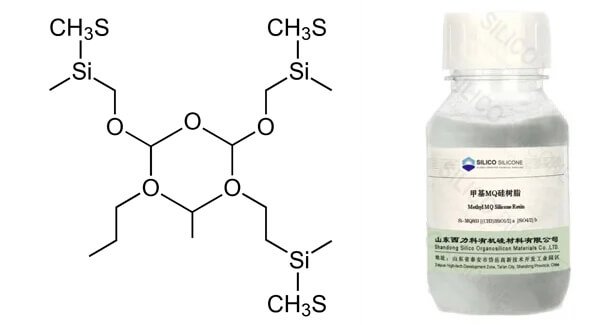
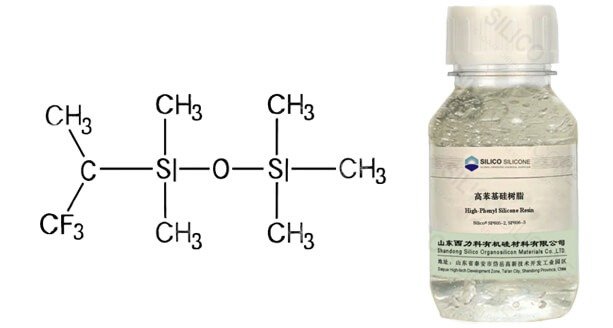
Silicone Resin related products
If you want to know other questions about Sillcone Resin, please contact us and we will provide professional answers.
Popular Recommendations
Get a Catalog & Best Price
- Quick and helpful reply within 24 hours;
- Tailored solutions provided for your project;
- One-stop purchasing service.
Need More Technical Information?
Silico® ORGANOSILICON
- Address: Daiyue Industrial Area, Taian, Shandong, China
- © Copyright 2022 Silico® . All Rights Reserved