
How to Dilute Silicone Emulsion with Water Without Breaking Stability
Diluting silicone emulsion with water is a common operation in textile finishing, coatings, mold release and other industrial processes. However, adding water does not always produce a stable, uniform dispersion. Water hardness, dilution ratio, mixing sequence, pH, temperature and compatibility with other formulation ingredients can all influence the final result.
To dilute silicone emulsion successfully, use water compatible with the formulation, follow the product-specific order of addition, control mixing conditions and verify stability before production. The correct procedure depends on the emulsion’s chemistry, active content and intended application; there is no single dilution recipe suitable for every grade.
Silico® supplies organosilicon materials for industrial applications where product selection and processing conditions need to match the intended use. Understanding the principles of silicone emulsion dilution helps formulators and purchasing teams establish repeatable procedures, reduce avoidable batch failures and evaluate whether a product is suitable for their process.
Table of Contents
- 1. Why Silicone Emulsion Can Break During Dilution
- 2. How to Choose Water for Silicone Emulsion Dilution
- 3. How to Calculate the Silicone Emulsion Dilution Ratio
- 4. Step-by-Step Silicone Emulsion Dilution Procedure
- 5. How Mixing Speed, Temperature and pH Affect Stability
- 6. How to Test Silicone Emulsion Stability After Dilution
- 7. Common Silicone Emulsion Dilution Problems and Solutions
- 8. Storage and Handling of Diluted Silicone Emulsion
- Frequently Asked Questions
- Conclusion
1. Why Silicone Emulsion Can Break During Dilution
Silicone emulsion is a dispersion of silicone material in water, stabilized by an emulsifier system and, depending on the formulation, other ingredients. During dilution, the concentration of silicone and other formulation components decreases, changing the chemical environment around the dispersed droplets.
If the new conditions are incompatible with the emulsifier system or the formulation’s stability limits, the droplets may aggregate, flocculate, coalesce or separate into distinct phases.
The main factors affecting dilution stability are summarized below.
| Factor | Potential effect | Recommended control |
|---|---|---|
| Water hardness | Calcium and magnesium ions may interfere with some emulsifier systems | Measure hardness and verify water compatibility |
| Dissolved salts and contaminants | May alter the ionic environment or introduce incompatible substances | Use clean water and check the source |
| Dilution ratio | Excessive dilution may reduce stability in some formulations | Follow the TDS and validate the target concentration |
| Order of addition | Local concentration changes may promote aggregation or uneven dispersion | Follow the product-specific procedure |
| Mixing intensity | Inadequate mixing can cause nonuniformity; excessive agitation can introduce air or stress sensitive systems | Use controlled, effective mixing |
| pH | Conditions outside the formulation’s tolerance may destabilize the dispersion | Measure and control pH where required |
| Temperature | Heat, freezing or sudden temperature changes may affect stability | Follow the specified processing and storage range |
| Additive compatibility | Other surfactants, salts, resins or process auxiliaries may cause incompatibility | Test the complete formulation before production |
These factors do not affect every silicone emulsion in the same way. Some grades are designed for high-ratio dilution, while others are intended for a specific application bath or formulation.
For example, supplier documentation for individual silicone emulsions specifies different dilution procedures and water requirements. Such instructions demonstrate why a procedure established for one product should not automatically be transferred to another.
The first step is to identify the exact product grade, review its technical data sheet (TDS) and confirm the recommended dilution range, water quality, addition sequence and processing conditions.
2. How to Choose Water for Silicone Emulsion Dilution
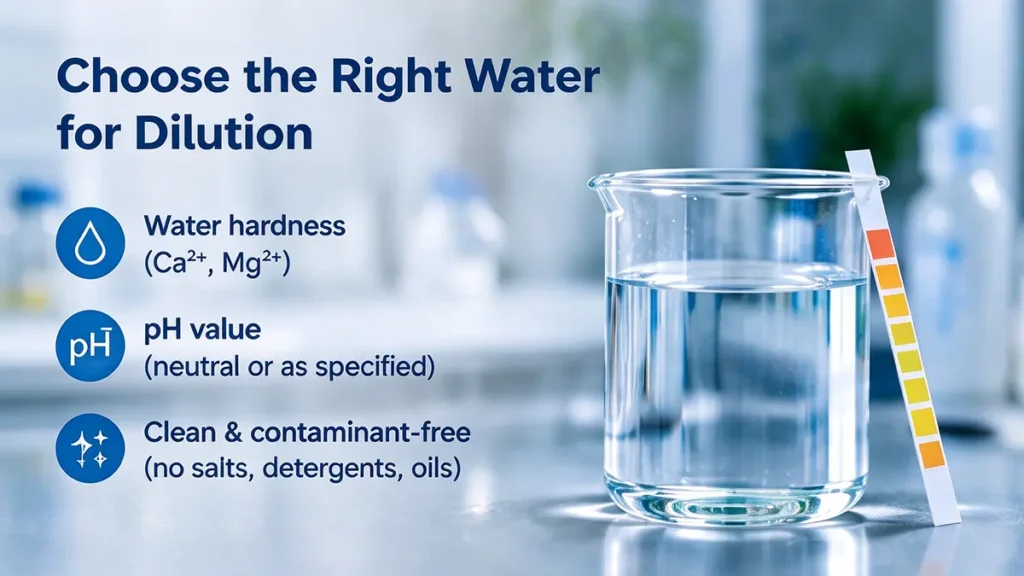
2.1 Water hardness: calcium and magnesium
- Measure the hardness of the available process water.
- Prepare a small dilution using deionized or softened water as a reference.
- Prepare a second sample using the intended production water.
- Compare the samples immediately and after a defined holding period.
- Investigate any difference in appearance, viscosity, separation or application performance.
2.2 Water pH and dissolved substances
Water pH alone does not determine whether the water is suitable for dilution. Dissolved salts, residual detergents, cleaning chemicals, surfactants and other contaminants can also affect compatibility.
Neutral or near-neutral water can be a reasonable starting point for screening when the supplier has not specified otherwise. However, some silicone emulsions are designed for mildly acidic application conditions, while others operate under different conditions.
Do not automatically adjust water pH using acetic acid, sodium hydroxide or another chemical. First check the product’s recommended pH range and determine whether the adjustment is necessary. If adjustment is required, test the specified chemical and addition procedure on a small sample.
2.3 Water cleanliness and microbial quality
Use clean water and equipment free from residues of previous batches. Detergents, oils, incompatible additives and cleaning agents can introduce unexpected formulation changes.
Microbial quality also matters, especially when a diluted product will be stored rather than used immediately. Dilution reduces the concentration of preservatives originally present in the concentrate, and the diluted material may not retain the same level of protection.
Where longer storage is necessary, confirm the recommended holding period and preservation requirements with the supplier. Do not add a preservative without checking its compatibility with the emulsion and the intended application.
3. How to Calculate the Silicone Emulsion Dilution Ratio
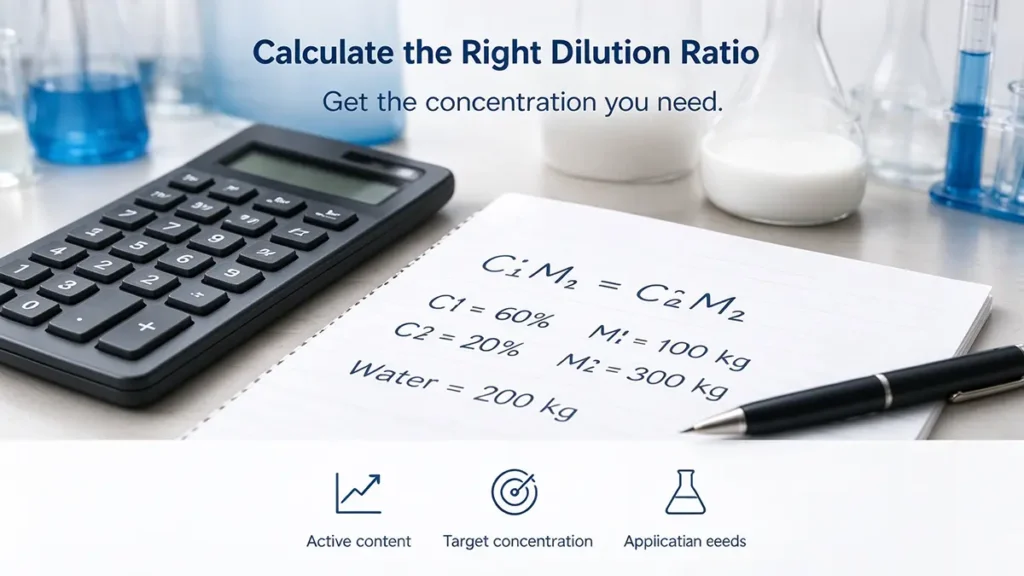
The required dilution ratio depends on the starting concentration, target concentration and application requirements. A ratio suitable for a textile finishing bath may not be appropriate for a mold-release application or a coating formulation.
Before calculating the amount of water, confirm whether the specified concentration refers to active silicone content, total solids or the mass of the supplied emulsion. These values are not interchangeable.
3.1 Example: Diluting a 60% active-content concentrate to 20%
- Starting silicone emulsion: 100 kg
- Active silicone content of the supplied emulsion: 60% by weight
- Target active silicone content after dilution: 20% by weight
- Diluent: water
Step 1: Calculate the active material in the original concentrate.
Step 2: Calculate the required final batch mass.
Step 3: Calculate the amount of water to add.
| Component | Mass | Percentage of final batch |
|---|---|---|
| Silicone emulsion concentrate | 100 kg | 33.33% |
| Water | 200 kg | 66.67% |
| Total | 300 kg | 100% |
This example assumes that the starting value represents the relevant active silicone content and that the percentages are weight-based. If the TDS reports total solids rather than active silicone content, verify which specification is relevant to the intended application.
3.2 General dilution formula
Mwater = Mass of water to add
M2 = Final batch mass
M1 = Initial concentrate mass
This formula calculates the theoretical concentration. It does not confirm that the emulsion will remain stable at the selected dilution level. A stability test is still required.
3.3 Why a dilution ratio alone is not enough
A product may be chemically stable at one dilution level but unstable at another. The result can also depend on water quality, temperature, addition order and contact with other ingredients.
Commercial products illustrate this variation. Some supplier instructions describe dilution at a defined concentration, while others provide a broader application-specific dilution range. Those figures should be treated as instructions for the named product, not general recommendations for all silicone emulsions.
For this reason, establish the target concentration from the application requirements and the product specification, then validate the actual mixture.
4. Step-by-Step Silicone Emulsion Dilution Procedure
The following procedure is a practical framework for laboratory development and process validation. If the manufacturer’s TDS specifies a different order of addition, mixing method, temperature range or holding time, follow that instruction.
Step 1: Review the product specification
- Ionic character: nonionic, anionic, cationic or another specified system.
- Active content or total solids.
- Recommended dilution range.
- Suitable diluent and water-quality requirements.
- Approved pH and temperature conditions.
- Required addition sequence and mixing instructions.
- Storage and holding-time recommendations after dilution.
Step 2: Prepare clean equipment and measure the water
Use a clean, compatible vessel. Remove residues from previous batches, especially detergents, acids, alkalis and other formulation chemicals.
Measure the required amount of water before mixing. For a new formulation or an uncertain water supply, prepare a reference sample with deionized or softened water and compare it with a sample made using production water.
Unless the TDS specifies otherwise, water close to ambient temperature is a sensible starting point for a laboratory trial.
Step 3: Follow the product-specific order of addition
There is no universal rule that water must always be added to the concentrate, or that the concentrate must always be added to water.
For example, supplier instructions for POWSIL-59800 specify charging water into the tank before adding the silicone softener concentrate. The published procedure for HAYSOFT-641 instead describes slowly adding water to the product while stirring.
These differences are important. The appropriate sequence depends on the formulation and its stability characteristics.
If the TDS instructs you to add concentrate to water, introduce the concentrate steadily while maintaining effective circulation. If it specifies adding water to the concentrate, follow the prescribed rate and mixing conditions. Do not change the sequence simply because another product uses a different method.
Step 4: Mix with controlled intensity
- Visible particles or stringy material.
- Localized thickening.
- Excessive foam.
- Oil droplets or early separation.
- Unexpected changes in flow behavior.
Step 5: Complete mixing and inspect the diluted sample
- Stop or reduce agitation according to the established procedure.
- Inspect the mixture under consistent lighting.
- Record appearance, pH and viscosity where relevant.
- Check for visible oil separation, coagulation or sediment.
- Retain a sample for subsequent stability testing.
Step 6: Validate before scaling up
A procedure that works in a 500 g laboratory sample may not produce the same result in a 500 kg production tank. Larger equipment can differ in circulation, addition time, heat transfer and air entrainment.
Before production, run a pilot batch using the intended water source, equipment and addition sequence. Evaluate the sample immediately and after a defined holding period. Confirm that both physical stability and application performance meet the acceptance criteria before approving the process.
5. How Mixing Speed, Temperature and pH Affect Stability
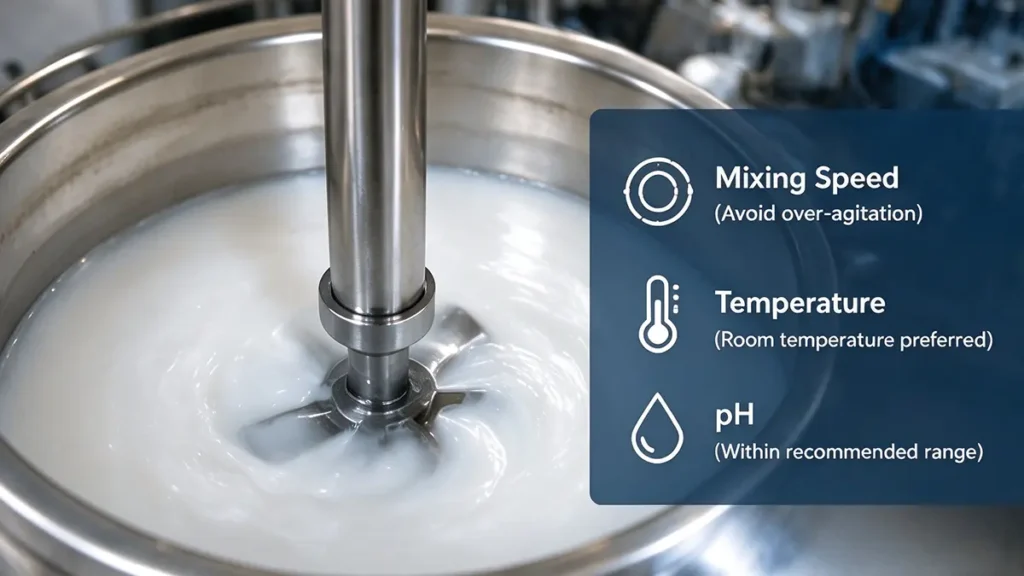
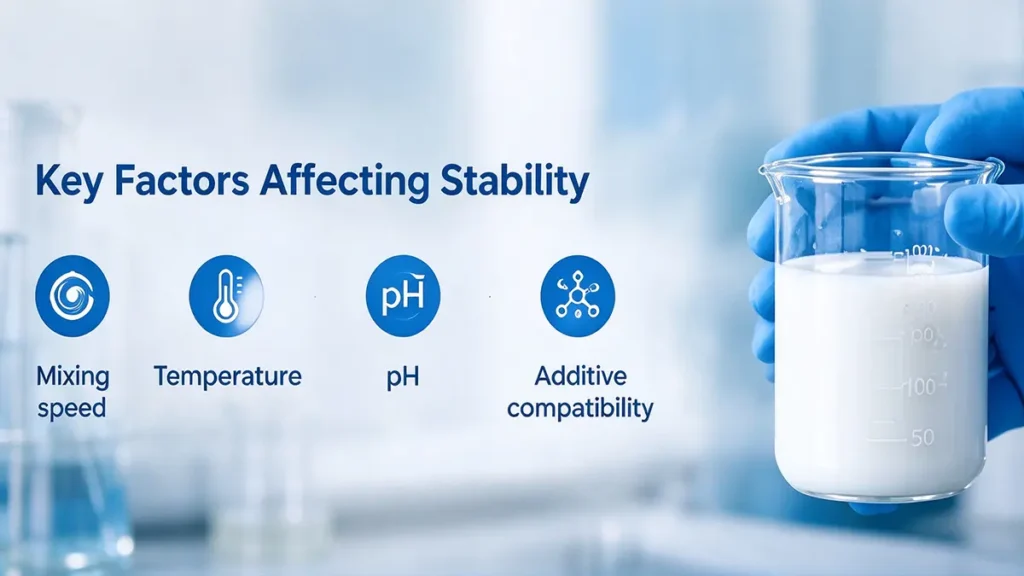
A stable dilution depends on the interaction of several process conditions. Adjusting only the water ratio may not solve a problem caused by mechanical stress, pH incompatibility or contamination.
5.1 Mixing speed and shear
Insufficient mixing can leave the batch nonuniform, particularly when the concentrate is added too quickly. Excessive agitation can introduce air, increase foaming and place unnecessary mechanical stress on a sensitive formulation.
Use a mixer that provides sufficient circulation without excessive aeration. Evaluate the actual mixing conditions rather than relying on rpm alone: impeller diameter, vessel size, fill level and impeller design all affect the flow pattern.
A product described as shear-stable should still be processed within its specified conditions. Shear stability does not mean that every mixing method or mechanical stress is acceptable.
5.2 Temperature
Temperature can influence viscosity, interfacial behavior and emulsion stability. Avoid unnecessary heating, freezing and sudden temperature changes during dilution.
Unless the supplier specifies another condition, start laboratory trials with water and concentrate close to ambient temperature. If a product has been frozen during transport or storage, follow the supplier’s recovery instructions and test its condition before use.
Freeze–thaw resistance is formulation-dependent; it should not be assumed for every silicone emulsion.
5.3 pH
The pH of the final diluted mixture can be more important than the pH of the incoming water alone. An emulsion that is stable in its original formulation may respond differently when diluted into a strongly acidic or alkaline environment.
Measure pH at the relevant stage and compare it with the grade’s specified operating range. If adjustment is required, use the recommended chemical and addition method, then repeat the stability test.
In textile processing, some silicone softeners are used in application baths around pH 5–6. This is an example of an application-specific condition, not a universal pH target for silicone emulsion dilution.
5.4 Compatibility with other formulation ingredients
A silicone emulsion that remains stable in water may still be incompatible with the complete production formulation. Other surfactants, salts, resins, pigments, dyes or processing auxiliaries may change the dispersion’s behavior.
This is particularly relevant when combining silicone emulsion with textile finishing chemicals or water-based coating ingredients.
Test the actual components at their intended concentrations and in the intended order of addition. Do not assume that nonionic emulsions are compatible with every additive, or that products with the same ionic classification will always mix successfully.
For formulation development, Silico® recommends evaluating the selected silicone material under the intended processing conditions rather than relying on dilution ratio alone. Product-specific testing helps establish whether the formulation meets the requirements for stability, application performance and process consistency.
6. How to Test Silicone Emulsion Stability After Dilution
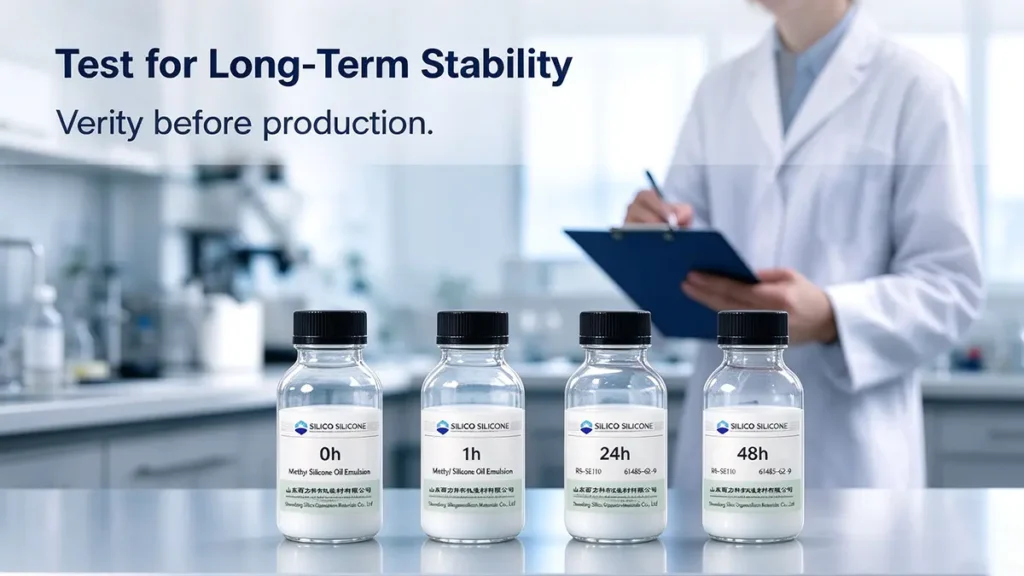
A visual inspection immediately after mixing is useful, but it is not sufficient to establish long-term stability. A structured test should examine the diluted sample over time and, where necessary, under actual application conditions.
6.1 A practical laboratory stability test
| Stage | Procedure | What to record |
|---|---|---|
| Immediately after dilution | Inspect the sample and record initial properties | Appearance, foam, visible particles, pH and viscosity where applicable |
| After 30–60 minutes | Leave the sample undisturbed | Early separation, creaming, sediment or changes in uniformity |
| After 24 hours | Inspect under the same conditions | Layer formation, changes in appearance and viscosity |
| Extended holding | Continue according to the intended storage period | Progressive separation, odor change or other signs of deterioration |
| Application test | Use the sample in the intended process | Finish quality, spreading, lubrication, release performance or other relevant properties |
For meaningful comparison, keep the sample container, fill level, storage temperature and inspection method consistent. Prepare a reference sample using the approved procedure, and record the dilution ratio and water source for each test.
6.2 What counts as a stable dilution?
- Appearance: The sample remains within the expected appearance range for the grade.
- pH: The measured value remains within the specified range.
- Viscosity: The sample meets the agreed specification when measured using a consistent method and temperature.
- Physical separation: No unacceptable oil layer, coagulation or sediment develops.
- Redispersibility: Where the product specification permits slight settling, determine whether gentle stirring restores the required uniformity.
- Application performance: The diluted product continues to meet the required process or finished-product performance.
6.3 When additional testing is necessary
For critical applications or long holding periods, additional tests may be required. Depending on the formulation and risk level, these may include temperature-cycle testing, accelerated storage evaluation, particle-size analysis or microbiological assessment.
Accelerated tests should be designed carefully. Elevated temperature or mechanical stress can produce failure mechanisms that do not correspond directly to normal storage conditions. Use the test method and acceptance criteria agreed with the supplier or the product’s quality team.
7. Common Silicone Emulsion Dilution Problems and Solutions
| Problem | Possible causes | Recommended action |
|---|---|---|
| Flakes or coagulated particles appear during mixing | Incorrect addition sequence, incompatible water, contamination or localized concentration changes | Stop addition, retain a sample and repeat a controlled trial using the TDS procedure |
| An oily layer appears on top | Emulsion breakdown, incompatible additives or temperature stress | Check water quality, pH, temperature and mixing history; do not assume more agitation will restore stability |
| Viscosity changes unexpectedly | Formulation incompatibility, pH change, temperature differences or measurement variation | Compare pH and viscosity against a reference sample at a controlled temperature |
| Excessive foam develops | Air entrainment, high mixing intensity or surface-active contaminants | Reduce aeration, review mixer configuration and inspect water and equipment cleanliness |
| Sediment appears during standing | Settling, aggregation or separation, depending on the formulation | Examine the sediment and verify whether the product meets its redispersibility and appearance specifications |
| The sample deteriorates during storage | Microbial contamination, unsuitable storage or reduced preservative protection | Review holding time, container hygiene, storage conditions and supplier recommendations |
| The emulsion is stable in water but fails in the process bath | Incompatibility with other ingredients, salts or process conditions | Test the complete formulation at the intended concentrations and addition sequence |
First, determine whether the observed change is reversible settling or genuine emulsion breakdown. These conditions should not be treated as equivalent.
Retain a sample and document the dilution ratio, water source, mixing conditions, temperature and time elapsed since preparation. Review the product’s TDS and, if appropriate, run a small test using the approved mixing procedure.
Do not automatically attempt to restore the batch with high-speed mixing, additional emulsifier or pH adjustment. Persistent oil separation, coagulation or unusual particles should be investigated before the material is released for production.
If the original specification cannot be restored or the cause remains unclear, consult the supplier’s technical team before deciding whether the batch can be used.
8. Storage and Handling of Diluted Silicone Emulsion
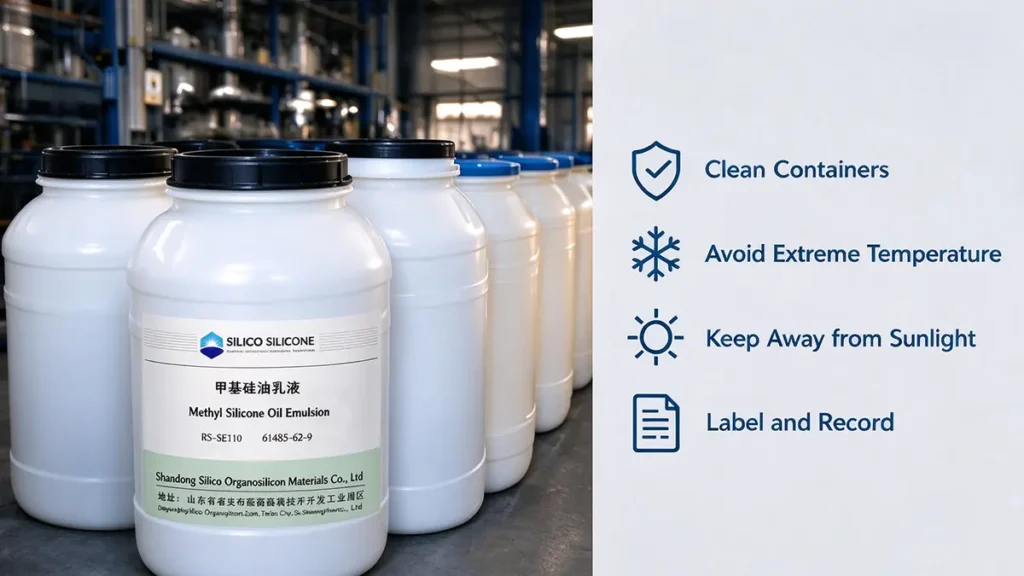
Diluted silicone emulsion should be managed as a prepared material with its own storage requirements. It should not automatically be assigned the same shelf life as the original concentrate.
Dilution changes the concentration of the formulation components and may reduce the effective concentration of preservatives. The resulting storage stability depends on the product, dilution water, equipment cleanliness, temperature and holding period.
- Prepare only the quantity required for the planned production period where practical.
- Store the diluted material in clean, compatible, properly closed containers.
- Protect it from freezing, excessive heat and direct sunlight.
- Label each batch with the product grade, dilution ratio, water source, preparation date and relevant processing conditions.
- Inspect stored material before use, particularly if it has been transported or held for an extended period.
- Follow supplier guidance if separation, freezing or another abnormal change occurs.
Frequently Asked Questions
Yes, some grades can be diluted with tap water, but suitability depends on water hardness, dissolved salts, contaminants and the formulation’s tolerance. Test the actual water supply against a deionized-water reference and follow the product’s TDS.
There is no universal ratio. The required amount depends on the starting active content, target concentration, application and dilution stability of the specific grade. Calculate the theoretical composition by mass, then verify it through stability and application testing.
Follow the product-specific instructions. Some grades require adding concentrate to water, while others specify gradual addition of water to the concentrate. The correct sequence depends on the formulation and should be validated before production.
Do not use hot water unless the product instructions explicitly permit it. Water close to ambient temperature is a reasonable starting point for laboratory trials, but the approved temperature range depends on the grade.
Possible causes include incompatible water, incorrect addition order, unsuitable pH, temperature stress, contamination or dilution beyond the formulation’s stability limits. Review the preparation history and compare the sample with a controlled reference before attempting corrective action.
The holding period depends on the product formulation, water quality, hygiene, temperature and preservation system. Follow the supplier’s instructions and establish a suitable period through testing. Do not assume that the diluted product has the same shelf life as the concentrate.
Check appearance, pH and viscosity where relevant, and inspect for unacceptable separation, coagulation or sediment. Repeat the inspection after a defined holding period and test application performance under the intended process conditions. Acceptance criteria should follow the product specification.
Conclusion
Successful silicone emulsion dilution requires more than selecting a water ratio. Water quality, addition sequence, mixing intensity, pH, temperature and compatibility with other ingredients can all affect the final dispersion.
A reliable procedure starts with the product’s TDS, uses a calculated dilution ratio, follows the specified mixing method and validates stability before production. Laboratory trials should reproduce the intended water source and process conditions, while scale-up should account for differences in equipment geometry, circulation and aeration.
For manufacturers, formulators and industrial buyers, Silico® can be a starting point for discussing silicone material requirements and application-specific product selection. Confirming the intended use, target concentration, water quality and processing conditions helps establish a more reproducible dilution procedure and reduces the risk of avoidable production problems.
Silicone Emulsion related products


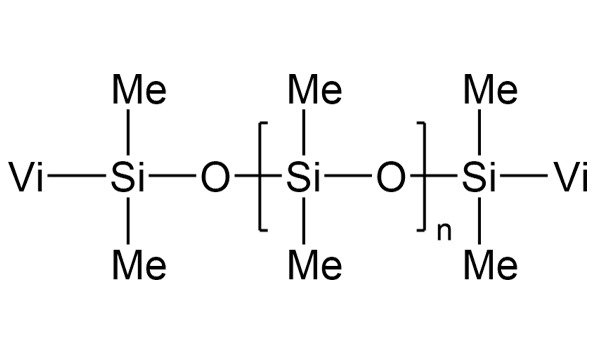

If you want to know other questions about Silicone Emulsion, please contact us and we will provide professional answers.
Popular Recommendations
Get a Catalog & Best Price
- Quick and helpful reply within 24 hours;
- Tailored solutions provided for your project;
- One-stop purchasing service.
Need More Technical Information?
Silico® ORGANOSILICON
- Address: Daiyue Industrial Area, Taian, Shandong, China
- © Copyright 2022 Silico® . All Rights Reserved