2026-09-10

Silicone resin is widely used as a binder for high-temperature coatings, electrical insulation, heat-resistant paints, automotive components, industrial equipment, and protective coatings.
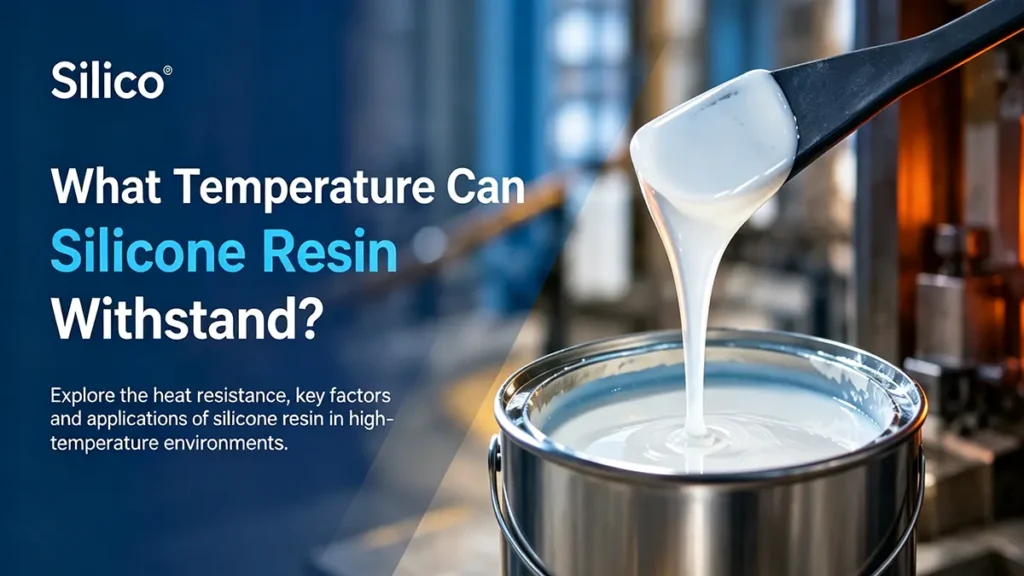
But how much temperature can silicone resin actually withstand?
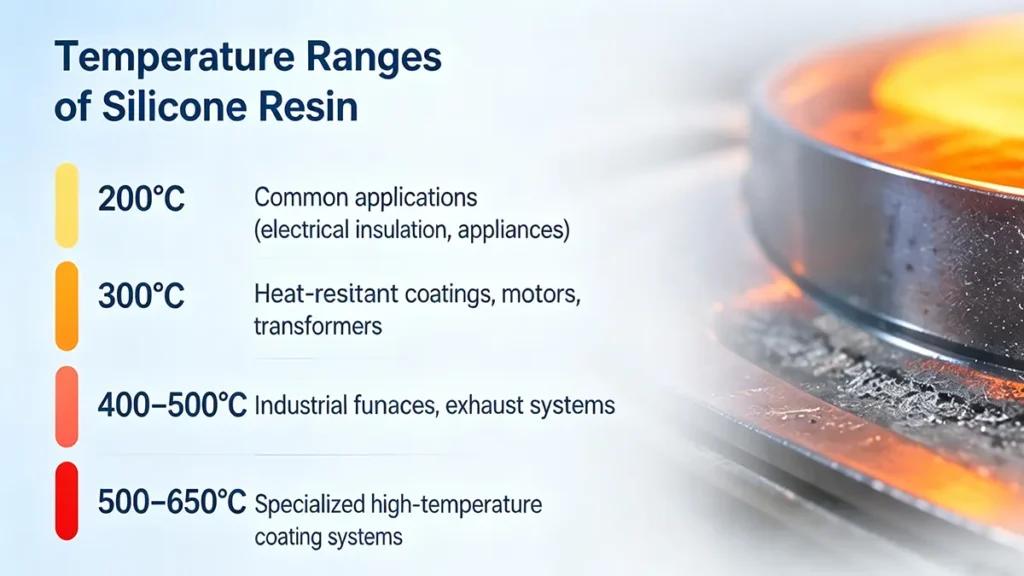
There is no single temperature rating for all silicone resins. In general, many standard silicone resin systems are suitable for approximately 200–300°C, while specially formulated high-temperature silicone resin coatings can be designed for 400–650°C or higher under specific conditions.
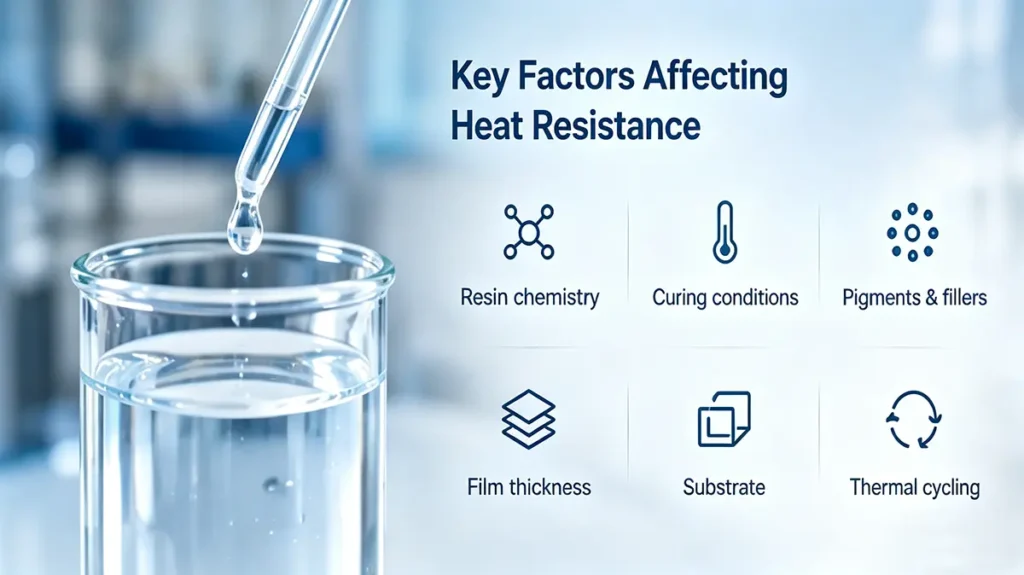
The actual temperature resistance depends on the resin chemistry, curing conditions, pigments and fillers, coating thickness, substrate, and whether the coating is exposed continuously or only to short-term temperature peaks.
For companies looking for silicone resin for high-temperature coatings, electrical insulation, or other demanding applications, Silico® provides silicone-based materials for a range of industrial applications and can help customers evaluate resin selection according to specific processing and performance requirements.
| Temperature Range | Typical Applications |
|---|---|
| Up to 200°C | Electrical insulation, appliances, industrial coatings |
| 200–300°C | Heat-resistant paints, motors, transformers, metal coatings |
| 300–400°C | Industrial ovens, exhaust components, furnaces |
| 400–500°C | High-temperature protective coatings and industrial equipment |
| 500–650°C | Specialized high-temperature coating systems |
| Above 650°C | Highly specialized applications requiring formulation-specific testing |
These figures are general application ranges rather than universal specifications.
For example, Shin-Etsu describes silicone resins for heat-resistant paints and electrical insulation, with products designed for applications around 250°C and above. Some of its methyl-phenyl silicone resin systems are evaluated in the 250–350°C range.
At higher temperatures, Dow publishes silicone resin coating systems with service temperatures of approximately 540°C, while certain aluminum-pigmented formulations can reach 650°C under specified conditions.
Therefore, it is more accurate to discuss the temperature resistance of a specific silicone resin system rather than silicone resin as a single material.
The primary reason is the structure of the silicone polymer.
Silicone resin contains a backbone based on:
Si–O–Si
The silicon-oxygen structure provides high thermal and oxidative stability compared with many conventional organic polymers.
This gives silicone resin several useful properties at elevated temperatures:
These properties explain why silicone resin is widely used in heat-resistant coatings and electrical insulation materials.
However, silicone resin is not completely resistant to thermal degradation. At sufficiently high temperatures, organic groups can oxidize and the cured material can gradually lose mass and change its physical properties.
For this reason, the temperature rating of a finished coating should always be considered together with the formulation and operating conditions.
Around 200°C is within the practical operating range of many silicone resin systems.
Typical applications include:
For these applications, resin selection should consider not only temperature but also curing conditions, adhesion, film thickness, and thermal cycling.
At approximately 300°C, the choice of silicone resin becomes more important.
Typical applications include:
Methyl-phenyl silicone resins are commonly considered for this range because they can provide a balance of heat resistance, hardness, flexibility, and resistance to cracking.
For example, Shin-Etsu reports coating performance for certain silicone resin systems in the 250–350°C range under specified test conditions.
At 400–500°C, the complete coating formulation becomes increasingly important.
The formulator needs to consider:A resin suitable for 250°C should not automatically be assumed to be suitable for 500°C.
Some specialized silicone resin coating systems can.
For example, Dow reports that certain coatings based on DOWSIL™ silicone resin systems can provide heat resistance to approximately 540°C, with specific aluminum-pigmented formulations reaching 650°C under defined application conditions.
At these temperatures, performance depends heavily on the entire coating system.
Potential failure mechanisms include:
Therefore, a statement such as “silicone resin withstands 650°C” should always be accompanied by the test conditions or application details.
This distinction is particularly important when comparing technical data from different silicone resin manufacturers.
The chemical structure of the silicone resin affects its thermal and mechanical properties.
Two commonly used categories are:Methyl silicone resins are used in applications requiring heat resistance, hardness, weatherability, and water repellency.
Methyl-phenyl silicone resins are widely used in high-temperature coatings because they can offer a useful balance between:
For example, Shin-Etsu’s KR-series silicone resins include products designed for heat-resistant paints, with different grades emphasizing properties such as hardness or resistance to cracking and peeling.
The best resin therefore depends on the application rather than simply choosing the resin with the highest published temperature.
Methyl, phenyl, and modified silicone resins can have different thermal performance.
Insufficient curing can reduce hardness, adhesion, chemical resistance, and thermal stability.
The pigment and filler system can significantly affect high-temperature performance.
This is one reason why two coatings using the same silicone resin may have different temperature ratings.
An excessively thick coating can increase internal stress and contribute to cracking or blistering during heating.
Steel, stainless steel, aluminum, ceramic, and other substrates have different thermal expansion characteristics.
Repeated heating and cooling can be more demanding than constant-temperature exposure.
For example:
25°C → 300°C → 25°C
repeated many times can cause cracking or adhesion loss even when a coating can tolerate a constant 300°C temperature.
This distinction is critical when selecting silicone resin.
Consider these two specifications:
Continuous operating temperature: 300°C
versus:
Short-term peak temperature: 500°C
They do not describe the same performance.
A coating may tolerate 500°C for a short period but fail during continuous exposure at 500°C.
When evaluating a silicone resin, ask for data covering:
This information provides a much more useful basis for resin selection than a single maximum-temperature number.
Determine the normal continuous temperature and the maximum temperature.
For example:
250°C continuous + 350°C peak
is a very different requirement from:
500°C continuous.
The final coating should be evaluated under conditions that reproduce the intended application.
Important tests may include:
For high-temperature applications, this final step is particularly important. The performance of the finished coating is more meaningful than the theoretical thermal stability of the liquid resin itself.
For applications requiring a balance of heat resistance, weatherability, electrical properties, and coating performance, Silico® offers silicone resin solutions for industrial applications and can provide technical information to support resin selection and formulation development.
Many silicone resin systems are used in the 200–300°C range. Specialized high-temperature coating systems can reach approximately 400–650°C or higher under specific conditions.
The exact rating depends on resin chemistry, formulation, curing, substrate, and exposure conditions.
Yes. Many silicone resin systems are suitable for applications around 200°C, including heat-resistant coatings and electrical insulation.
Yes. Certain methyl-phenyl and modified silicone resin systems are designed for applications in the 250–350°C range.
Some specialized silicone resin coating systems can withstand approximately 500°C, depending on formulation and test conditions.
Yes, some specialized formulations can reach approximately 600°C or higher. Certain commercial silicone resin coating systems are published with temperature ratings up to 650°C under specific conditions.
Yes. Methyl-phenyl silicone resin is widely used in high-temperature coatings because it can provide a useful combination of heat resistance, hardness, flexibility, and crack resistance.
So, what temperature can silicone resin withstand?
A practical answer is:
The most important point is that silicone resin does not have one universal maximum temperature.
The correct selection depends on the resin chemistry, continuous operating temperature, peak temperature, exposure time, curing conditions, pigments, fillers, coating thickness, substrate, and thermal cycling requirements.
For engineers and coating manufacturers, the best approach is therefore to select silicone resin based on the complete application rather than choosing a product simply because it has the highest temperature number on a technical datasheet.
For manufacturers developing high-temperature coatings, electrical insulation materials, automotive coatings, or other silicone-based formulations, Silico® provides silicone resin materials and technical support for application-specific requirements.