Silicone Resin Coatings: Properties, Uses and Limitations
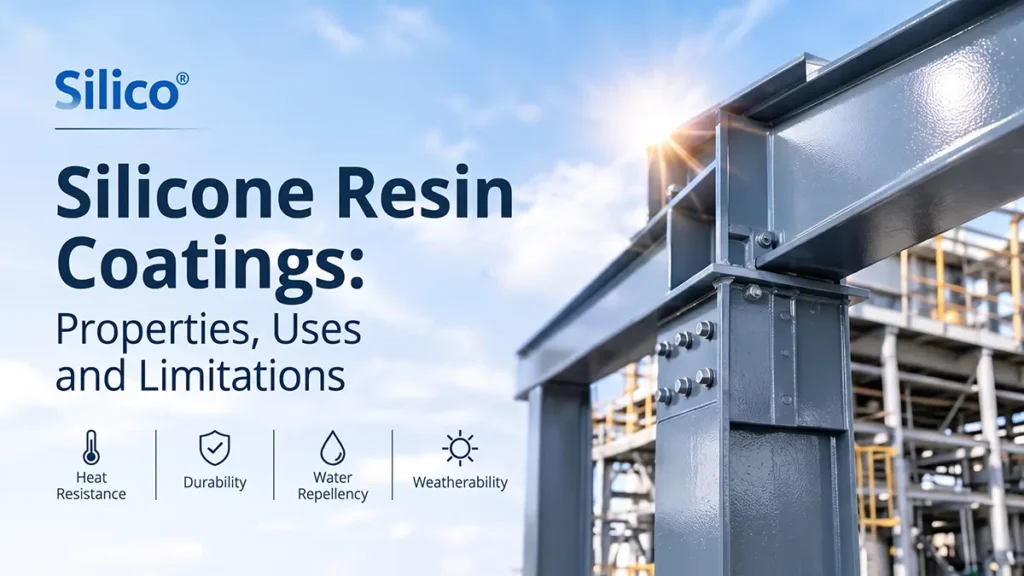
Silicone resin coatings are specialized protective and functional coatings known for their heat resistance, weatherability, oxidation stability, water repellency and electrical insulation properties. They are widely used in applications where conventional organic coatings may lose their mechanical or protective performance under elevated temperatures, prolonged UV exposure or demanding environmental conditions.
Unlike conventional acrylic, alkyd or epoxy coatings, silicone resin coatings are based on a three-dimensional siloxane network containing silicon–oxygen (Si–O–Si) bonds. This molecular structure provides a different balance of thermal stability, flexibility, surface hardness and chemical resistance. By modifying the organic groups attached to silicon atoms, particularly methyl and phenyl groups, formulators can adjust the properties of the resulting coating film.
Silicone resin coatings are used in industrial equipment, exhaust systems, furnaces, heat exchangers, metal structures, electrical insulation and weather-resistant protective finishes. Depending on the resin chemistry, pigment selection and curing conditions, specialized formulations can operate at temperatures considerably higher than those tolerated by conventional organic coating systems.
For manufacturers and formulators evaluating organosilicon raw materials, Silico® recognizes silicone resin selection as a formulation-specific decision. The resin structure, binder composition, substrate preparation, pigment system and curing process must all be considered to achieve the required coating performance.
This article examines how silicone resin coatings work, their main chemical structures, technical properties, industrial applications, formulation considerations and practical limitations.
Table of Contents
- 1. What Are Silicone Resin Coatings?
- 2. Chemical Structure and Main Types of Silicone Resins
- 3. Key Properties of Silicone Resin Coatings
- 4. Main Industrial Applications of Silicone Resin Coatings
- 5. Formulation, Application and Curing Considerations
- 6. Limitations and Common Performance Challenges
- 7. Silicone Resin vs. Epoxy, Acrylic and Polyester Coatings
- 8. Conclusion
- Frequently Asked Questions
1. What Are Silicone Resin Coatings?
Silicone resin coatings are coating systems in which silicone resin acts as the primary film-forming binder or as a significant component of a hybrid binder system.
The resin forms a crosslinked siloxane network after drying and curing. This network provides the coating with thermal and environmental stability while the organic groups attached to the silicon atoms help control film flexibility, hardness, compatibility and other physical characteristics.
The fundamental chemical structure of silicone resin differs from that of conventional organic coating binders.
Most organic resins rely primarily on carbon-based polymer backbones. Silicone resins contain an inorganic silicon–oxygen backbone with organic substituents attached to silicon atoms. The Si–O bond has a bond dissociation energy of approximately 108 kcal/mol, compared with approximately 82.6 kcal/mol for a typical carbon–carbon bond. This contributes to the thermal and radiation stability associated with silicone materials.
1.1 How Silicone Resin Coatings Form a Protective Film
- Application: The liquid resin, usually supplied in a solvent, aqueous dispersion or other delivery form, is applied to the prepared substrate.
- Solvent evaporation or water removal: The carrier evaporates or is removed, allowing the resin components to become concentrated in the coating film.
- Chemical crosslinking: Reactive groups, such as silanol or alkoxy groups, undergo condensation reactions to form additional siloxane bonds.
- Film development: The crosslinked structure develops the required hardness, adhesion, thermal stability and protective characteristics.
1.2 Three Major Components of a Silicone Coating System
| Component | Function | Typical examples |
|---|---|---|
| Silicone resin binder | Forms the coating film and provides the main performance characteristics | Methyl silicone resin, methyl phenyl silicone resin |
| Pigments and fillers | Control color, opacity, reinforcement and high-temperature performance | Aluminum, titanium dioxide, iron oxide, mica, silica |
| Solvents and additives | Adjust application viscosity, dispersion, processing and film properties | Xylene, butyl acetate, catalysts and suitable surface additives |
For high-temperature applications, the interaction between the silicone resin and inorganic pigments is particularly important. In some formulations, hydroxyl-bearing pigment surfaces participate in reactions with the resin during curing and subsequent high-temperature exposure, contributing to the formation of metal–silicone composite structures.
This is one reason why the maximum operating temperature of a finished silicone coating cannot be determined from the resin’s chemical name alone.
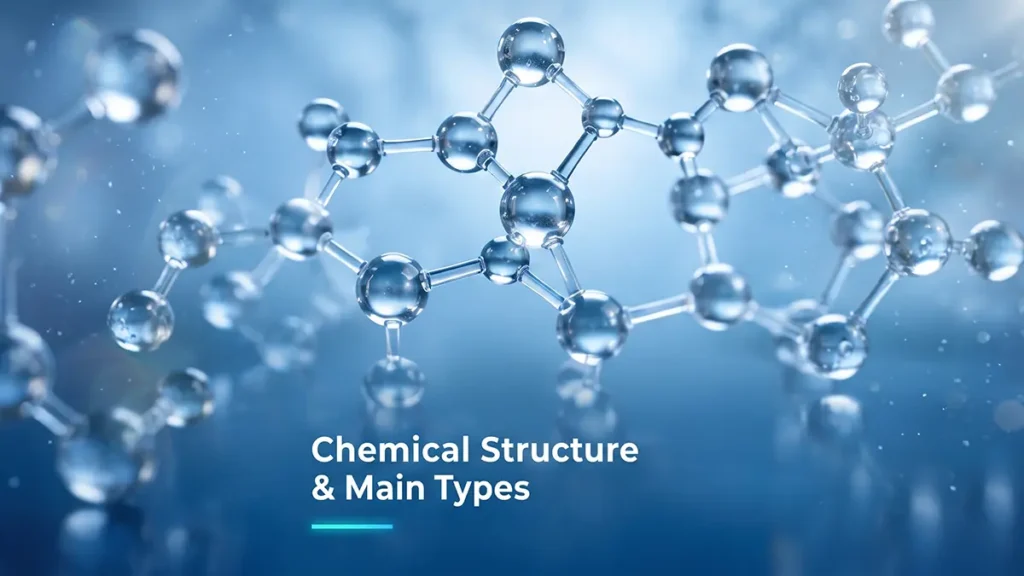
2. Chemical Structure and Main Types of Silicone Resins
The performance of silicone resin coatings is strongly influenced by their molecular structure, particularly the distribution of different siloxane structural units and the organic groups attached to silicon.
2.1 Understanding M, D, T and Q Structural Units
| Unit | Chemical representation | Structural characteristic |
|---|---|---|
| M | R₃SiO₁/₂ | Monofunctional end unit |
| D | R₂SiO₂/₂ | Difunctional chain unit |
| T | RSiO₃/₂ | Trifunctional branching unit |
| Q | SiO₄/₂ | Tetrafunctional network unit |
- M units generally terminate siloxane structures and influence molecular weight and end-group functionality.
- D units contribute to chain-like structures and can help provide flexibility.
- T units introduce branching and contribute to three-dimensional network formation.
- Q units create highly condensed inorganic-like network structures.
2.2 Methyl Silicone Resin
- Good heat resistance.
- Strong water-repellent properties.
- High surface hardness in appropriately crosslinked systems.
- Good electrical insulation characteristics.
- Favorable thermal behavior in selected high-temperature formulations.
2.3 Methyl Phenyl Silicone Resin
- Good thermal stability.
- Improved compatibility with selected organic resin systems.
- Good resistance to outdoor weathering and UV exposure.
- Balanced hardness and flexibility.
- Potential suitability for industrial protective and heat-resistant coatings.
2.4 Silicone-Modified Organic Resins
- Acrylic resins.
- Polyester resins.
- Alkyd resins.
- Epoxy-based systems.
2.5 Comparison of Main Silicone Resin Types
| Property | Methyl Silicone Resin | Methyl Phenyl Silicone Resin | Silicone-Modified Organic Resin |
|---|---|---|---|
| Heat resistance | Good | Good to excellent, depending on formulation | Depends on silicone content and organic binder |
| Water repellency | Generally very good | Generally good | Formulation-dependent |
| Surface hardness | Can be high | Adjustable | Depends on the organic component |
| Flexibility | Structure-dependent | Often favorable at elevated temperatures | Depends on resin combination |
| Weatherability | Good | Generally very good | Depends on the blend |
| Organic resin compatibility | Grade-dependent | Often improved by phenyl modification | Designed for specific binder combinations |
| Typical applications | Protective and insulating coatings | High-temperature industrial coatings | Industrial topcoats and hybrid protective systems |
These are general chemical tendencies rather than guaranteed product specifications. Actual performance must be confirmed using the technical data sheet of the selected resin.
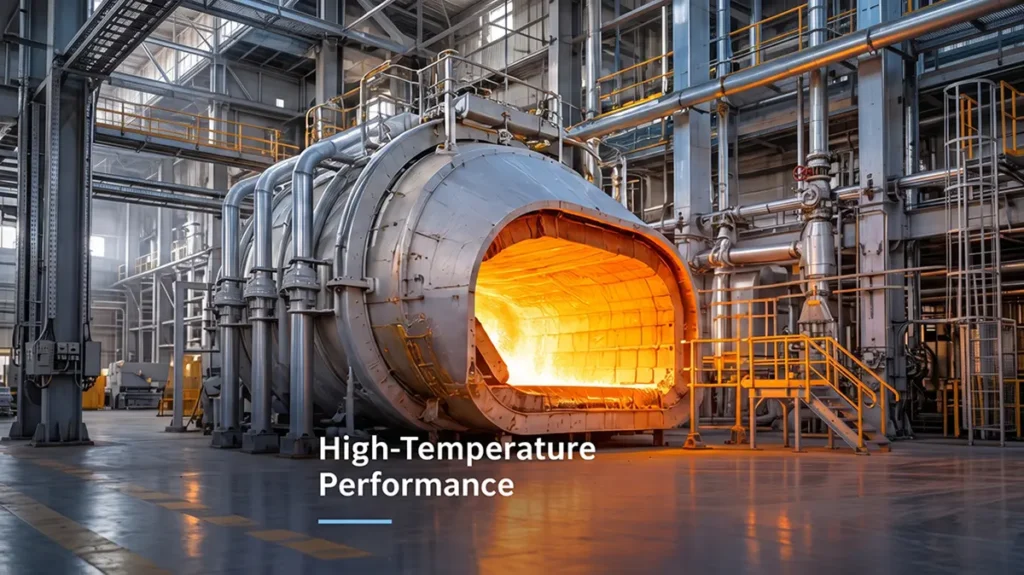
3. Key Properties of Silicone Resin Coatings
Silicone resin coatings are selected primarily because their combination of thermal, environmental and electrical properties meets requirements that can be difficult for conventional organic coating systems.
3.1 High-Temperature Resistance
- The thermal stability of the silicone resin itself.
- The curing temperature required to develop the coating film.
- The continuous operating temperature of the complete coating.
- The maximum temperature the coating can tolerate for short periods.
| Silicone coating system | Indicative temperature capability | Important qualification |
|---|---|---|
| Methyl silicone resin | Around 200°C for selected long-term applications | Depends on resin chemistry and formulation |
| Methyl phenyl silicone resin | Around 250°C for selected long-term applications | Depends on crosslinking and film properties |
| Silicone resin with suitable inorganic pigments | Around 350°C | Requires a suitable pigment and binder system |
| Silicone resin with aluminum or micaceous iron oxide pigments | Up to approximately 600°C in selected formulations | Specialized high-temperature coating design |
Momentive’s published technical overview provides these representative temperature levels for different silicone resin and pigment combinations.
Higher temperatures are possible in certain specially formulated products. For example, Evonik’s SILIKOPHEN® P80/MPA technical data sheet describes a methyl phenyl silicone resin used with metallic pigments and special formulations for continuous heat resistance up to 650°C. This product has approximately 80% non-volatile content and a specified curing condition of 250°C for 30 minutes.
These figures must not be interpreted as universal temperature ratings for every methyl phenyl resin. The final operating limit depends on formulation design, substrate, exposure duration, atmosphere, film thickness and thermal cycling.
3.2 Weatherability and UV Resistance
- Bridges and steel infrastructure.
- Offshore equipment.
- Industrial storage tanks.
- Wind turbine components.
- Chemical processing facilities.
- Outdoor industrial structures.
3.3 Water Repellency and Moisture Resistance
- Reduced surface wetting.
- Improved water repellency.
- Better protection against moisture exposure.
- Reduced water absorption in suitable systems.
- Improved durability in selected outdoor applications.
3.4 Electrical Insulation and Dielectric Properties
Silicone resins are also used in electrical insulation applications because of their dielectric characteristics and thermal stability.
Potential applications include:
Electrical insulating varnishes.
Motor and generator components.
Transformer-related insulation systems.
Glass-fiber and mica-based insulating materials.
Electrical equipment exposed to elevated temperatures.
Momentive’s TSR117 methyl phenyl silicone resin, for example, is described as suitable for consideration in electrical insulating varnishes and applications involving Class H insulation materials. The published bulletin reports a typical solids content of 50% and viscosity of approximately 140 mPa·s at 25°C.
Class H insulation is associated with a thermal class of 180°C. However, the classification of an electrical insulation system depends on the complete insulation system and applicable standards, not simply the use of one silicone resin.
3.5 Surface Hardness and Abrasion-Related Performance
The three-dimensional crosslinked structure of silicone resins can produce relatively hard coating films.
This is useful where surface durability, resistance to handling damage and dimensional stability are important.
However, hardness and toughness are not the same property. A highly crosslinked resin may produce a hard surface but can also become brittle if its structure and formulation do not provide sufficient flexibility.
The appropriate balance depends on the coating thickness, substrate movement, temperature variation and mechanical requirements.
3.6 Oxidation and Corrosion Protection
- Formation of a stable crosslinked binder structure.
- Reduction of direct moisture contact with the substrate.
- Incorporation of heat-stable inorganic pigments.
- Development of a more inorganic, silica-rich residue during severe thermal exposure.
4. Main Industrial Applications of Silicone Resin Coatings
Silicone resin coatings are used in industries where temperature resistance, environmental durability or electrical insulation is more important than simply achieving a decorative finish.
The appropriate resin type depends on the operating environment, substrate material, required service life and applicable performance standards.
4.1 High-Temperature Industrial Equipment
- Industrial furnaces and ovens.
- Boiler casings and heating equipment.
- Exhaust manifolds and mufflers.
- Industrial chimneys and stacks.
- Heat exchangers.
- Combustion chambers.
- High-temperature pipelines and processing vessels.
4.2 Automotive and Transportation Applications
- Exhaust pipes and mufflers.
- Engine-related metal components.
- Heat shields.
- Heating and ventilation components.
- Selected high-temperature metal surfaces.
4.3 Industrial Corrosion Protection and Infrastructure
- Industrial storage tanks.
- Steel bridges and structures.
- Offshore equipment.
- Chemical processing facilities.
- Industrial pipelines.
- Outdoor equipment and metal enclosures.
4.4 Electrical Insulating Coatings
- Motor and generator insulation.
- Electrical insulating varnishes.
- Mica-based insulation materials.
- Glass-fiber insulating laminates.
- Selected high-temperature electrical components.
4.5 Cookware, Bakeware and Consumer Appliances
- Heat stability.
- Adhesion to metal substrates.
- Surface hardness.
- Resistance to repeated heating.
- Suitable appearance and color retention.
- Compliance with applicable food-contact requirements. Food-contact compliance cannot be assumed from silicone chemistry alone. Each finished formulation must meet the regulatory requirements for its intended market and use conditions.
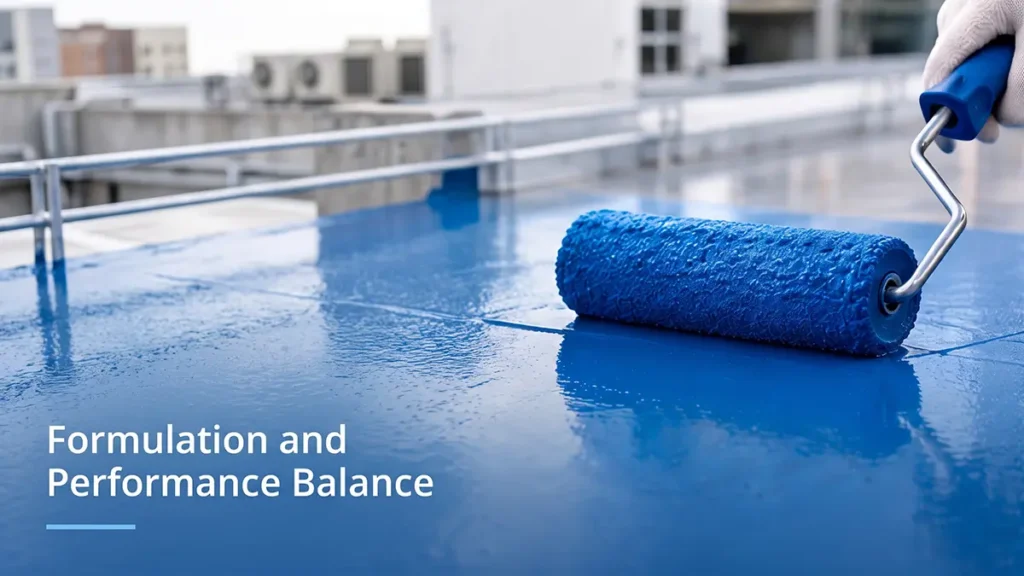
5. Formulation, Application and Curing Considerations
The properties of a finished silicone resin coating depend on how the resin is formulated and processed.
Selecting an appropriate silicone resin is only the starting point. Pigments, fillers, catalysts, solvents, substrate preparation and curing conditions can substantially affect the final performance.
5.1 Resin Selection and Binder Composition
- A predominantly silicone resin binder.
- A silicone-modified organic binder.
- A methyl silicone resin.
- A methyl phenyl silicone resin.
- A specially functionalized silicone resin.
| Performance temperature range | Suggested binder direction | Silicone proportion | Pigment guidance |
|---|---|---|---|
| 121–204°C | Silicone-modified organic resin | 15–50% | Broad pigment selection |
| 204–316°C | Silicone-modified organic or organic-modified silicone | 15–90% | Leafing aluminum or heat-stable pigments |
| 316–427°C | Organic-modified silicone or silicone resin | 51–100% | Black iron oxide, leafing aluminum or selected inorganic pigments |
| 427–538°C | Silicone resin | 100% | Black iron oxide or leafing aluminum |
| 538–760°C | Specialized silicone system | 100% | Ceramic pigments |
Reference: Dow, Silicone Resins and Intermediates Selection Guide. The guide’s table identifies these as performance-temperature ranges with a 1,000-hour minimum reference condition. They are formulation-selection guidelines, not guaranteed ratings for all silicone resins or finished coatings.
5.2 Pigment and Filler Selection
| Pigment or filler | Typical function in silicone resin coatings |
|---|---|
| Aluminum pigment | Heat-resistant metallic finish and protective pigment structure |
| Titanium dioxide | Opacity, whiteness and selected high-temperature formulations |
| Iron oxide pigments | Color and thermal stability |
| Micaceous iron oxide | Lamellar barrier reinforcement and protective coating applications |
| Mica | Reinforcement and improved resistance to film deterioration |
| Silica | Reinforcement and modification of mechanical properties |
| Wollastonite | Inorganic reinforcement and dimensional stability |
5.3 Catalyst Selection and Crosslinking
Silanol-functional resins
Alkoxy-functional resins
5.4 Film Thickness and Application
- Air spraying.
- Conventional spray application.
- Brushing.
- Roller application, where suitable.
- Other industrial coating processes specified by the product manufacturer.
5.4 Film Thickness and Application
| Performance temperature range | Suggested binder direction | Silicone proportion | Pigment guidance |
|---|---|---|---|
| 121–204°C | Silicone-modified organic resin | 15–50% | Broad pigment selection |
| 204–316°C | Silicone-modified organic or organic-modified silicone | 15–90% | Leafing aluminum or heat-stable pigments |
| 316–427°C | Organic-modified silicone or silicone resin | 51–100% | Black iron oxide, leafing aluminum or selected inorganic pigments |
| 427–538°C | Silicone resin | 100% | Black iron oxide or leafing aluminum |
| 538–760°C | Specialized silicone system | 100% | Ceramic pigments |
5.5 Substrate Preparation
- Oil and grease.
- Loose rust.
- Mill scale.
- Dust and other contaminants.
- Residual salts and processing residues.
5.6 Curing Temperature and Time
| Curing temperature | Typical curing time |
|---|---|
| 204°C | 60 minutes |
| 232°C | 30 minutes |
| 316°C | 6 minutes |
- Drying is not necessarily equivalent to full chemical curing.
- Oven temperature is not necessarily the same as actual substrate temperature.
- Initial film formation does not always indicate full high-temperature protection.
- A coating that requires thermal curing may not be suitable for large structures that cannot be heated.
5.7 Solvent Selection, VOC and Storage Stability
- Xylene.
- Toluene.
- Butyl acetate.
- Other suitable esters and ketones.
6. Limitations and Common Performance Challenges
Although silicone resin coatings offer several advantages, they are not suitable for every coating application.
Their performance depends on the balance between thermal stability, film flexibility, adhesion, chemical resistance and formulation cost. Understanding these limitations is essential when selecting materials for industrial use.
6.1 Film Brittleness and Cracking
- Repeated thermal expansion and contraction.
- Mechanical vibration.
- Impact or bending.
- Significant temperature changes.
- Differences in thermal expansion between the coating and substrate.
How to address it:
6.2 Thermal Degradation at Extremely High Temperatures
How to address it:
6.3 Adhesion and Substrate Compatibility
How to address it:
Establish the required substrate-preparation standard, evaluate primer compatibility and perform adhesion testing after the specified curing and thermal-exposure cycles.
6.4 Limited Chemical Resistance in Certain Environments
How to address it:
Identify the exact chemicals, concentration, temperature, exposure duration and whether contact is continuous or intermittent. Conduct immersion or chemical-resistance testing using the intended formulation.
6.5 High Curing Temperature Requirements
- Heat-sensitive plastic substrates.
- Large installed structures.
- Components that cannot be placed in an industrial oven.
- Assemblies containing temperature-sensitive electrical components.
How to address it:
Check the required curing schedule before choosing the resin. Where high-temperature baking is impractical, investigate an appropriately designed ambient-curing or low-temperature-curing silicone resin system.
6.6 Pigment and Color Restrictions
How to address it:
Select pigments based on their thermal stability, chemical compatibility and contribution to the protective film. Do not assume that a pigment suitable for a conventional decorative coating will remain stable in a high-temperature silicone system.
6.7 Solvent Content, VOC and Processing Costs
- VOC emission requirements.
- Workplace ventilation.
- Solvent storage and fire safety.
- Resin transportation and storage conditions.
- Production line compatibility.
- Energy consumption during curing.
6.8 Recoating and Repair Considerations
How to address it:
Evaluate compatibility with primers and subsequent topcoats, and establish a suitable repair procedure before the coating enters service.
7. Silicone Resin vs. Epoxy, Acrylic and Polyester Coatings
Silicone resin coatings are often compared with conventional organic coatings when selecting materials for industrial protection.
However, these resin families are designed around different performance priorities. The best choice depends on the operating environment rather than the general reputation of a particular resin.
7.1 Performance Comparison
| Property | Silicone Resin | Epoxy Resin | Acrylic Resin | Polyester Resin |
|---|---|---|---|---|
| High-temperature resistance | Excellent in suitable formulations | Generally limited compared with silicone | Generally limited | Formulation-dependent |
| UV and weather resistance | Very good | Generally requires additional protection for prolonged outdoor exposure | Generally good, depending on grade | Formulation-dependent |
| Water repellency | Generally very good | Depends on formulation | Depends on formulation | Depends on formulation |
| Chemical resistance | Application-dependent | Often very good | Moderate to good, depending on chemistry | Depends on formulation |
| Adhesion | Substrate- and formulation-dependent | Often very good | Generally good | Generally good |
| Surface hardness | Can be high | Generally high | Adjustable | Adjustable |
| Flexibility | Formulation-dependent | Formulation-dependent | Often good | Formulation-dependent |
| Typical applications | High-temperature and weather-resistant coatings | Industrial corrosion protection and chemical-resistant systems | Architectural and industrial coatings | Industrial finishes and coil coatings |
7.2 When Should You Choose Silicone Resin?
- Sustained exposure to elevated temperatures.
- Good UV and outdoor weathering resistance.
- Water repellency and moisture resistance.
- High-temperature electrical insulation.
- Protective performance under repeated thermal exposure.
- Compatibility with heat-stable inorganic pigments.
7.3 When Might an Organic Resin Be More Suitable?
An epoxy system may be preferable when strong adhesion, chemical resistance and corrosion protection at moderate temperatures are the dominant requirements.
Acrylic coatings may be more appropriate when appearance, weatherability, color retention and practical application are important.
Polyester coatings may provide a suitable balance of hardness, flexibility and processing characteristics in industrial finishing applications.
7.4 Why Are Silicone-Organic Hybrid Coatings Used?
- Silicone modification can improve thermal and UV resistance.
- Epoxy components can contribute adhesion and corrosion protection.
- Polyester components can contribute film formation and mechanical properties.
- Acrylic components can support weatherability and appearance.
8. Conclusion
Silicone resin coatings are important materials for industrial applications where thermal stability, weatherability, water repellency and electrical insulation are major performance requirements.
Their effectiveness comes from the combination of a stable siloxane backbone, appropriate organic substituents, crosslinked network structure and carefully selected formulation components.
Methyl silicone resins, methyl phenyl silicone resins and silicone-modified organic systems offer different balances of hardness, flexibility, compatibility and thermal performance. Selecting the right type requires an understanding of the actual operating temperature, substrate, pigment system, curing process and environmental exposure.
At the same time, silicone resin coatings have practical limitations. High curing temperatures, potential film brittleness, pigment restrictions, chemical compatibility and long-term performance under thermal cycling must all be considered during formulation and product selection.
For companies sourcing organosilicon raw materials, Silico® provides a starting point for exploring silicone resin materials and their potential industrial applications. Selecting a suitable resin should be based on technical specifications and the requirements of the complete coating system rather than a single advertised performance parameter.
A properly designed silicone resin coating is not simply a heat-resistant film. It is an engineered material system in which resin chemistry, pigments, substrate preparation and curing conditions work together to achieve reliable performance throughout its intended service life.
Frequently Asked Questions
Silicone resin coatings are mainly used in applications requiring heat resistance, weatherability, moisture resistance and electrical insulation.
Typical applications include industrial furnaces, exhaust systems, heat exchangers, pipelines, storage tanks, electrical insulating varnishes and selected cookware coatings.
The operating temperature depends on resin chemistry, pigment selection, binder composition and curing conditions.
As general manufacturer references, selected methyl silicone resin systems are considered for long-term service around 200°C, while selected methyl phenyl systems are considered around 250°C.
Specially formulated high-temperature coatings using inorganic or metallic pigments can achieve substantially higher operating temperatures, sometimes in the 500–650°C range or above. These figures apply to specific coating formulations and should not be interpreted as universal ratings for all silicone resins.
Methyl silicone resin contains predominantly methyl substituents and is known for its hydrophobic properties, hardness and thermal stability.
Methyl phenyl silicone resin contains both methyl and phenyl groups. Phenyl modification can improve temperature resistance, UV weathering performance, flexibility at elevated temperatures and compatibility with certain organic resins.
The preferred type depends on the required coating properties and formulation.
Yes. Silicone resin coatings are used on carbon steel and other metal substrates, particularly in high-temperature industrial applications.
Steel preparation is critical. Degreasing and abrasive blasting may be required to achieve reliable adhesion and protective performance.
The finished coating should be tested for adhesion, thermal cycling and corrosion resistance under the intended service conditions.
Not all silicone resin coatings require the same curing conditions.
Some specialized systems can cure at room temperature with suitable catalysts or reactive groups. Other formulations require baking, commonly around 200–250°C, to obtain optimum film properties.
Always follow the individual manufacturer’s curing instructions.
Silicone resin coatings generally provide good water-repellent properties, particularly when their structures contain methyl groups.
However, water repellency does not automatically mean complete waterproofing. Water resistance, film continuity, substrate preparation and long-term exposure conditions must be considered.
Yes. Certain silicone resins and intermediates are designed to modify or combine with organic resins, including epoxy and polyester systems.
The compatibility depends on resin functionality, molecular structure, solvent system, catalyst and curing mechanism.
A laboratory compatibility test should be performed before developing a production formulation.
Silicone Fluid related products
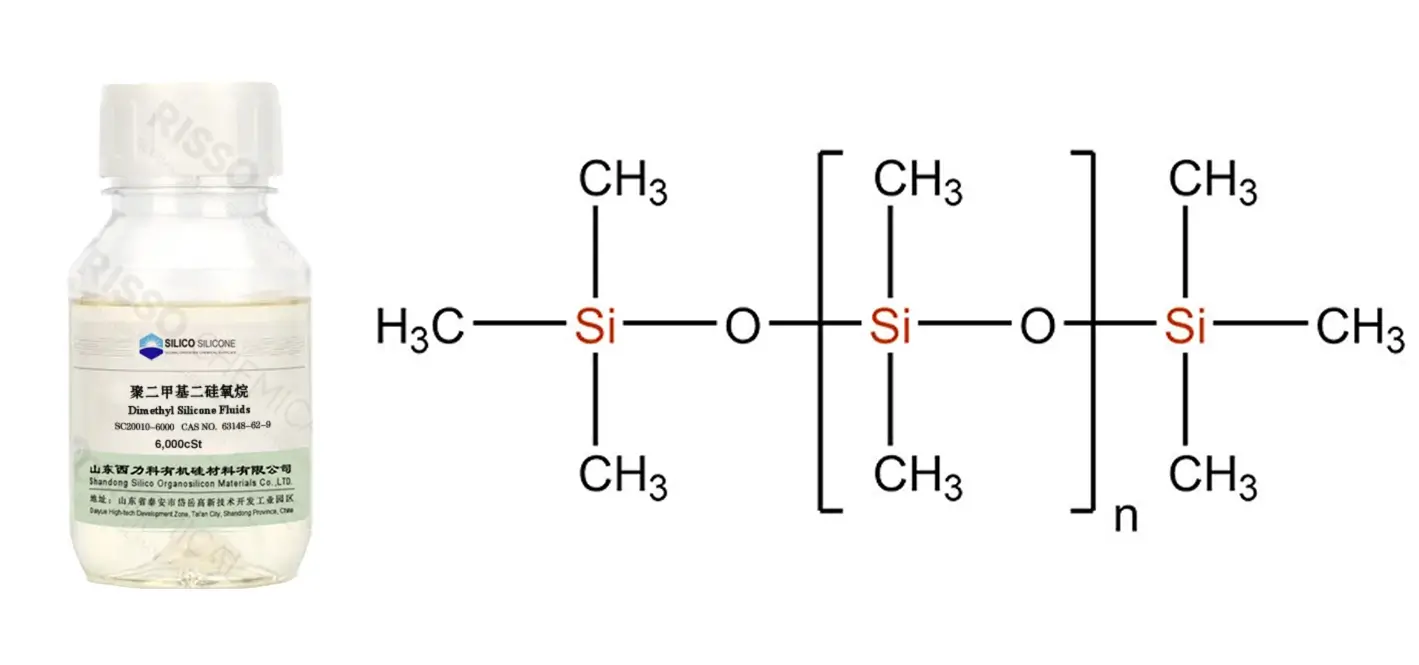
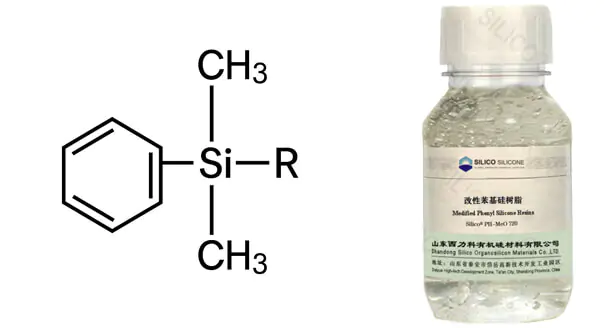

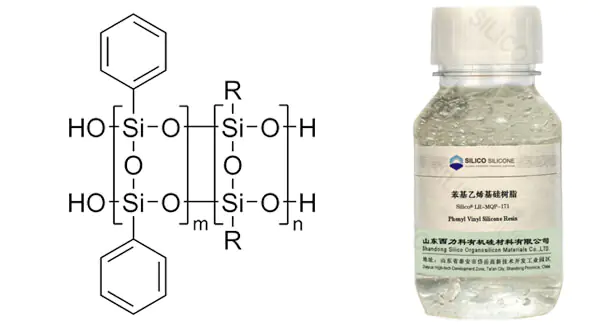
If you want to know other questions about Sillcone Fluid, please contact us and we will provide professional answers.
Popular Recommendations
Get a Catalog & Best Price
- Quick and helpful reply within 24 hours;
- Tailored solutions provided for your project;
- One-stop purchasing service.
Need More Technical Information?
Silico® ORGANOSILICON
- Address: Daiyue Industrial Area, Taian, Shandong, China
- © Copyright 2022 Silico® . All Rights Reserved