
What Is Silicone Coating? Types, Properties and Applications
Silicone coating is a coating system containing silicone resin, silicone polymer, silicone elastomer, silicone fluid, or silicone-based additives. Depending on its chemistry and curing system, it can provide heat resistance, water repellency, weatherability, electrical insulation, low surface energy, release performance, and surface protection.
Silicone coatings are used in industrial paints, protective coatings, release liners, electronics, metal surfaces, construction materials, textiles and other applications.
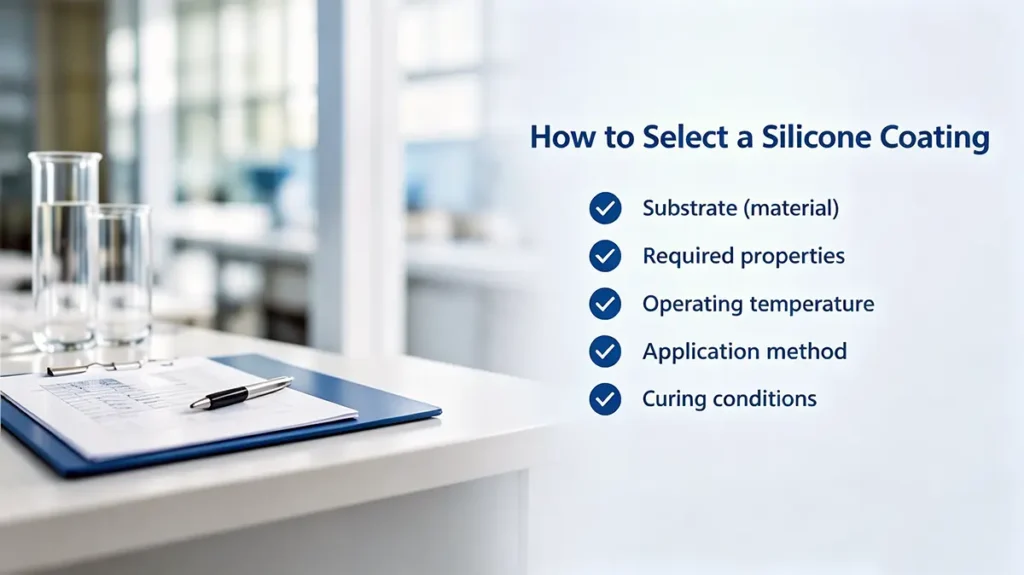
The correct coating depends on the substrate, required properties, operating temperature, application method and curing conditions.
Silico® supplies silicone fluids, silicone resins, silane coupling agents and related silicone materials for industrial coating and surface-treatment applications.
Table of Contents
1. What Is Silicone Coating?
Silicone coating is a functional coating based on siloxane chemistry, usually containing Si–O–Si structures.
Unlike conventional organic coatings, silicone-based materials can combine:
- High thermal stability
- Low surface energy
- Water repellency
- UV and weather resistance
- Electrical insulation
- Flexibility
- Low surface friction
- Controlled release
The term silicone coating covers several different technologies. A silicone resin coating designed for high-temperature metal protection is chemically and functionally different from a silicone release coating used on release paper.
Therefore, coating selection should be based on the required performance rather than the word “silicone” alone.
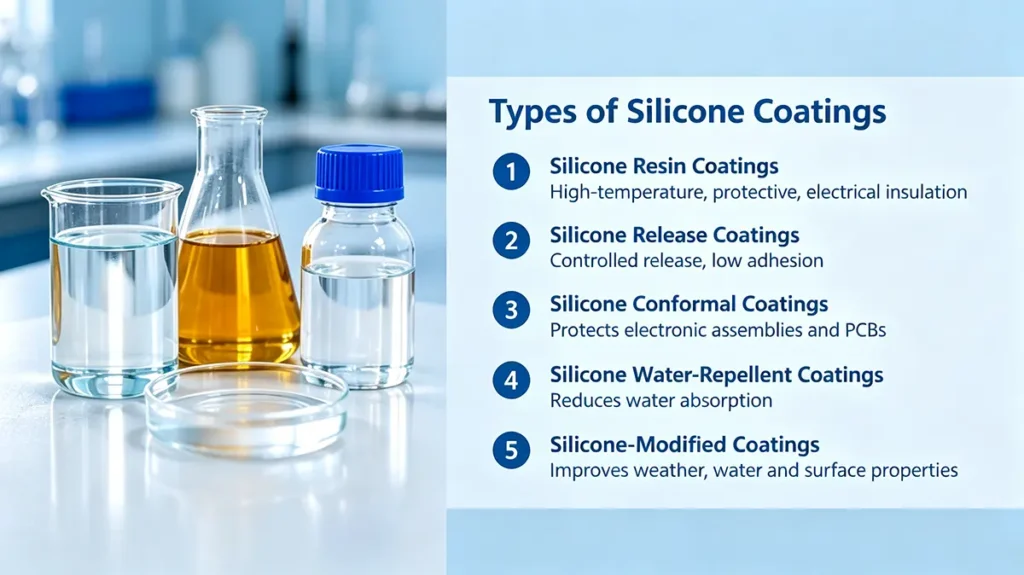
2. Types of Silicone Coatings
Silicone Resin Coatings
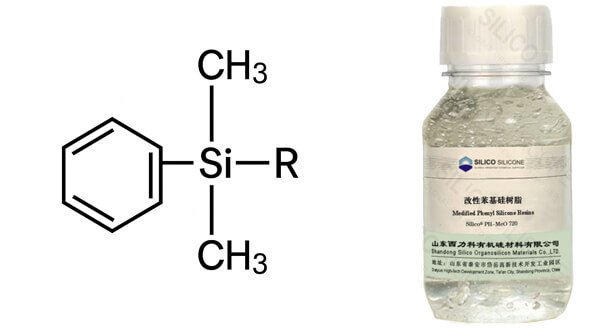
Silicone resin coatings use silicone resin as the primary or major film-forming component.
Common resin types include:- Methyl silicone resin
- Methyl-phenyl silicone resin
- Phenyl silicone resin
- Modified silicone resin
- Silicone-organic hybrid resin
They are commonly used for high-temperature paints, protective coatings, electrical insulation and weather-resistant finishes.
Depending on resin chemistry and formulation, some systems are designed for continuous service around 200–250°C, while specialized formulations can withstand substantially higher temperatures. Actual performance depends on the resin, pigments, substrate, film thickness and curing conditions.
Silicone Release Coatings
Silicone release coatings create a low-adhesion surface for materials that need controlled release.
Typical applications include:- Release liners
- Labels
- Pressure-sensitive tapes
- Adhesive films
- Medical products
- Packaging materials
Addition-cure and condensation-cure systems are both used. UV-curable systems are also available for high-speed coating processes.
A release coating is designed for controlled release force, not simply the lowest possible adhesion.
Silicone Conformal Coatings
Silicone conformal coatings are used primarily to protect electronic assemblies and PCBs.
They provide protection against:- Moisture
- Condensation
- Corrosion
- Contamination
- Electrical leakage
- Thermal cycling
Their flexibility allows the coating to accommodate movement caused by differences in thermal expansion between electronic components and substrates.
Application methods include spray, dip coating, dispensing and automated coating.
Silicone Water-Repellent Coatings
Silicone-based water-repellent treatments reduce surface wetting and water absorption.
They are commonly used on:- Concrete
- Masonry
- Stone
- Building façades
- Textiles
- Selected construction materials
Water repellency should not automatically be considered the same as waterproofing. A hydrophobic treatment can reduce water absorption without forming a completely impermeable membrane.
Silicone-Modified Coatings
- Acrylic
- Epoxy
- Polyester
- Polyurethane
- Alkyd
In these systems, silicone is used to improve selected properties such as weather resistance, water resistance, surface slip, leveling, heat resistance or surface energy.
This approach is common when the required performance cannot be achieved economically with silicone as the only binder.
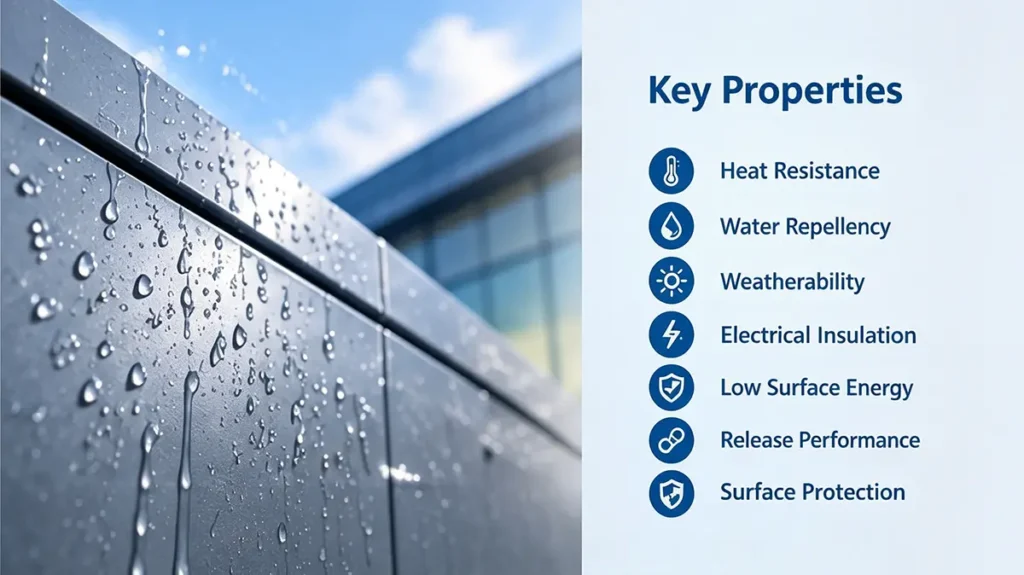
3. Key Properties of Silicone Coatings
Heat Resistance
Silicone chemistry is widely used in high-temperature coatings because of the thermal stability of the siloxane backbone.
Applications include:- Ovens
- Furnaces
- Exhaust components
- Heaters
- Industrial equipment
- Appliances
- High-temperature metal parts
The maximum service temperature must always be determined from the specific formulation and test data.
Weather and UV Resistance
Silicone’s low surface energy provides hydrophobic behavior and can reduce water wetting and penetration.
This property is particularly useful for construction materials and surface-treatment applications.
Low Surface Energy
- Wetting
- Leveling
- Slip
- Gloss
- Release
- Surface smoothness
Electrical Insulation
Silicone coatings can provide electrical insulation together with moisture and thermal resistance.
Typical applications include:- PCB conformal coatings
- Electrical components
- Coils
- Insulating varnishes
- Electronic assemblies
Flexibility
Silicone coatings can remain flexible over a wide temperature range.
This is important for substrates exposed to:- Thermal expansion
- Vibration
- Mechanical stress
- Repeated temperature cycling
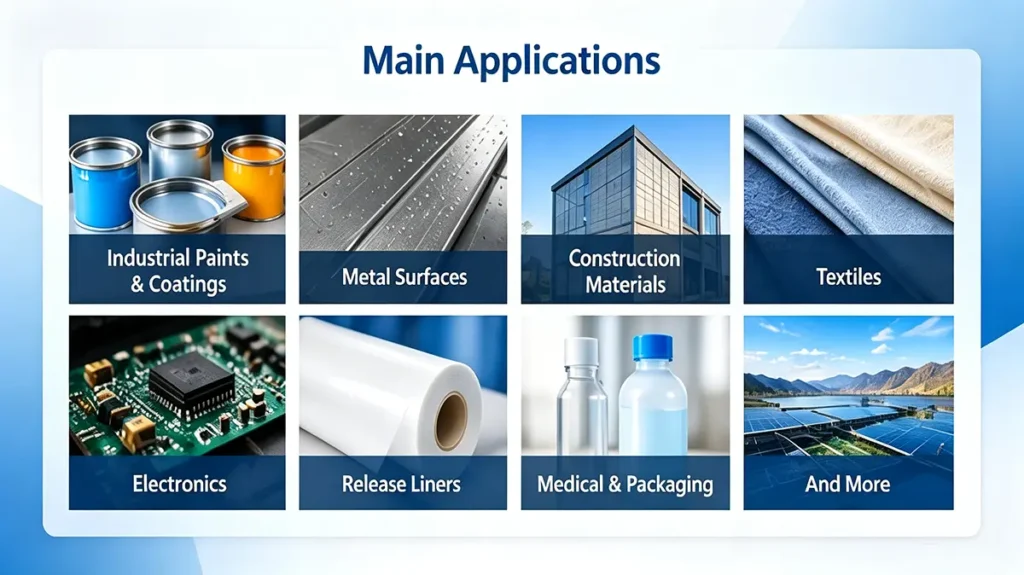
4. Main Silicone Coating Applications
| Application | Main Function |
|---|---|
| High-temperature coating | Heat and thermal-cycle resistance |
| Protective coating | Moisture, weather and surface protection |
| Anti-corrosion coating | Protection of metal surfaces |
| Release coating | Controlled low adhesion |
| Conformal coating | Electronic component protection |
| Water-repellent coating | Reduced water absorption |
| Electrical coating | Insulation and environmental protection |
| Coating additive | Wetting, leveling, slip and surface modification |
High-Temperature Industrial Coatings
Silicone resin coatings are used on metal components exposed to elevated temperatures, including exhaust systems, ovens, furnaces, heaters and industrial equipment.
Protective and Anti-Corrosion Coatings
Silicone-based systems can improve resistance to moisture, weathering and temperature exposure. They may be combined with pigments, fillers and other resins to meet specific corrosion-protection requirements.
Release Coatings
Release coatings are widely used for paper, films, labels and adhesive products where controlled separation is required.
Electronics
Silicone conformal coatings protect PCBs and electronic components from moisture, contamination and environmental exposure while maintaining flexibility.
Construction
Silicone water-repellent systems can reduce water absorption in porous mineral substrates while maintaining the required surface characteristics.
5. How to Select a Silicone Coating
5.1. Substrate
Identify whether the substrate is:
metal, glass, plastic, rubber, concrete, paper, textile or PCB.
Adhesion and surface preparation vary significantly between substrates.
5.2. Required Performance
- Heat resistance
- Water repellency
- Corrosion protection
- Electrical insulation
- Release
- Flexibility
- Chemical resistance
- UV resistance
5.3. Operating Temperature
- Minimum temperature
- Continuous temperature
- Peak temperature
- Exposure time
- Thermal cycling
A short-term temperature peak and continuous high-temperature exposure should not be treated as the same requirement.
5.4. Application Method
- Spray
- Dip
- Roll
- Brush
- Dispensing
- Screen printing
- Automated coating
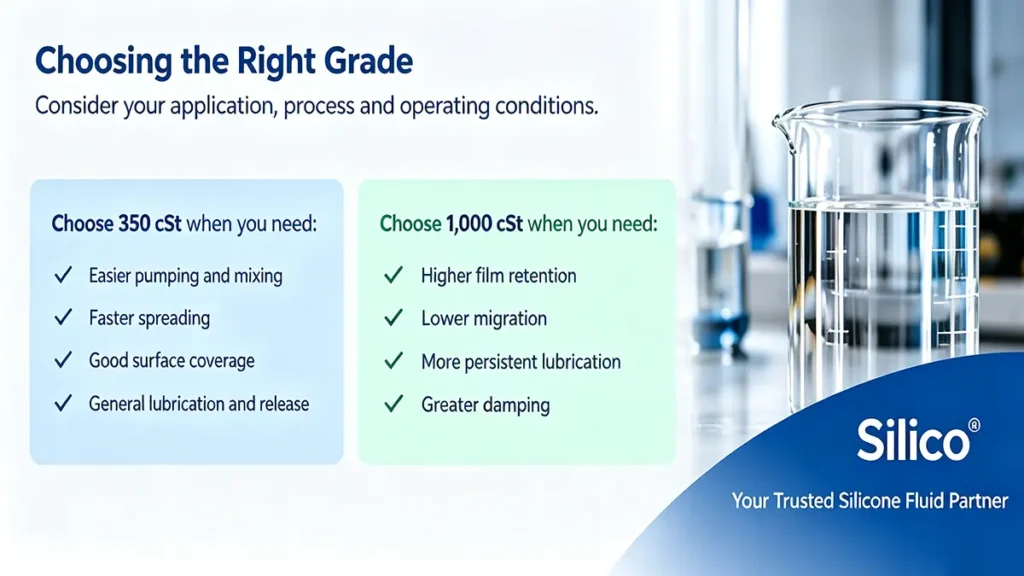
Viscosity affects atomization, spreading, leveling, penetration and film thickness.
5.5. Curing System
- Moisture cure
- Heat cure
- Addition cure
- Condensation cure
- UV cure
- Dual cure
The curing method must be compatible with both the substrate and production process.
5.6. Testing
Final selection should be verified using the actual:
substrate + formulation + application method + curing conditions.
Relevant tests may include:- Adhesion
- Hardness
- Water resistance
- Thermal aging
- UV aging
- Corrosion resistance
- Dielectric strength
- Release force
- Chemical resistance
6. Silicone Coating FAQs
Silicone coating is a coating system containing silicone resin, silicone polymer, silicone elastomer, silicone fluid or silicone-based additives. It can provide heat resistance, water repellency, release, electrical insulation and surface protection.
Common applications include high-temperature protection, corrosion protection, waterproofing and water repellency, electrical insulation, PCB conformal coating, release liners and industrial surface treatment.
Some silicone coatings provide strong water repellency or waterproofing performance, but these are different properties. A water-repellent treatment does not necessarily create an impermeable waterproof membrane.
Yes. Silicone resin coatings are widely used for high-temperature applications. Actual temperature resistance depends on resin chemistry, formulation, substrate, curing and exposure conditions.
A silicone release coating is a cured low-adhesion silicone layer used to facilitate controlled separation of adhesives and other tacky materials from paper, film or other substrates.
A silicone conformal coating is a protective film applied to electronic assemblies and PCBs to reduce the effects of moisture, contamination, corrosion and thermal cycling.
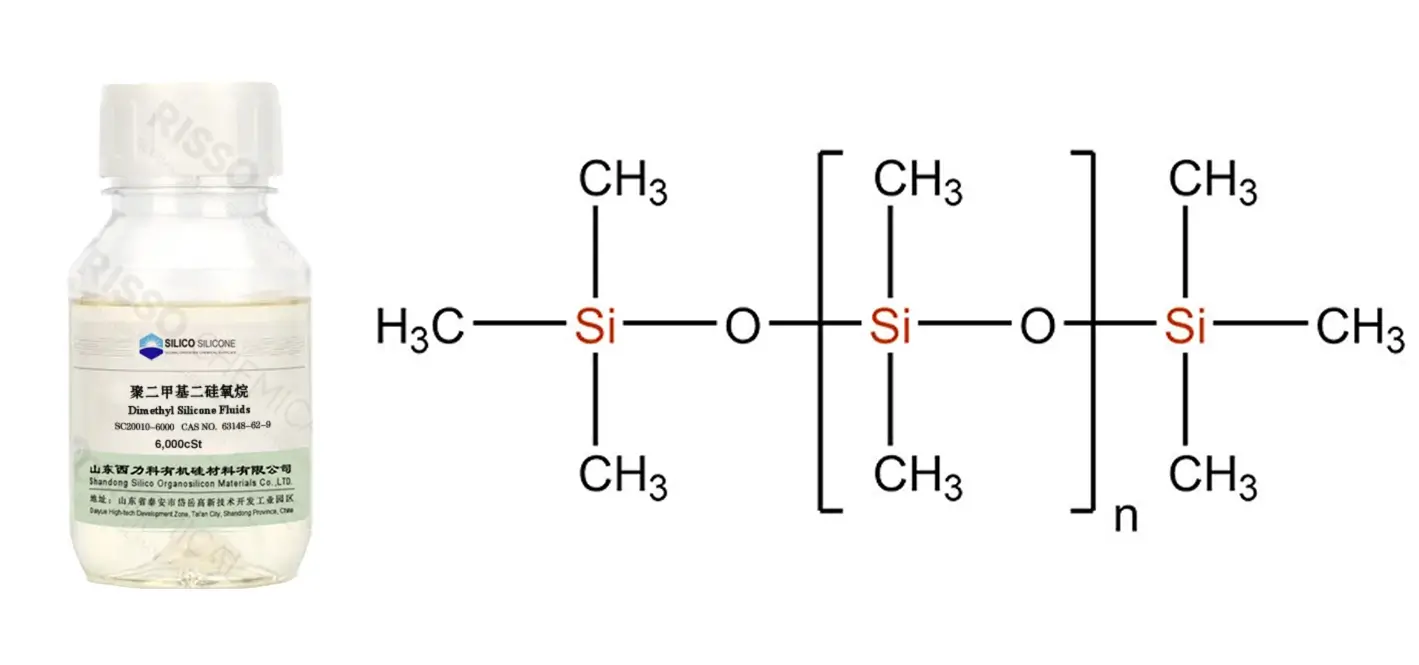
Yes. PDMS and other silicone fluids can be used as surface modifiers, leveling agents, slip additives, release additives and other functional components. Suitability depends on viscosity, compatibility and formulation chemistry.
Silicone coating is a broad term covering different silicone-based coating technologies. Silicone resin coating specifically uses silicone resin as an important film-forming component or binder.
Consider the substrate, required performance, operating temperature, chemical exposure, application method, curing system and target film thickness. Product testing under actual operating conditions is recommended.
7. Conclusion
Silicone coating is a broad technology covering silicone resin coatings, release coatings, conformal coatings, water-repellent treatments and silicone-modified coating systems.
The main advantages of silicone chemistry include thermal stability, weather resistance, hydrophobicity, low surface energy, flexibility and electrical insulation. However, no single silicone coating is suitable for every application.
The correct material should be selected according to:
Substrate → Performance → Temperature → Application → Cure → Testing
For industrial coating development, the distinction between silicone resin, silicone fluid, silicone additive, silicone release coating and silicone conformal coating is particularly important. Each serves a different technical function.
For manufacturers and formulators looking for silicone materials for coating development, Silico® provides silicone fluids, silicone resins, silane coupling agents and related materials for different industrial formulation requirements.
Silicone Fluid related products
If you want to know other questions about Sillcone Fluid, please contact us and we will provide professional answers.
Popular Recommendations
Get a Catalog & Best Price
- Quick and helpful reply within 24 hours;
- Tailored solutions provided for your project;
- One-stop purchasing service.
Need More Technical Information?
Silico® ORGANOSILICON
- Address: Daiyue Industrial Area, Taian, Shandong, China
- © Copyright 2022 Silico® . All Rights Reserved