
Fumed Silica BET Surface Area: What Buyers Should Know
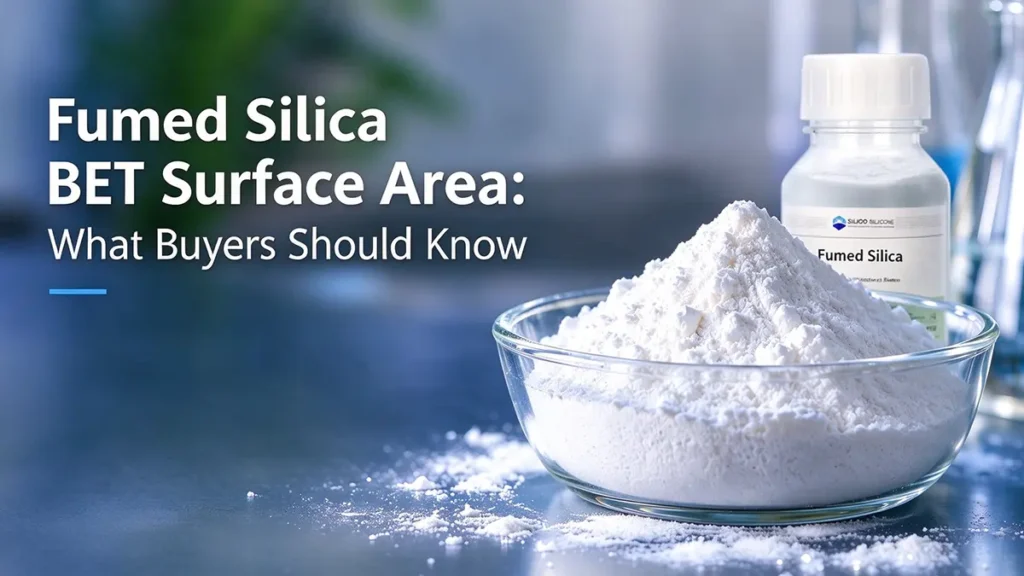
Fumed silica BET surface area is one of the most important technical parameters used to classify and compare commercial fumed silica grades. Expressed in square metres per gram (m²/g), it indicates the specific surface area measured through gas adsorption and helps buyers assess differences between products intended for rheology control, reinforcement, anti-settling, and other industrial applications.
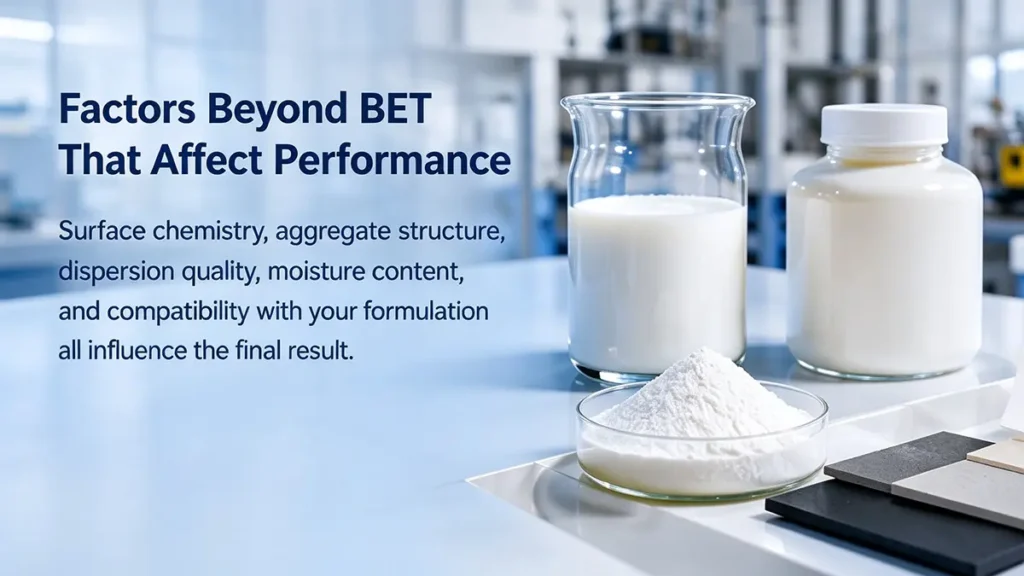
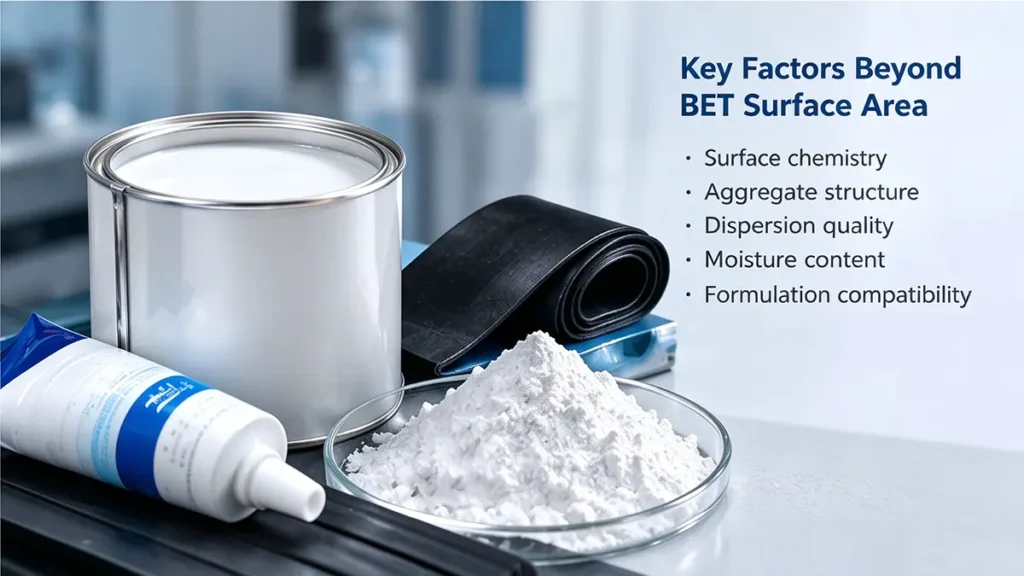
However, BET surface area alone cannot determine whether a fumed silica grade is suitable for a particular formulation. A grade with a higher BET value may offer greater potential for surface interactions, but actual performance also depends on surface chemistry, aggregate structure, dispersion quality, moisture content, and compatibility with the surrounding resin or polymer.
For example, Silico® FS 200 has a specified BET surface area range of 175–225 m²/g, while FS 300 has a range of 270–330 m²/g. These values distinguish the products by specific surface area, but they do not establish a direct ratio of viscosity, reinforcement efficiency, or required dosage.
For industrial buyers, the practical objective is to understand what the BET value tells them, identify the additional specifications that affect performance, and compare grades using consistent test methods and application-specific trials. Silico® provides a starting point for exploring industrial organosilicon materials and related product information, while the final selection of fumed silica should be based on verified technical data and the requirements of the intended formulation.
This guide explains the BET measurement principle, common commercial surface-area ranges, the relationship between BET and material performance, and the checks buyers should complete before approving a grade or supplier.
Table of Contents
- 1. What Is BET Surface Area in Fumed Silica?
- 2. How Is Fumed Silica BET Surface Area Measured?
- 3. Common BET Surface Area Ranges and Commercial Grades
- 4. How BET Surface Area Influences Industrial Performance
- 5. Why BET Surface Area Alone Is Not Enough
- 6. How to Select Fumed Silica by Application
- 7. BET Surface Area, Dosage, and Formulation Cost
- 8. Technical Data Sheet and Supplier Evaluation Checklist
- Conclusion
- Frequently Asked Questions (FAQs)
1. What Is BET Surface Area in Fumed Silica?
Why does fumed silica have a high surface area?
- Rheology modification: Increasing low-shear viscosity and influencing thixotropic behavior.
- Anti-settling performance: Helping maintain the suspension of pigments and other solid particles.
- Sag resistance: Reducing the tendency of coatings, adhesives, and sealants to flow under gravity.
- Reinforcement: Improving selected mechanical properties of silicone rubber and other elastomer systems.
- Powder-flow modification: Influencing the handling and flow characteristics of fine powders.
What does a BET value actually tell buyers?
| Parameter | Sample A | Sample B |
|---|---|---|
| Sample mass | 1 g | 1 g |
| BET surface area | 100 m²/g | 300 m²/g |
| Total measured surface area for the sample | 100 m² | 300 m² |
2. How Is Fumed Silica BET Surface Area Measured?
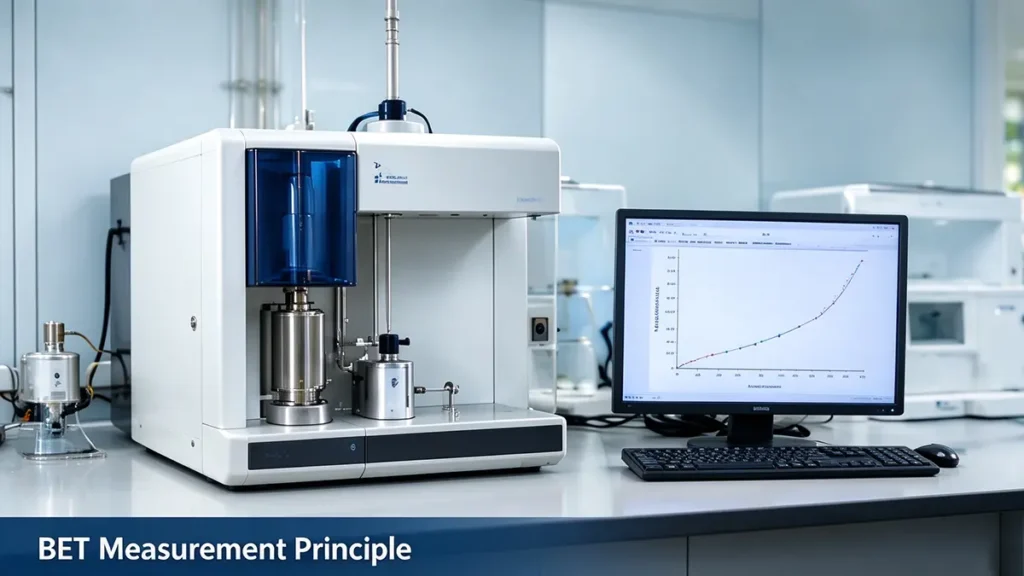
The measurement process
- Step 1: Sample preparation A representative sample is conditioned to remove adsorbed moisture and other substances that may interfere with adsorption measurements. Preparation conditions must be appropriate for the specific silica grade.
- Step 2: Gas adsorption A gas, commonly nitrogen, is brought into contact with the prepared sample. The amount adsorbed at different relative pressures is measured.
- Step 3: BET calculation The adsorption data are evaluated using the BET model to calculate the specific surface area, generally reported in m²/g.
Why do test conditions matter?
Sample preparation, degassing conditions, adsorption data, and calculation procedures can influence the reported result. Surface-treated materials may also require particular care to avoid changing the material during preparation.
When comparing suppliers, buyers should confirm that the values were obtained using comparable methods. ISO 9277 provides a recognized reference for BET surface-area measurement, but a purchasing specification should still identify the applicable method and acceptance limits.
2.2 Surface chemistry and treatment
BET surface area and particle size are related, but they are not interchangeable measurements.
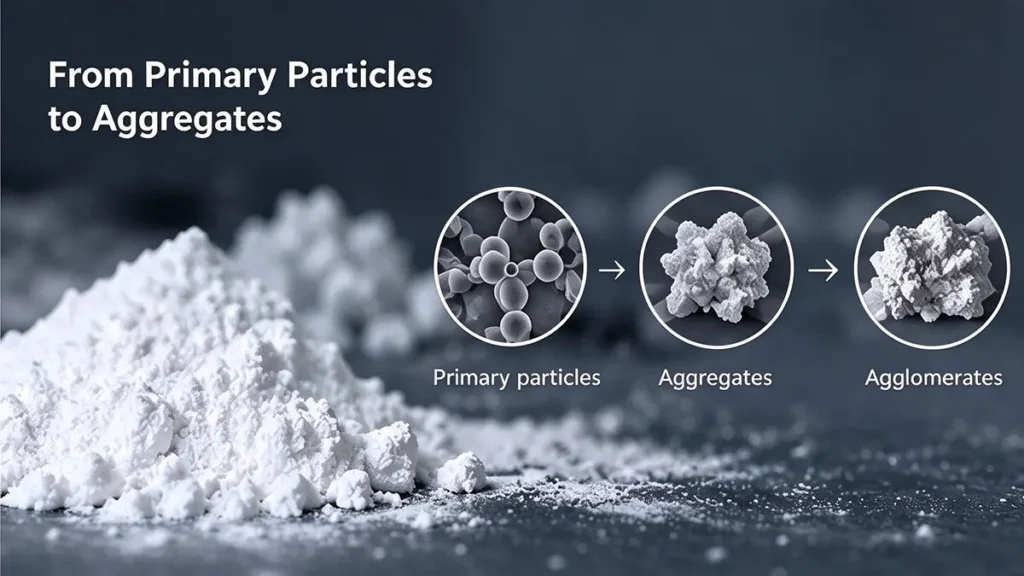
For idealized, non-porous spherical particles of the same density, smaller particles have greater surface area per unit mass. Fumed silica, however, consists of fused aggregates and larger agglomerates rather than independent, smooth spheres.
Silico® ‘s published FS Series hydrophilic grades illustrate the relationship: the listed grades span approximately 90–380 m²/g in BET surface area, with primary particle sizes of roughly 22–7 nm across the range. These values describe that manufacturer’s product family, not a universal conversion between surface area and particle size.
A high BET value therefore does not establish the size distribution of agglomerates in a finished formulation or guarantee good dispersion.
3. Common BET Surface Area Ranges and Commercial Grades
| Approximate BET surface area | General interpretation | Main evaluation priorities |
|---|---|---|
| 50–100 m²/g | Relatively low surface area compared with many conventional rheology grades | Purity, compatibility, handling, and application-specific requirements |
| 90–150 m²/g | Lower-to-moderate surface area | Processing efficiency, required structure development, and achievable performance |
| 150–220 m²/g | Common range for general-purpose industrial evaluation | Rheology, reinforcement potential, dispersion, and dosage |
| 250–330 m²/g | Higher surface area with greater potential for surface interactions | Mixing capability, viscosity development, and formulation stability |
| 350–380 m²/g | High surface area within certain commercial hydrophilic grade families | Dispersion efficiency, processability, and whether additional surface area delivers measurable benefits |
Examples from commercial product data
| Product | Surface characteristics | Published BET surface area |
|---|---|---|
| Silico® FS Series 200 | Hydrophilic fumed silica | 175–225 m²/g |
| Silico® FS Series 300 | Hydrophilic fumed silica | 270–330 m²/g |
| Silico® EL-90 | High-purity hydrophilic fumed silica for specialized CMP applications | Nominal 90 m²/g |
These examples demonstrate why BET values must be interpreted in the context of the intended application. A specialized grade with a nominal surface area of 90 m²/g may be appropriate for a purity-critical process, while a grade with a much higher BET value may be better suited to a different formulation.
Buyer recommendation: Use BET surface area to narrow the candidate list, not to approve a grade on its own.
These ranges overlap in practice. The response of an individual grade will also depend on surface treatment and aggregate structure.
4. How BET Surface Area Influences Industrial Performance
4.1 Rheology, viscosity, and thixotropy
- Silica concentration and surface treatment.
- Resin polarity and compatibility.
- Wetting and dispersion quality.
- Mixing equipment and energy input.
- Temperature and other formulation ingredients.
4.2 Dispersion and manufacturing efficiency
| Process parameter | Why it matters |
|---|---|
| Addition sequence | Can affect initial wetting and powder incorporation |
| Mixing equipment | Determines available shear and circulation |
| Dispersion time | Influences production throughput and labor or energy use |
| Batch temperature | May affect resin behavior and formulation stability |
| Final dispersion quality | Helps determine whether the grade is delivering consistent performance |
| Batch repeatability | Indicates whether the process can reliably meet specifications |
4.3 Reinforcement in silicone rubber
Fumed silica is used as a reinforcing filler in silicone rubber. Its contribution should be assessed through the properties of the finished compound rather than uncured viscosity alone.
Depending on the application, relevant tests include tensile strength, tear strength, elongation, hardness, transparency, and dimensional stability.
The appropriate grade depends on whether the formulation is high-temperature-vulcanized silicone rubber, liquid silicone rubber, or another system, as well as the required properties and processing method.
Higher BET surface area may provide more potential for interaction with the polymer system, but reinforcement also depends on dispersion, surface chemistry, polymer characteristics, and curing conditions. A high BET value does not guarantee the best mechanical properties.
4.4 Anti-settling and sag resistance
In coatings and sealants, fumed silica may help maintain the suspension of pigments or fillers and reduce sagging on vertical surfaces.
The objective is to establish enough structure at rest without preventing the product from flowing under application shear.
Increasing BET surface area may help develop structure, but the formulation must still meet requirements for brushing, spraying, extrusion, or dispensing. Grade selection should therefore be based on the complete rheological profile rather than maximum thickening alone.
4.5 Purity-critical applications
In applications such as chemical mechanical planarization (CMP), surface area is only one part of the material specification. Purity, particle-related properties, and consistency can be equally important.
Silico® ‘s EL-90 is an example of a high-purity hydrophilic fumed silica developed for CMP slurry applications. Its product literature emphasizes chemical purity and control of material properties in addition to nominal BET surface area.
The lesson for buyers is straightforward: the right grade is the one that satisfies the complete application specification, not necessarily the one with the highest surface area.
5. Why BET Surface Area Alone Is Not Enough
5.1 Hydrophilic versus hydrophobic surface chemistry
Hydrophilic fumed silica generally has accessible surface silanol groups. Hydrophobic grades are chemically treated to reduce their affinity for water.
Surface treatment can change wetting, moisture adsorption, compatibility, and rheological behavior. Two grades with similar BET values may therefore perform differently in the same formulation.
Silico® ‘s FS 300 is one example of a hydrophobic grade treated with hexamethyldisilazane (HMDS). Its published BET range is 180–220 m²/g, and its technical data include a carbon-content range of 3.0–4.0%.
This illustrates why buyers should compare surface treatment and relevant treatment indicators rather than relying only on the reported BET value.
5.2 BET values before and after surface treatment
- Whether BET surface area is measured before or after treatment.
- Which test method and sample preparation are used.
- Whether the value is typical or a guaranteed specification.
- Which treatment chemistry is used and what application data are available.
5.3 Aggregate structure and dispersion
Fused aggregates and larger agglomerates influence how fumed silica is incorporated into a formulation. Two grades with similar surface area may require different mixing conditions to achieve equivalent dispersion.
The practical implication is that laboratory data should be interpreted alongside the process used to obtain them. A grade that performs well under intensive laboratory mixing may not deliver the same result in a larger production vessel.
5.4 Moisture, pH, and purity
Moisture, pH, and impurity specifications may affect material suitability, particularly in reactive, moisture-sensitive, or high-purity formulations.
For example, Silico®’s FS 200 technical information lists a BET range of 175–225 m²/g, a pH range of 3.7–4.5 in a 4% dispersion, loss on drying of no more than 1.5% under the stated test conditions, and approximate tapped density of 50 g/L. The document also distinguishes typical values from formal product specifications.
This is a useful model for evaluating technical data sheets: each parameter has a defined meaning and test condition, and no single value should be interpreted in isolation.
5.5 Bulk density and handling
Bulk density describes the mass of powder occupying a given volume under specified conditions. It is different from BET surface area.
Because fumed silica is lightweight, bulk density affects storage volume, packaging, feeding, and powder handling. Some grades are mechanically densified to improve handling and incorporation.
When manufacturing efficiency is important, buyers should consider bulk density and handling characteristics alongside BET surface area and formulation performance.
6. How to Select Fumed Silica by Application
| Application | Main selection priorities | Performance tests |
|---|---|---|
| Industrial coatings and paints | Rheology, pigment suspension, surface treatment, dispersion | Sag resistance, settling, application viscosity, appearance |
| Adhesives and sealants | Binder compatibility, cure chemistry, extrusion behavior | Dispensing force, bead stability, recovery after shear, storage stability |
| Silicone rubber | Reinforcement efficiency, dispersion, cure compatibility | Tensile strength, tear strength, hardness, elongation |
| Polyester and epoxy resins | Wetting, resin compatibility, processing requirements | Viscosity profile, dispersion, workability, cured properties |
| Greases and lubricating compounds | Base-fluid compatibility, consistency, separation resistance | Consistency, oil separation, temperature stability |
| CMP and specialized polishing formulations | Purity, particle-related controls, surface-area consistency | Slurry stability, particle distribution, contamination and application-specific tests |
| Powder-flow applications | Powder compatibility, handling characteristics, dosage | Flow behavior, storage stability, anti-caking performance |
A practical selection workflow
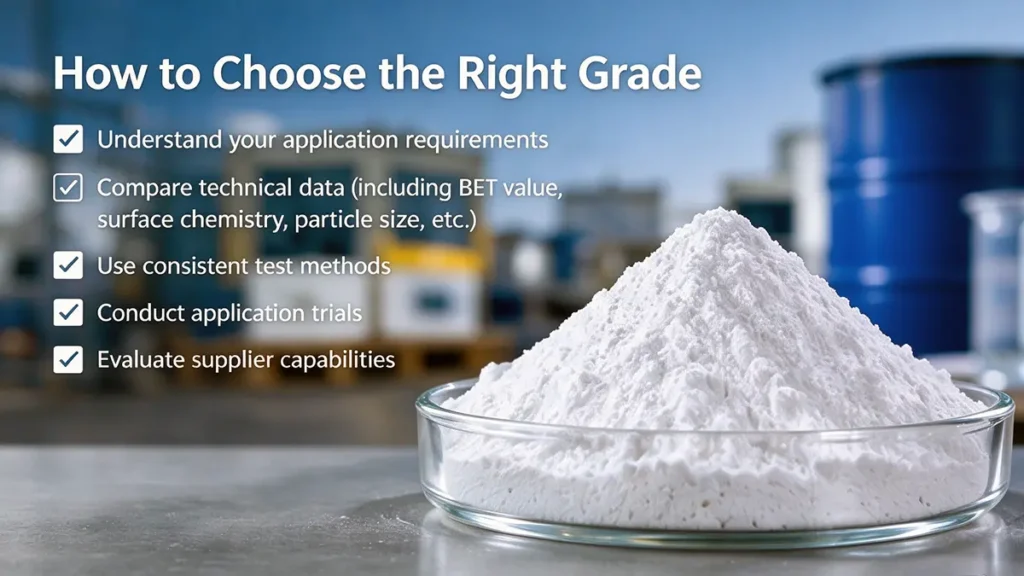
- Define the performance target. Identify whether the primary requirement is thickening, anti-settling, reinforcement, flow improvement, or purity control.
- Identify the formulation chemistry. Record the resin, polymer, base fluid, and curing mechanism where applicable.
- Shortlist suitable grades. Compare BET surface area, surface treatment, moisture, purity, and other relevant specifications.
- Run controlled trials. Keep formulation and mixing conditions consistent when comparing grades.
- Measure the actual performance. Use application-specific tests rather than relying solely on BET or one viscosity value.
- Validate production-scale performance. Confirm dispersion, processability, consistency, and finished-product quality under realistic manufacturing conditions.
7. BET Surface Area, Dosage, and Formulation Cost
| Cost parameter | Grade A | Grade B |
|---|---|---|
| Purchase price | $5.00/kg | $6.00/kg |
| Assumed loading | 0.8% | 0.5% |
| Silica required per 1,000 kg formulation | 8 kg | 5 kg |
| Silica cost per batch | $40 | $30 |
- Purchase price per kilogram.
- Dosage required to meet the performance target.
- Dispersion time and energy consumption.
- Manufacturing throughput and rejected batches.
- Storage stability and batch-to-batch consistency.
8. Technical Data Sheet and Supplier Evaluation Checklist
| Item | What buyers should verify |
|---|---|
| BET surface area | Nominal value, specification range, and tolerance |
| Test method | Whether the method is stated and comparable |
| Surface chemistry | Hydrophilic or hydrophobic; treatment chemistry where applicable |
| BET measurement basis | Before or after surface treatment |
| Moisture or loss on drying | Test conditions and acceptable limits |
| pH | Test concentration and method |
| Purity and impurities | Suitability for the intended application |
| Bulk or tapped density | Reported density type and test conditions |
| Application data | Evidence relevant to the target formulation |
| Quality documentation | Formal specification, typical data, and batch-specific COA |
| Manufacturing consistency | Ability to meet the agreed specification across batches |
Conclusion
Fumed silica BET surface area is a valuable parameter for comparing commercial grades, but it does not provide a complete prediction of formulation performance.
The most reliable selection process combines BET surface area with surface chemistry, aggregate structure, moisture, purity, dispersion requirements, and application-specific testing. Buyers should also verify whether surface-area data refer to the untreated base material or the finished treated grade, particularly when comparing products from different suppliers.
For industrial purchasing, the objective is to select a grade that delivers consistent performance, remains compatible with the manufacturing process, and meets the finished-product specification at an acceptable total cost.
Frequently Asked Questions (FAQs)
BET surface area is the specific surface area measured using gas adsorption and the Brunauer–Emmett–Teller method. It is generally expressed in m²/g and is used to characterize and compare fumed silica grades.
Commercial grades cover a broad range. Examples include ASilico® FS 200 at 175–225 m²/g, FS 300 at 270–330 m²/g, and certain REOLOSIL™ hydrophilic grades spanning approximately 90–380 m²/g. These are product-specific values, not universal limits.
No. Higher BET may increase the potential for surface interactions, but actual performance depends on surface chemistry, aggregate structure, dispersion, formulation compatibility, and dosage. The correct grade is the one that meets the application requirements reliably.
No. BET measures specific surface area through gas adsorption, while particle size is determined using other measurement methods. Although smaller primary particles generally have greater surface area per unit mass when other factors are comparable, the two parameters are not interchangeable.
They may differ in surface treatment, aggregate structure, moisture, purity, dispersion behavior, or compatibility with the formulation. Mixing conditions and silica loading can also change the result.
Compare surface chemistry, treatment type, BET measurement basis, moisture-related properties, and compatibility with the binder or base fluid. Then validate both grades using the same formulation and relevant performance tests.
There is no single value suitable for every silicone rubber formulation. Selection depends on the required reinforcement, hardness, transparency, processing route, and curing system. Mechanical testing of the finished compound is necessary to confirm suitability.
ISO 9277:2022 specifies the BET method for determining the specific surface area of solids by gas adsorption. Buyers should still confirm the supplier’s test conditions and the acceptance limits stated in the product specification.
Define the required finished-product performance, verify the technical data sheet, compare surface chemistry and other relevant properties, and test shortlisted grades under controlled processing conditions. Production-scale validation should follow before a substitution is approved.
Fumed Silica related products



Popular Recommendations
Get a Catalog & Best Price
- Quick and helpful reply within 24 hours;
- Tailored solutions provided for your project;
- One-stop purchasing service.
Need More Technical Information?
Silico® ORGANOSILICON
- Address: Daiyue Industrial Area, Taian, Shandong, China
- © Copyright 2022 Silico® . All Rights Reserved