2026-03-16


PDMS silicone fluid, or polydimethylsiloxane, is a highly versatile silicone material widely used in modern industry. Its excellent thermal stability, chemical inertness, low surface tension, and broad viscosity range make it ideal for industrial lubrication, defoamers, mold release agents, electronics insulation, coatings, and personal care products.
Among all properties, viscosity is the most critical factor affecting performance. It determines how the silicone fluid flows, spreads, forms protective films, and behaves under varying temperature and mechanical conditions.
Industrial PDMS fluids are available in a wide range of viscosity grades—from 0.65 cSt up to over 1,000,000 cSt—enabling precise formulation for specialized applications. High-purity fluids from trusted manufacturers, such as Silico® PDMS fluids, ensure consistent viscosity stability for reliable use in lubrication, defoaming, and mold-release systems.
This guide helps engineers and formulators choose the right PDMS silicone fluid, with practical advice on viscosity ranges, performance characteristics, and application strategies.
PDMS silicone fluid is a linear silicone polymer composed of repeating siloxane units (–Si–O–Si–) with methyl side groups attached to the silicon atoms. This molecular structure gives the material its unique combination of flexibility and stability.
Compared with conventional mineral oils or synthetic lubricants, industrial PDMS silicone fluids provide several advantages:
A broad silicone oil viscosity range
cosmetics and personal care formulations
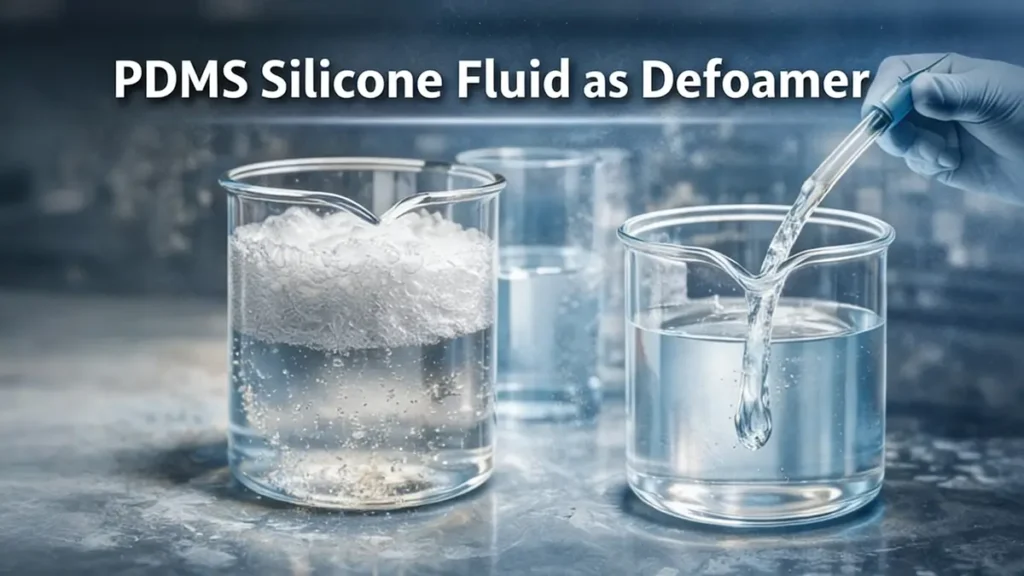
When engineers or formulators search for PDMS silicone oil for industrial applications, viscosity is usually the first parameter they consider.
Viscosity affects several key performance characteristics:Low-viscosity silicone fluids flow easily and spread rapidly across surfaces. These grades are commonly used in textile finishing, spray lubricants, and cosmetic formulations.
Higher viscosity PDMS fluids form thicker and more durable films, which improves long-term lubrication and surface protection.
For mechanical systems, the viscosity of silicone oil determines load-bearing capacity and wear resistance.
Higher molecular weight PDMS oils generally have lower volatility and greater long-term stability, making them suitable for high-temperature industrial environments.
Choosing the wrong viscosity can result in poor coating uniformity, insufficient lubrication, or reduced defoaming performance, which directly affects production efficiency.
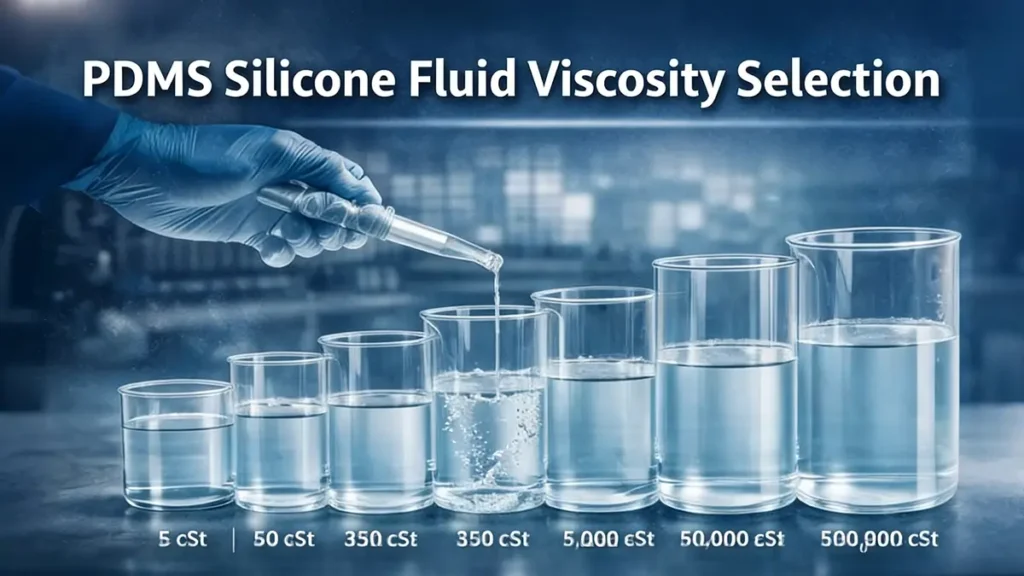
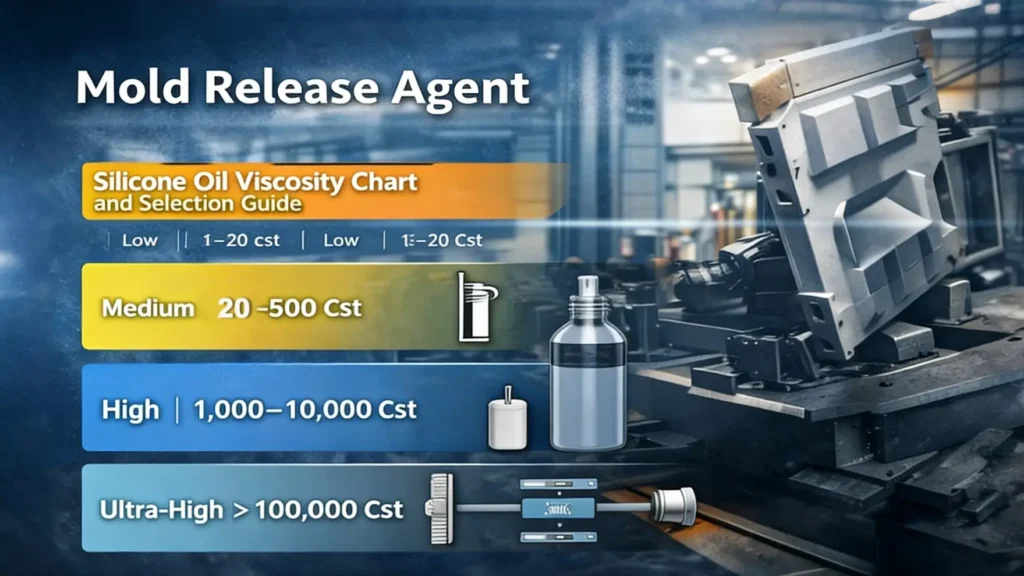
A typical silicone oil viscosity chart for PDMS fluids covers a very wide range of grades.
| Viscosity Range | Flow Characteristics | Typical Use |
|---|---|---|
| 0.65 – 5 cSt | Water-like flow | Heat transfer fluids, cosmetics |
| 5 – 50 cSt | Light oil | Textile finishing, sprays |
| 50 – 500 cSt | Medium viscosity | Mold release agents |
| 1,000 – 10,000 cSt | Thick oil | Lubrication and damping |
| 10,000 – 100,000+ cSt | Very thick | Shock absorbers and gels |
Because of this wide viscosity spectrum, PDMS silicone oil suppliers can offer grades tailored to specific industrial processes.
These grades are often selected when rapid surface wetting and easy flow are required.
This viscosity range is one of the most widely used in industrial manufacturing.
Typical applications include:For example, Silico® medium-viscosity PDMS silicone fluids are commonly used in mold-release formulations where both spreading performance and film durability are important.
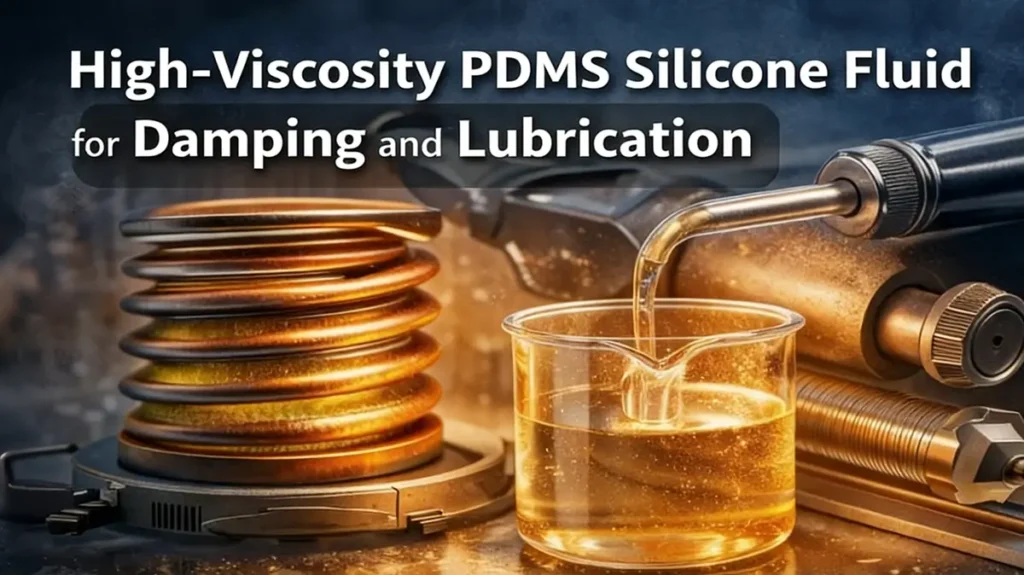
High viscosity silicone fluids are commonly used when strong lubrication or mechanical damping is required.
Applications include:electrical insulation fluids
These grades form thicker lubricant films and provide long-lasting protection for mechanical components.
encapsulation materials
These materials exhibit strong viscoelastic properties, making them ideal for energy absorption systems.
Each application has a recommended viscosity range.
Although PDMS fluids maintain excellent thermal stability, silicone oil viscosity changes with temperature.
Low viscosity grades perform better in cold environments, while higher viscosity oils maintain stable lubrication at high temperatures.
Low viscosity PDMS oils spread easily across substrates, which is essential for coatings, polishes, and anti-foam systems.
Higher viscosity grades provide thicker protective layers but may require additional processing.
Applications that require long-term stability or minimal evaporation usually benefit from higher viscosity PDMS silicone oils.
Manufacturing methods also influence viscosity selection.
For example:multi-component formulations may blend several PDMS viscosity grades
Determine whether the fluid will function as a lubricant, defoamer, release agent, or thermal medium.
Typical starting points include:
| Application | Recommended Viscosity |
|---|---|
| Defoamer | 10 – 100 cSt |
| Mold release | 100 – 500 cSt |
| Industrial lubrication | 350 – 10,000 cSt |
| Damping systems | 10,000 – 100,000+ cSt |
long-term performance
Lower viscosity grades are often cheaper but may not provide sufficient lubrication or durability.
Temperature significantly affects viscosity performance in real operating environments.
Very high viscosity oils may cause processing difficulties and poor surface spreading.
Surface energy and wetting properties play a crucial role in coatings and defoaming systems.
Selecting the correct PDMS silicone fluid viscosity for industrial applications is essential for optimizing performance, efficiency, and long-term reliability.
Because silicone oil viscosity grades range from ultra-low to extremely high, engineers must carefully evaluate application requirements, processing conditions, and operating environments before making a selection.
A typical selection process includes:
validating the selection through testing
High-quality silicone fluids with stable viscosity and consistent purity can significantly improve industrial performance. For manufacturers seeking reliable silicone materials, Silico® PDMS Silicone Fluids provide a wide range of viscosity grades designed for lubrication, defoaming, mold release, and other demanding industrial applications.
The ideal PDMS silicone fluid viscosity depends on the specific application and required performance.
Low viscosity (1–20 cSt): spray lubricants, textile finishing, heat transfer fluids
Medium viscosity (50–500 cSt): mold release agents, industrial defoamers, surface coatings
High viscosity (1,000–10,000 cSt): lubrication systems, damping fluids, silicone grease formulations
Selecting the correct viscosity ensures proper flow behavior, film formation, and long-term stability in industrial processes.
Several viscosity grades are widely used across industrial applications, particularly 100 cSt, 350 cSt, and 1,000 cSt PDMS silicone fluids.
These grades provide a balanced combination of:
good spreading performance
reliable lubrication
moderate film thickness
They are commonly used in mold release agents, lubricants, and silicone defoamer formulations.
Like most fluids, PDMS silicone oil viscosity decreases as temperature increases. However, silicone fluids maintain a more stable viscosity across a wide temperature range compared with many mineral oils.
This property makes polydimethylsiloxane fluids suitable for:
high-temperature lubrication
electronic insulation systems
heat transfer applications
demanding industrial environments
PDMS silicone fluids are widely used across multiple industries due to their excellent thermal stability and chemical inertness.
Major application sectors include:
plastics and rubber processing (mold release agents)
automotive and machinery (lubricants and damping fluids)
electronics and electrical equipment (dielectric fluids)
chemical processing (industrial defoamers)
cosmetics and personal care products
These versatile silicone oil applications make PDMS one of the most widely used silicone materials globally.
In most cases, PDMS silicone fluid and silicone oil refer to the same material: polydimethylsiloxane (PDMS).
The difference is mainly terminology:
Silicone fluid is commonly used in chemical and industrial contexts
Silicone oil is frequently used in lubrication and cosmetic industries
Both terms describe linear PDMS polymers with adjustable viscosity and excellent thermal stability.