2026-03-11

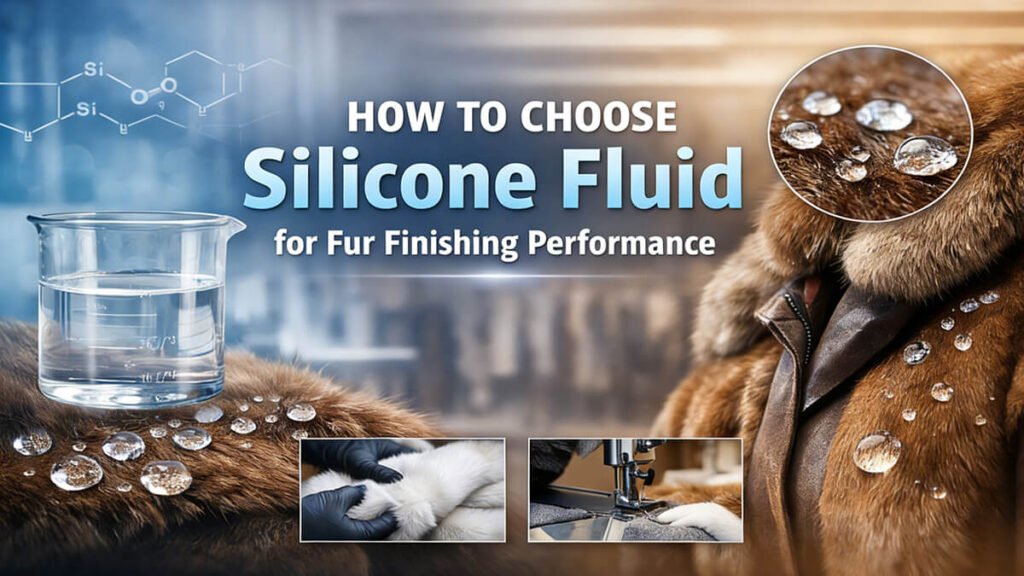
Silicone fluid plays a critical role in modern fur finishing by enhancing softness, thermal stability, water repellency, and stain resistance. Through controlled viscosity, low surface tension, and stable film formation, silicone fluid–based systems deliver smooth hand feel, durable hydrophobic performance, and long-term appearance stability. This article outlines key selection parameters, application processes, and formulation strategies to help manufacturers optimize finishing performance in high-end fur apparel using advanced silicone fluid technologies from Silico®.
In the manufacturing of natural fur coats, premium fur garments, and fur-based fashion items, the finishing stage plays a decisive role in defining both functional performance and perceived product value.
Key performance requirements typically include:
Long-term stability of appearance and tactile properties during wear and storage
Conventional oil-based finishing agents often fail to meet these requirements simultaneously, as they may increase dust attraction, offer limited water repellency, or degrade under thermal and oxidative conditions.
As a result, silicone fluid–based finishing systems, such as those engineered by Silico®, have become an essential component in advanced fur garment finishing.
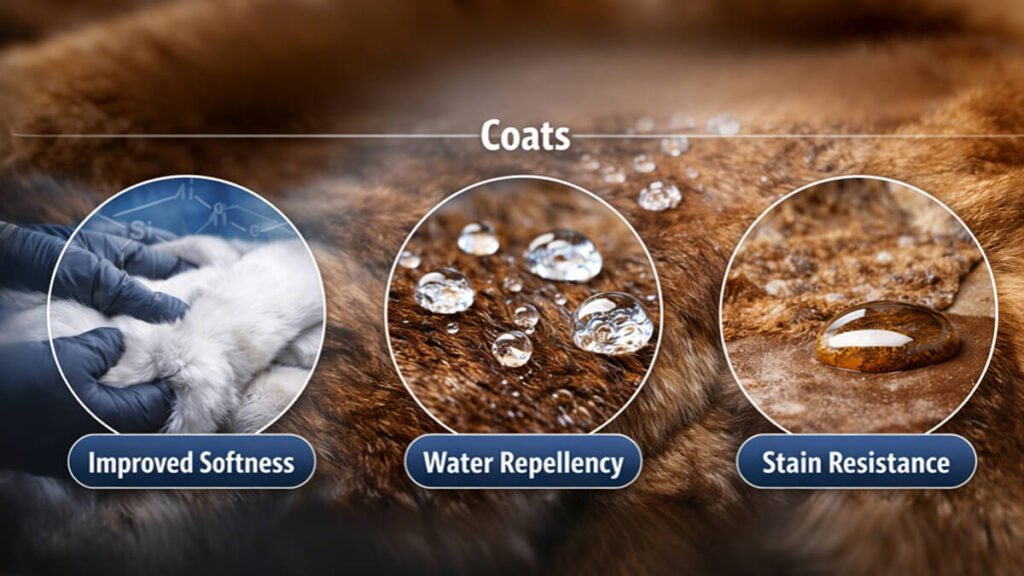
Silicone fluids used in fur finishing are specialty functional materials, not general-purpose lubricants. They are specifically designed to be compatible with leather and fur processing conditions and are typically supplied in emulsion or micro-emulsion form for aqueous finishing systems.
Hydrophilic or self-emulsifying silicone fluid systems
| Parameter | Typical Range | Impact on Fur Performance |
|---|---|---|
| Kinematic viscosity (25 °C) | 50–1,000 cSt | Determines softness, lubricity, and film thickness |
| Emulsion solids content | 30–60% | Influences application efficiency and stability |
| Surface tension | 20–22 mN/m | Affects wetting, spreading, and lubrication |
| Recommended dosage | 1–3% (o.w.f) | Balances hand feel and repellency |
For high-end fur coats, medium-to-low viscosity silicone fluids are generally preferred, as they enable uniform surface coverage while maintaining a clean, non-greasy handle.
The softening effect of silicone fluid does not rely on adding heaviness or oiliness, but rather on modifying surface friction at the fiber interface level.
Minimal migration during long-term use or storage
These characteristics allow finished fur garments to maintain consistent softness and appearance throughout their lifecycle.
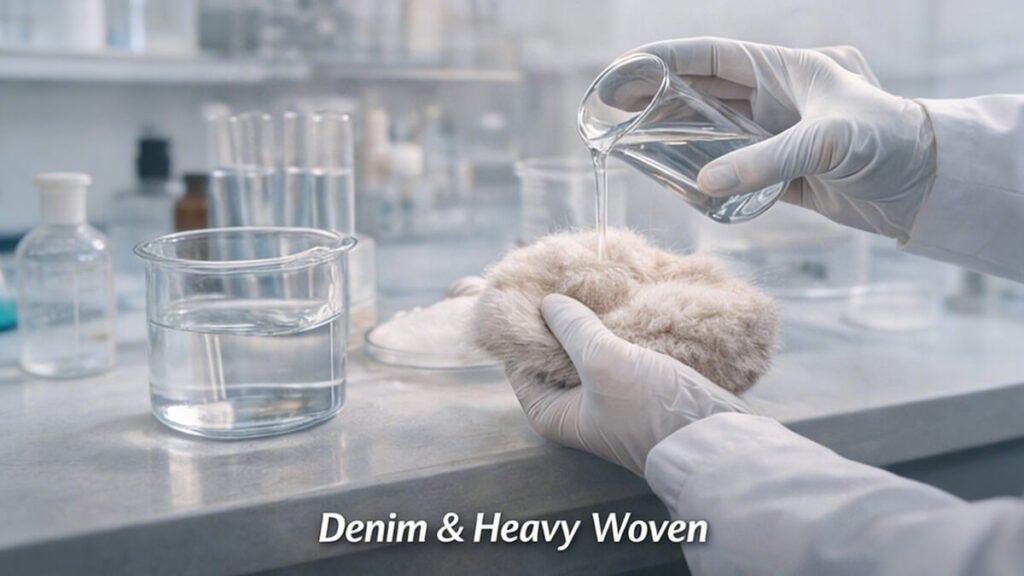
In fur water-repellent and stain-resistant finishing systems, silicone fluid primarily functions as a baseline hydrophobic and hand-feel regulating layer.
Due to its intrinsically low surface energy, silicone fluid creates a hydrophobic surface that promotes water beading and runoff.
PS: In practical finishing applications, fur surfaces treated with silicone fluid typically exhibit
water contact angles in the range of approximately 100°–110°
Low surface energy also limits the adhesion of dust, oil-based stains, and everyday contaminants, contributing to improved cleanability and visual durability.
For higher-performance requirements, silicone fluid is most effective when integrated with dedicated water- and stain-repellent finishing agents, rather than used as a standalone solution.
Spray finishing – ideal for directional or surface-specific treatment of premium garments
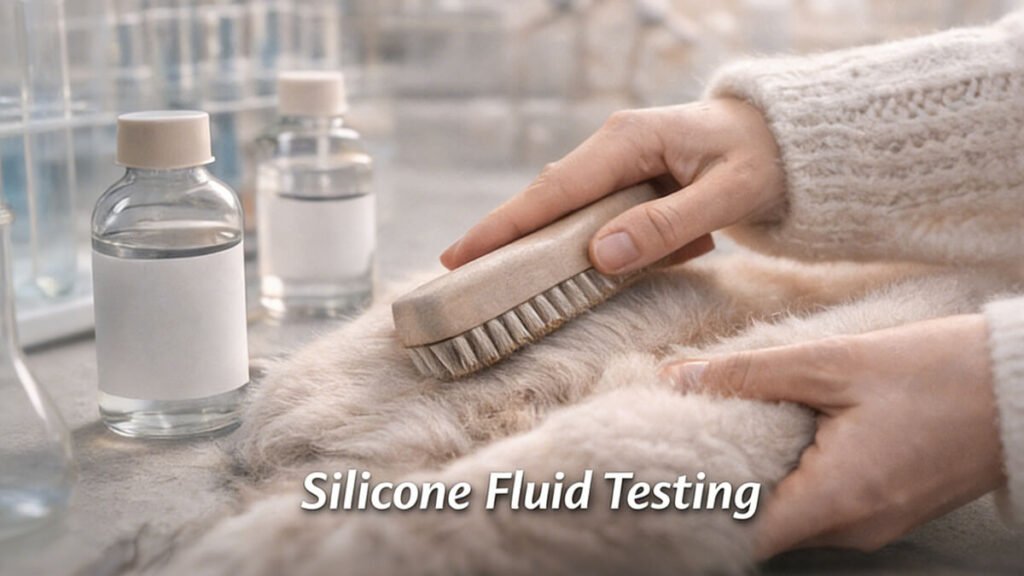
Brushing, grooming, and final setting
Low-temperature drying is critical to avoid substrate stiffening while ensuring proper film formation and performance consistency.
Film-forming polymers or hand-feel modifiers
Avoiding excessive silicone levels that may interfere with protective film continuity
Careful laboratory evaluation is essential to achieve the optimal balance between softness and repellency—an area where Silico® silicone fluid solutions are often selected for their formulation flexibility and consistency.
| Challenge | Possible Cause | Optimization Strategy |
|---|---|---|
| Excessive slipperiness | Low viscosity or overdosing | Increase viscosity or reduce dosage |
| Limited water repellency | Silicone fluid ratio too high | Combine with dedicated repellent agents |
| Surface dullness | Uneven film formation | Improve emulsion dispersion and application control |
In modern high-end fur coat and fur garment finishing, silicone fluid has become a critical functional additive for enhancing softness, wearing comfort, and baseline protective performance.
By selecting the appropriate silicone fluid type, carefully controlling viscosity and dosage, and integrating it into a well-designed finishing system, manufacturers can significantly improve product quality, durability, and market competitiveness.
Advanced silicone fluid technologies—such as those developed by Silico®—continue to play a vital role in elevating performance standards across the premium fur apparel industry.