
Food Grade Silicone Fluid vs. Industrial Silicone Oil: Key Differences

Food grade silicone oil and industrial silicone oil are often based on the same silicone chemistry, particularly PDMS (polydimethylsiloxane). They can also share similar properties such as low surface tension, chemical stability, thermal stability, lubricity, and release performance.
The main difference is not simply the polymer itself. It is the product specification, manufacturing controls, intended application, documentation, and regulatory requirements associated with the specific grade.
For food-processing applications, selecting a silicone oil only by viscosity or price is not enough. The exact grade should be evaluated against the intended use and the applicable requirements in the target market.
Silico® Food Grade Silicone Oil is available in viscosity grades from 100 to 1,500 cSt at 25°C, providing options for food-processing lubrication, mold release, surface treatment, and selected defoaming applications.
Table of Contents
- 1. What Is Food Grade Silicone Fluid?
- 2. What Is Industrial Silicone Oil?
- 3. Food Grade vs. Industrial Silicone Oil
- 4. Purity and Quality Control
- 5. Application Differences
- 6. Silicone Oil Viscosity and Grade Selection
- 7. Food Contact and Regulatory Requirements
- 8. Documentation for Commercial Purchasing
- 9. Can Industrial Silicone Oil Be Used in Food Processing?
- 10. How to Choose the Right Silicone Oil
- Conclusion
1. What Is Food Grade Silicone Fluid?
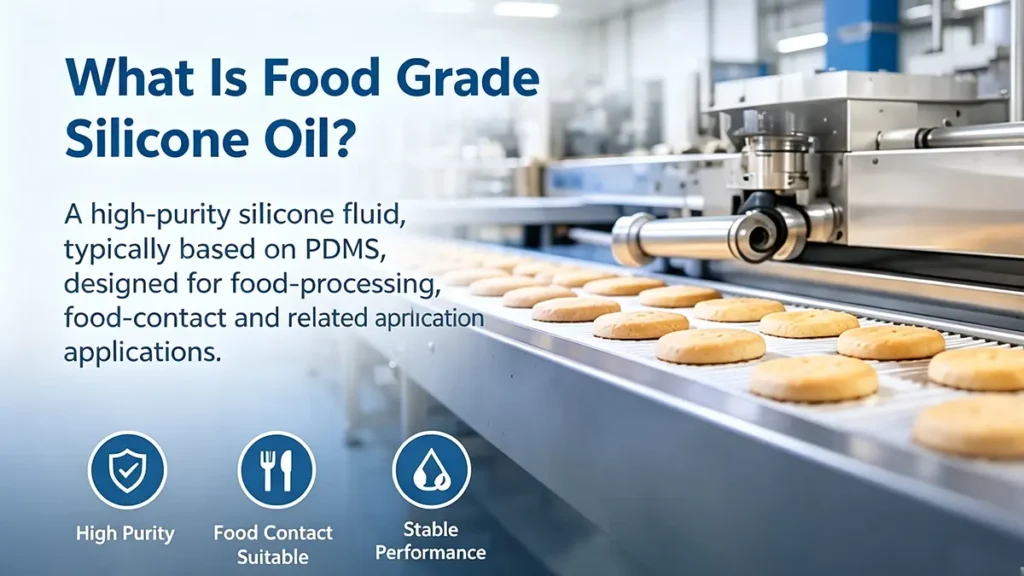
Food grade silicone fluid is a high-purity silicone fluid, typically based on PDMS (polydimethylsiloxane), specified for particular food-processing, food-contact, lubrication, release, or processing-aid applications.
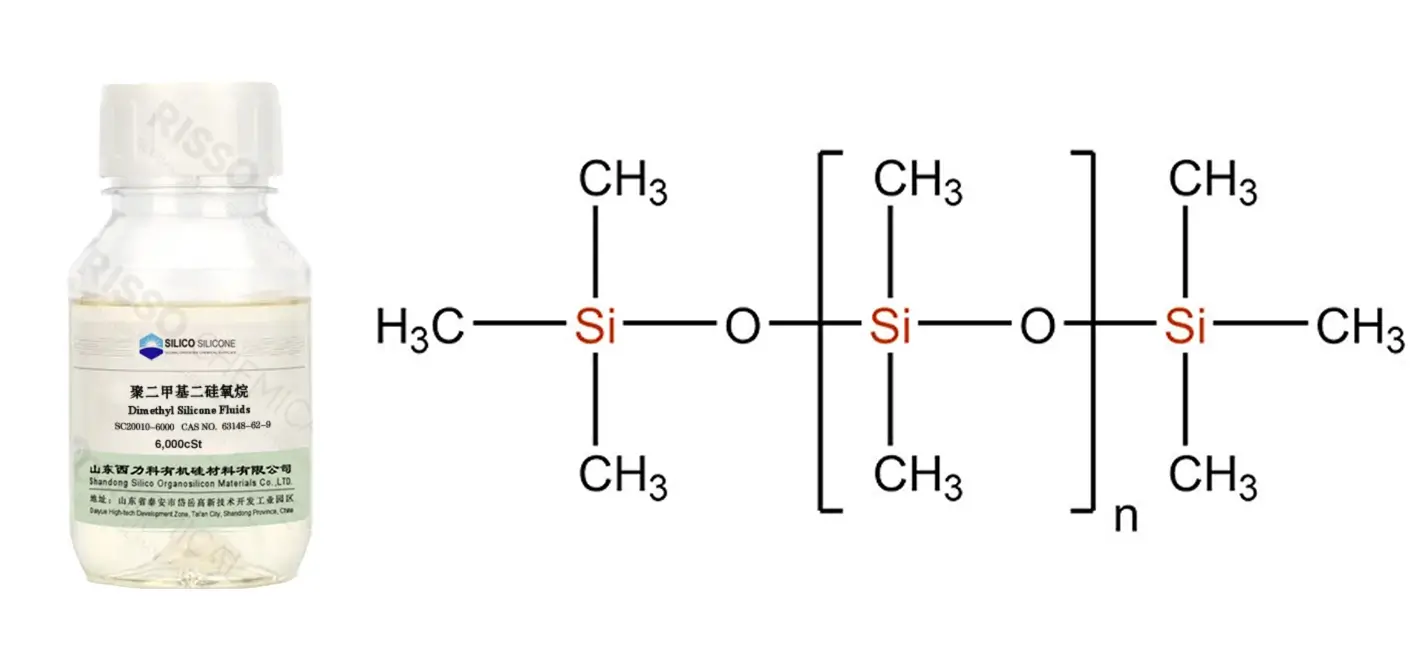
PDMS is a linear silicone polymer with a wide viscosity range. Its combination of low surface tension, chemical stability, thermal resistance, and lubricating and release properties makes it useful in food-processing equipment and other industrial applications.
However, “food grade” does not mean unrestricted approval for every food-contact application. The suitability of a product depends on its specific composition, intended use, concentration, temperature, contact conditions, and applicable regulation.
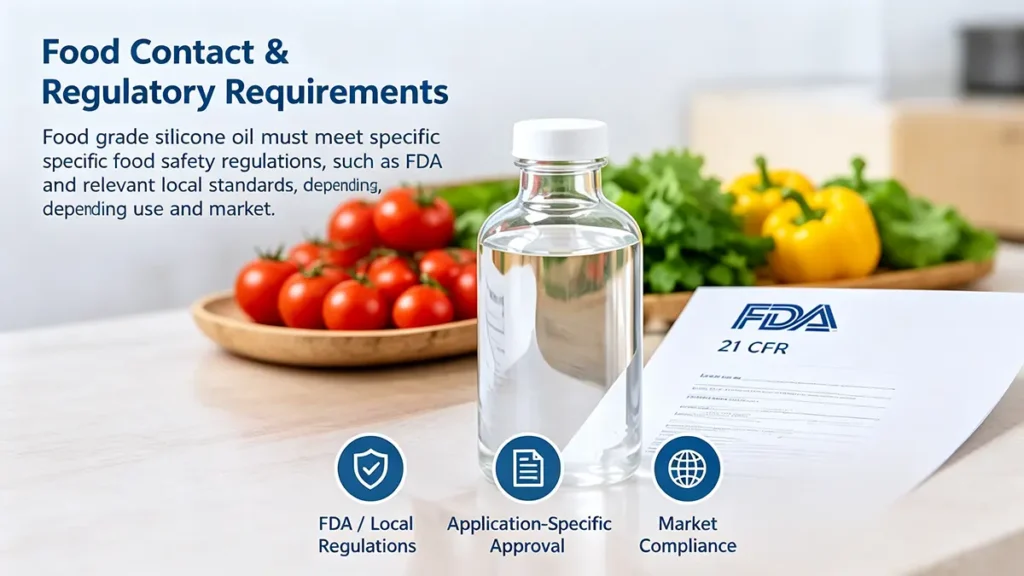
The U.S. FDA food-contact inventory lists dimethylpolysiloxane under several specific regulations, including 21 CFR 173.340 and 21 CFR 178.3570. The relevant regulation must be reviewed to determine whether the substance is authorized for the intended use.
2. What Is Industrial Silicone Oil?
Industrial silicone oil is a broad category of silicone fluids designed for general industrial applications. PDMS is one of the most widely used silicone fluids in this category.
Typical applications include:- Mechanical lubrication
- Mold release
- Damping
- Electrical insulation
- Surface treatment
- Textile processing
- Polishing and finishing
- Industrial defoaming
- Process applications
Industrial silicone oils are available in a wide range of viscosities, from low-viscosity fluids with high flowability to high-viscosity grades with greater film retention.
An industrial grade is normally specified according to its industrial performance requirements, rather than the requirements of a particular food-processing or food-contact application.
3. Food Grade vs. Industrial Silicone Oil
| Factor | Food Grade Silicone Oil | Industrial Silicone Oil |
|---|---|---|
| Base chemistry | Typically PDMS | Often PDMS or other silicone fluids |
| Primary use | Specified food-processing applications | General industrial applications |
| Purity control | Based on intended food-related use | Based on industrial requirements |
| Regulatory requirements | Application-specific food requirements may apply | General industrial requirements |
| Typical uses | Lubrication, release, defoaming, processing | Lubrication, damping, release, surface treatment |
| Viscosity | Application-dependent | Application-dependent |
| Food-contact suitability | Must be confirmed for the specific use | Not automatically suitable |
| Typical documents | TDS, SDS, CoA, applicable compliance documents | TDS, SDS, CoA |
4. Purity and Quality Control
4.1 Product Purity
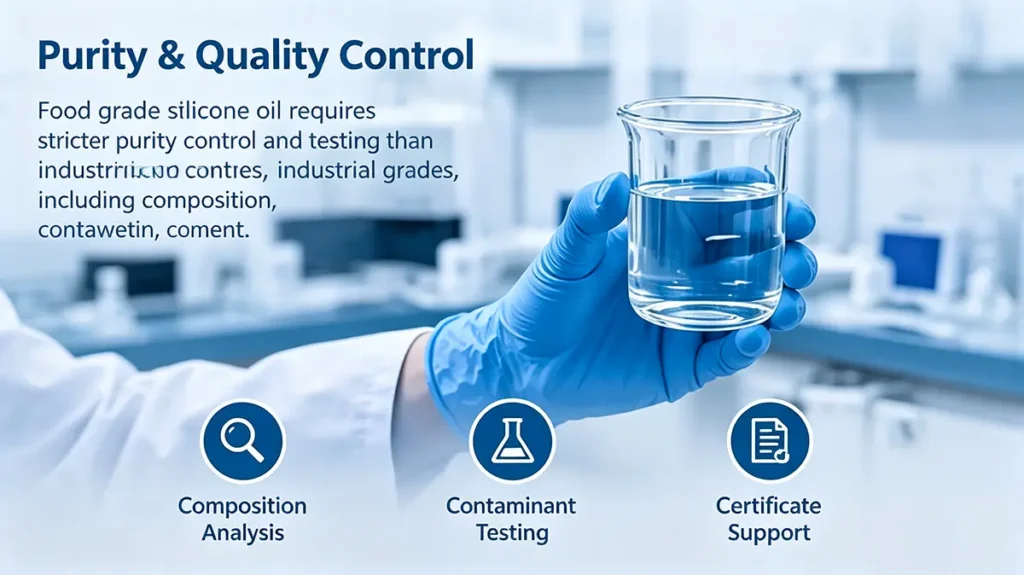
Food-processing applications can require tighter control of product composition and impurities, particularly where the silicone fluid may contact food directly or indirectly.
Industrial silicone oil can also be highly pure and consistent. However, its specification is normally established according to the requirements of the industrial application rather than a food-contact requirement.
Therefore, high purity alone does not make an industrial silicone oil a food grade product.
4.2 Manufacturing Controls
- Raw material control
- Production process control
- Contamination prevention
- Batch traceability
- Packaging
- Quality testing
- Regulatory documentation
The level of control depends on the product and its intended application.
4.3 Batch Consistency
For commercial food-processing applications, consistency between batches is particularly important because viscosity, purity, and other physical properties can affect lubrication, release, spreading, and processing performance.
A Certificate of Analysis (CoA) for the actual batch can therefore be important during purchasing and quality evaluation.

5. Application Differences
Food Processing
- Equipment lubrication
- Mold release
- Surface treatment
- Processing aids
- Foam control
Commercial food-grade PDMS products are available for food processing and packaging applications, including rendering and edible-oil processing. For example, commercial 350 cSt and 1,000 cSt food-grade PDMS fluids are marketed for these types of applications.
Defoaming
PDMS is widely used for foam control because silicone fluids have low surface tension and can spread rapidly across a foam film.
The FDA lists dimethylpolysiloxane for specific food-related technical effects, including use as a lubricant or release agent and as a surface-active agent. Specific applications and conditions remain subject to the applicable regulation.
For this reason, a food-processing defoamer should be evaluated according to its specific formulation, dosage, processing conditions, and regulatory status, rather than simply being identified as “silicone oil.”
Mold Release
Silicone oil can form a thin, low-surface-energy film on a processing surface. This reduces adhesion between the product and the surface and can improve release.
Food grade silicone oil can therefore be considered for selected food molds and processing surfaces when the specific grade meets the applicable requirements.
Lubrication
Silicone fluids provide good lubricity and stable performance over a broad range of industrial conditions.
For food-processing equipment, the relevant question is not simply whether a silicone oil provides good lubrication, but whether the specific lubricant grade and application comply with the applicable incidental food-contact requirements.
For example, the FDA Food Code points to 21 CFR 178.3570 for lubricants used where incidental food contact can occur.

6. Silicone Oil Viscosity and Grade Selection
Food grade and industrial silicone oils can have similar viscosity grades. Viscosity by itself does not determine whether a silicone fluid is food grade.
For PDMS, viscosity is commonly expressed in centistokes (cSt), normally measured at 25°C.
Typical food-grade PDMS viscosity ranges may include:
100–200 cSt
Lower-viscosity silicone fluids provide easier flow and spreading. They are useful where rapid coverage, low flow resistance, or a thinner film is required.
350–750 cSt
These grades provide a practical balance between flowability and film retention. They can be considered for lubrication, mold release, and selected processing applications.
1,000–1,500 cSt
Higher-viscosity silicone fluids generally provide greater film retention and a more persistent surface film than lower-viscosity grades.
A commercial 1,000 cSt food-grade PDMS product, for example, is specified for surface treatment, release, lubrication, and processing-aid applications in food processing and packaging.
The key distinction is:
Viscosity determines how the silicone fluid flows and behaves during application; food-grade status relates to the product specification and intended-use requirements.
7. Food Contact and Regulatory Requirements
Regulatory compliance is one of the most important differences between food grade and general industrial silicone oil.
A supplier should avoid using a broad statement such as “FDA approved silicone oil” without identifying the applicable regulation and conditions of use.
The FDA’s database lists dimethylpolysiloxane (CAS 9016-00-6) under several sections of 21 CFR. The FDA also explicitly advises users to consult the cited regulations to determine whether the substance is authorized for the intended use.
For example:21 CFR 173.340
This regulation covers specified uses of dimethylpolysiloxane as an antifoaming agent in food processing. The regulation defines the applicable conditions rather than providing unrestricted authorization for all food uses.
21 CFR 178.3570
This section concerns lubricants with incidental food contact. The application and conditions of use are important when evaluating a silicone-based lubricant for food-processing equipment.
Food Grade Does Not Mean Direct Food Additive
- Food-processing aid
- Food-contact material
- Incidental food-contact lubricant
- Defoamer
- Direct food additive
A silicone oil suitable for one category may not automatically be suitable for another.
The correct evaluation should therefore consider:
Product grade → Intended use → Concentration → Contact conditions → Applicable regulation
8. Documentation for Commercial Purchasing
| Document | Purpose |
|---|---|
| TDS | Technical properties, viscosity and product specifications |
| SDS | Safety, handling, storage and transportation |
| CoA | Actual batch test results |
| Compliance Statement | Applicable regulatory or food-contact information |
| Quality Certificates | Supplier quality-management information |
| Application Information | Recommended use and operating conditions |
For international purchases, the regulatory requirements of the destination country or region should also be checked.
9. Can Industrial Silicone Oil Be Used in Food Processing?
Not automatically.
An industrial silicone oil should not be selected for a food-processing application simply because it:- Uses PDMS as the base polymer
- Has the required viscosity
- Has good thermal stability
- Has similar physical properties
- Comes from a manufacturer that also produces food-grade silicone oil
For example, a 1,000 cSt industrial PDMS and a 1,000 cSt food-grade PDMS may have similar viscosity, but their specifications, intended applications, documentation, and compliance status can be different.
Therefore, viscosity and chemical identity alone are not sufficient to establish food-processing suitability.
10. How to Choose the Right Silicone Oil
10.1. Define the Application
- Lubrication
- Mold release
- Defoaming
- Surface treatment
- Processing aid
- Food-contact application
10.2. Select the Required Viscosity
- Application method
- Flow and spreading
- Film retention
- Surface coverage
- Operating temperature
- Equipment design
10.3. Identify the Regulatory Requirement
Determine the target market and the specific regulation or food-contact requirement relevant to the application.
10.4. Review Supplier Documentation
Check the TDS, SDS, CoA, and applicable compliance documentation for the exact grade.
10.5. Conduct Application Testing
Laboratory or production-line testing is useful because actual performance depends on equipment design, dosage, surface material, temperature, processing speed, and the food product itself.
Conclusion
Food grade silicone oil and industrial silicone oil can share the same basic PDMS chemistry, but they should not be treated as interchangeable products.
The practical difference lies in the combination of:
Chemical composition + product specification + quality control + intended application + regulatory requirements
For food-processing applications, buyers should evaluate viscosity, purity, application performance, documentation, and compliance together rather than selecting a silicone oil based only on its chemical name or viscosity.
For manufacturers and distributors looking for controlled viscosity options, Silico® Food Grade Silicone Oil provides a 100–1,500 cSt range for selected food-processing, lubrication, mold-release, surface-treatment, and defoaming applications. The final grade should be selected according to the specific process and applicable requirements.
In short, the right question is not simply “Is this silicone oil food grade?” but:
“Is this specific silicone oil grade suitable for my intended application and compliant with the requirements of my target market?”
That distinction is essential when selecting a reliable food grade silicone oil or silicone fluid for commercial food-processing applications.
Frequently Asked Questions
No. Both can be based on PDMS, but they are specified for different intended uses. Food grade silicone oil requires evaluation against the relevant food-processing or food-contact requirements.
No. Purity alone does not establish food-grade status. The product specification, intended use, manufacturing controls, and applicable regulatory documentation must also be considered.
Yes. 350 cSt food-grade PDMS is commercially available. Products at this viscosity are used in selected food-processing and packaging applications.
A 1,000 cSt food-grade PDMS can be used in selected food-processing applications when the specific product and intended use meet the applicable requirements. Commercial 1,000 cSt food-grade PDMS products are used for surface treatment, release, lubrication, and processing aids.
The primary difference is viscosity. 350 cSt provides easier flow, while 1,000 cSt generally provides greater film retention. The appropriate grade depends on the application method and required surface performance.
Request the TDS, SDS, CoA, applicable food-contact or regulatory compliance documentation, and relevant quality certificates for the exact viscosity grade.
No. FDA authorization is generally tied to specific substances, uses, and conditions. The applicable regulation should be checked against the intended application.
Silicone Fluid related products
If you want to know other questions about Sillcone Fluid, please contact us and we will provide professional answers.
Popular Recommendations
Get a Catalog & Best Price
- Quick and helpful reply within 24 hours;
- Tailored solutions provided for your project;
- One-stop purchasing service.
Need More Technical Information?
Silico® ORGANOSILICON
- Address: Daiyue Industrial Area, Taian, Shandong, China
- © Copyright 2022 Silico® . All Rights Reserved