
What Is 100% Silicone Oil? Properties, Benefits and Industrial Applications
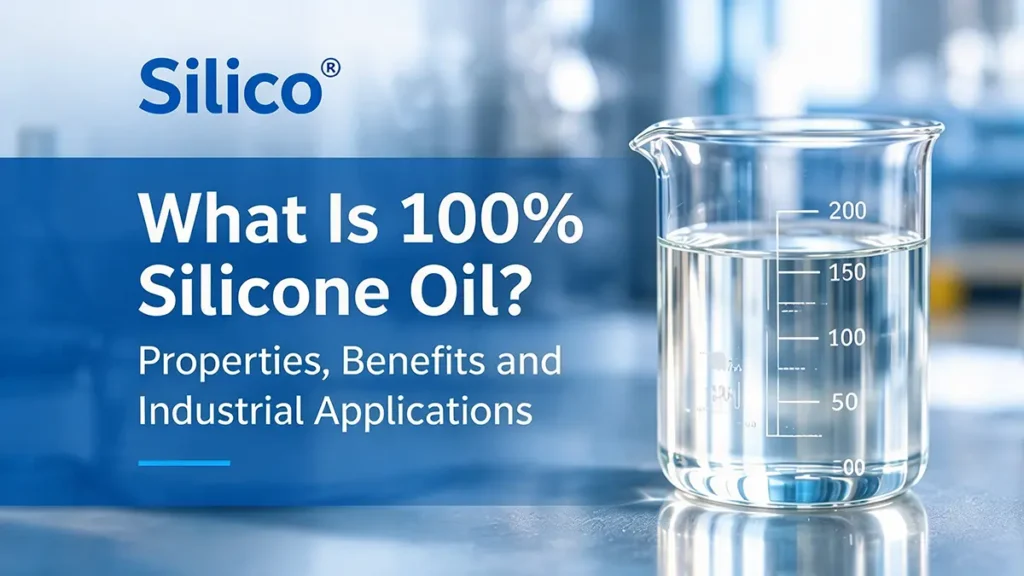
100% silicone oil is a pure, undiluted silicone fluid, most commonly based on polydimethylsiloxane (PDMS). It is widely used in industrial lubrication, mold release, damping, heat transfer, electrical insulation, rubber and plastic processing, surface treatment, and foam control.
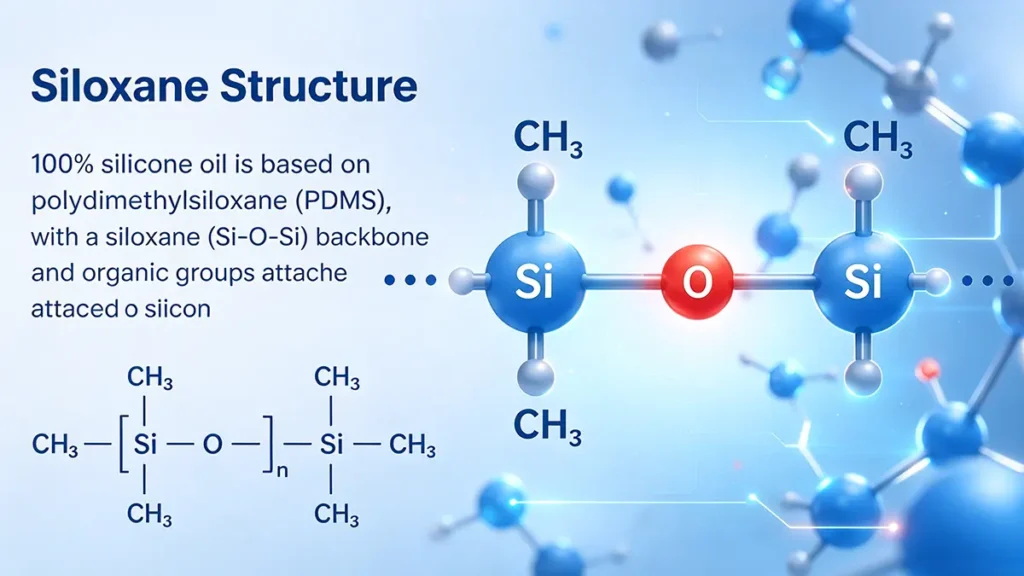
Unlike mineral oil, silicone oil has a siloxane (Si–O–Si) backbone with organic groups attached to silicon. This structure gives silicone fluids a useful combination of low surface tension, water repellency, thermal stability, dielectric properties, chemical stability, and relatively stable viscosity over a wide temperature range.
For industrial buyers, however, “100% silicone oil” does not mean every product is the same. Viscosity, purity, molecular structure, temperature range, and application requirements still need to be considered.
For manufacturers and industrial users looking for consistent PDMS grades, Silico® supplies silicone fluids in a broad viscosity range for applications including lubrication, mold release, damping, rubber and plastics processing, surface treatment, and other industrial uses.
Table of Contents
- 1. What Is 100% Silicone Oil?
- 2. Is 100% Silicone Oil the Same as PDMS?
- 3. What Does “100%” Mean?
- 4. Key Properties of 100% Silicone Oil
- 5. Silicone Oil Viscosity and cSt Grades
- 6. 100 cSt, 350 cSt and 1000 cSt Silicone Oil
- 7. Industrial Applications of Silicone Oil
- 8. Silicone Oil for Lubrication
- 9. Silicone Oil for Mold Release
- 10. Silicone Oil for Damping
- 11. Silicone Oil for Heat Transfer
- 12. Silicone Oil for Electrical Applications
- 13. Silicone Oil in Rubber and Plastic Processing
- 14. Silicone Oil for Defoaming
- 15. Food Grade and Specialty Silicone Oil
- 16. How to Choose the Right Silicone Oil
- 17. 100% Silicone Oil vs. Silicone Emulsion
- Conclusion
1. What Is 100% Silicone Oil?
100% silicone oil is a neat, undiluted silicone fluid supplied without water, solvent, or another carrier.
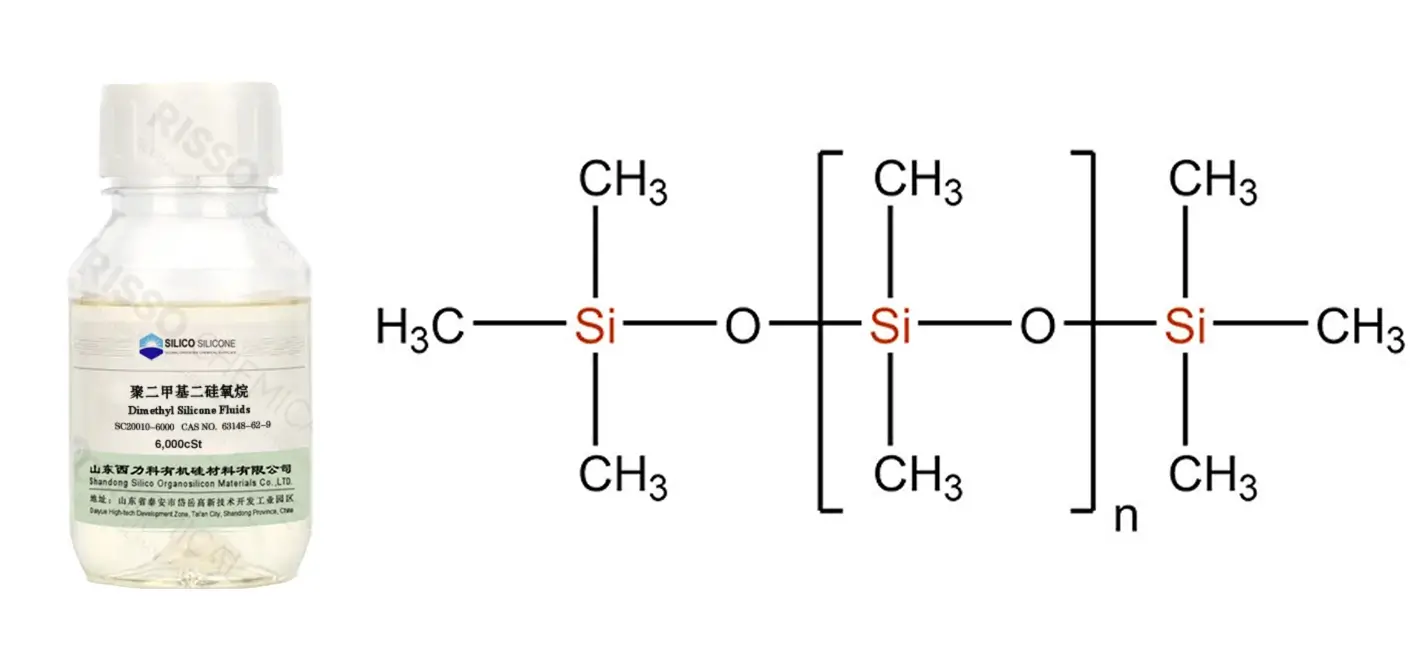
The most common industrial chemistry is polydimethylsiloxane (PDMS), also known as dimethyl silicone fluid. Its approximate repeating structure is:
CH₃[Si(CH₃)₂–O]ₙSi(CH₃)₃
The degree of polymerization and molecular weight influence the viscosity and physical properties of the fluid.
Commercial silicone oils are available in a wide range of viscosities, from low-viscosity fluids such as 5–20 cSt to high-viscosity grades of 10,000 cSt, 60,000 cSt, and above.
The appropriate grade depends primarily on the application.
2. Is 100% Silicone Oil the Same as PDMS?
In many industrial applications, 100% silicone oil refers to neat PDMS silicone fluid.
However, the terms are not always chemically identical.
- PDMS refers specifically to polydimethylsiloxane.
- Silicone oil is a broader commercial term.
- Silicone fluid is commonly used to describe industrial silicone liquids, particularly PDMS-based fluids.
- Modified silicone fluids can contain different organic groups to provide specific properties.
Therefore, industrial purchasing specifications should identify the silicone chemistry and viscosity, rather than relying only on the term “silicone oil.”
3. What Does “100%” Mean?
“100%” generally means the silicone fluid is supplied in its neat form, without dilution in water or another carrier.
This is different from:100% Silicone Fluid
Neat silicone fluid with no water or solvent carrier.
Silicone Solution
Silicone fluid diluted in an organic solvent or another carrier.
Silicone oil dispersed in water with emulsifiers and other formulation components.
Silicone Defoamer
A formulated product containing silicone fluid and other ingredients designed specifically for foam control.
For industrial purchasing, it is useful to specify:- Chemical type: PDMS
- Silicone content: 100%
- Kinematic viscosity
- Reference temperature
- Appearance
- Density
- Volatile content, where relevant
- Application grade
- Packaging requirements
4. Key Properties of 100% Silicone Oil
Low Surface Tension
- Mold release
- Surface treatment
- Coatings
- Rubber and plastic processing
- Polishing formulations
Thermal Stability
Silicone fluids can maintain useful performance over a relatively broad temperature range. Specific high-temperature grades are available for heat-transfer and other demanding applications.
The actual operating temperature should always be checked against the supplier’s technical data.
Water Repellency
PDMS is hydrophobic and can provide water-repellent properties in coatings and surface-treatment applications.
Chemical Stability
Silicone fluids are relatively chemically stable in many industrial environments. Compatibility should nevertheless be evaluated when the fluid is exposed to aggressive chemicals, coatings, adhesives, plastics, or elastomers.
Dielectric Properties
PDMS is electrically insulating and is used in selected electrical and electronic applications where dielectric performance and thermal stability are required.
Low Volatility at Higher Molecular Weights
Higher-viscosity PDMS grades generally have lower volatility than very low-viscosity silicone fluids, making them suitable for applications where a persistent fluid film is required.

5. Silicone Oil Viscosity and cSt Grades
Viscosity is one of the most important specifications when selecting silicone oil.
Kinematic viscosity is commonly expressed in centistokes (cSt):
1 cSt = 1 mm²/s
A product specified as 100 cSt at 25°C has a nominal kinematic viscosity of 100 mm²/s at that reference temperature.
Silicone oil viscosity changes with temperature. It generally becomes less viscous as temperature increases and more viscous as temperature decreases.
Common industrial grades include:| Silicone Oil Grade | General Characteristics |
|---|---|
| 50 cSt | Low viscosity, easy spreading |
| 100 cSt | General-purpose fluid |
| 350 cSt | Medium viscosity, better film retention |
| 500 cSt | Medium viscosity |
| 1,000 cSt | Higher viscosity, persistent film |
| 5,000 cSt | High viscosity |
| 10,000–50,000 cSt | Very high viscosity |
| 80,000 cSt+ | Specialty high-viscosity applications |
The exact viscosity range available depends on the manufacturer and product series.
6. 100 cSt, 350 cSt and 1000 cSt Silicone Oil
- General lubrication
- Mold release
- Surface treatment
- Rubber and plastic processing
- Heat-transfer applications
350 cSt provides a thicker fluid film than 100 cSt and can offer better film persistence.
Typical applications include:- Lubrication
- Mold release
- Damping
- Surface treatment
- Industrial formulations
1000 cSt provides greater resistance to flow and can be useful where a more persistent film or higher damping effect is required.
It can be used in:- Damping systems
- Lubrication
- Mold release
- Instrument applications
- Specialty industrial formulations
Higher viscosity does not automatically mean better performance. The correct grade depends on pumping requirements, operating temperature, load, movement speed, surface characteristics, and the required film thickness.
7. Industrial Applications of Silicone Oil
| Application | Main Function |
|---|---|
| Lubrication | Reduce friction and provide a stable film |
| Mold release | Reduce adhesion during demolding |
| Damping | Control movement and vibration |
| Heat transfer | Transfer and control heat |
| Electrical | Insulation and dielectric performance |
| Rubber processing | Lubrication and release |
| Plastic processing | Slip and processing assistance |
| Surface treatment | Spreading and water repellency |
| Defoaming | Foam control |
| Coatings | Flow, leveling and surface modification |
The performance required from the silicone oil varies significantly between these applications, so the same viscosity should not be used universally.

8. Silicone Oil for Lubrication
- Rubber components
- Plastic components
- Seals
- Valves
- Guide mechanisms
- Instruments
- Precision components
Its advantages include good spreading, relatively stable performance over temperature, and compatibility with many non-metallic materials.
For a lubrication application, engineers should evaluate:- Load
- Sliding speed
- Operating temperature
- Material compatibility
- Required film thickness
- Viscosity
- Replenishment interval
Low-viscosity silicone oil is generally easier to distribute, while higher-viscosity grades can provide greater film persistence.
9. Silicone Oil for Mold Release
Silicone oil is widely used in mold-release applications because of its low surface energy and ability to form a thin separating film.
Applications include:- Rubber molding
- Plastic molding
- Composite processing
- Industrial forming
- Die release
- Viscosity
- Application concentration
- Mold temperature
- Polymer type
- Mold material
- Film thickness
- Reapplication frequency
For some applications, a finished silicone release formulation may be more appropriate than using 100% silicone oil directly.
10. Silicone Oil for Damping
High-viscosity silicone fluids are widely used in damping and motion-control systems.
Applications include:- Shock absorbers
- Dashpots
- Vibration dampers
- Precision instruments
- Meters
- Gyroscopes
- Torsional vibration dampers
Viscosity directly affects the resistance to movement. Higher-viscosity fluids generally provide greater damping, but the correct grade must be matched to the geometry, operating temperature, movement speed, and required damping coefficient.
This is one reason why 350 cSt, 1000 cSt and higher-viscosity silicone oils are commonly considered for specialty damping applications.
11. Silicone Oil for Heat Transfer
Silicone fluids can be used as heat-transfer or temperature-control media in selected industrial and laboratory systems.
Typical applications include:- Temperature-control equipment
- Laboratory baths
- Process heating
- Instrumentation
- Specialty industrial equipment
- Operating temperature
- Thermal stability
- Viscosity
- Specific heat
- Thermal conductivity
- Vapor pressure
- Pumpability
- Flash point
A lower-viscosity grade can often provide easier circulation, while the maximum operating temperature must be confirmed for the specific product.
12. Silicone Oil for Electrical Applications
PDMS has useful dielectric and electrical insulation properties.
Silicone fluids can therefore be used in selected:- Electrical equipment
- Electronic systems
- Instrumentation
- Dielectric cooling applications
- Specialty insulation systems
- Dielectric strength
- Volume resistivity
- Dissipation factor
- Moisture content
- Purity
- Viscosity
- Thermal stability
Electrical applications normally require a specifically qualified grade rather than a general-purpose silicone oil.
13. Silicone Oil in Rubber and Plastic Processing
- Processing aid
- Lubricant
- Mold-release agent
- Slip additive
- Surface modifier
It can help reduce friction during processing and improve release from processing equipment or molds.
However, excessive silicone migration may interfere with subsequent painting, printing, coating or adhesive bonding. The viscosity and dosage should therefore be selected according to the complete production process rather than one processing step.
14. Silicone Oil for Defoaming
PDMS is also widely used in foam-control systems.
It can be used in applications involving:- Chemical processing
- Petroleum processing
- Industrial formulations
- Coatings
- Detergents
- Food-processing systems using suitable qualified grades
A key distinction is that 100% silicone oil is a raw material, while many commercial silicone defoamers are formulated products containing silicone fluid plus additional components that improve dispersion and foam-control performance.
15. Food Grade and Specialty Silicone Oil
Not all silicone oils are automatically suitable for food-contact, cosmetic, pharmaceutical, or medical applications.
For specialty applications, buyers should request appropriate documentation, such as:- TDS
- SDS
- COA
- Regulatory compliance information
- Food-contact documentation where applicable
- Batch information
- Purity and viscosity specifications
The required standard depends on the application and target market.
A product should therefore be described as food-grade, cosmetic-grade, electrical-grade, or another specialty grade only when its specific formulation and documentation support that designation.
1. Define the application
- Lubrication
- Damping
- Mold release
- Heat transfer
- Electrical insulation
- Surface treatment
- Rubber processing
- Plastic processing
- Defoaming
2. Select the viscosity
Consider the required balance between:
Lower viscosity- Easier pumping
- Faster spreading
- Easier metering
- Better circulation
- Greater film retention
- Higher damping effect
- Greater resistance to migration
- More persistent lubrication
3. Check operating temperature
Always evaluate viscosity and physical properties at the actual operating temperature, not only at 25°C.
4. Check material compatibility
Test the silicone oil against the actual rubber, plastic, metal, coating, adhesive, or seal material whenever long-term compatibility is important.
5. Confirm purity and grade
Determine whether the application requires standard industrial silicone oil or a specific food, cosmetic, electrical, or high-purity grade.
6. Request technical documents
- Technical Data Sheet
- Safety Data Sheet
- Certificate of Analysis
- Viscosity specification
- Batch information
- Packaging details
- Applicable compliance documents
17. 100% Silicone Oil vs. Silicone Emulsion
| Product | Composition | Typical Use |
|---|---|---|
| 100% Silicone Oil | Neat silicone fluid | Direct industrial use and formulation |
| Silicone Solution | Silicone + solvent/carrier | Solvent-based applications |
| Silicone Emulsion | Silicone dispersed in water | Water-based applications |
| Silicone Defoamer | Silicone + functional additives | Foam control |
100% silicone oil provides the highest silicone concentration, while emulsions and solutions can offer easier application in systems where direct use of neat silicone fluid is impractical.
Conclusion
100% silicone oil is a versatile industrial fluid, but its performance depends on more than purity alone. PDMS-based silicone oil combines low surface tension, water repellency, thermal stability, chemical stability and dielectric properties, making it suitable for applications ranging from lubrication and damping to mold release, heat transfer, electrical insulation, rubber and plastics processing, and foam control.
Viscosity is one of the most important selection criteria. 100 cSt, 350 cSt, 1000 cSt and higher-viscosity grades can behave very differently, particularly in pumping, film retention, damping and temperature-dependent performance.
For industrial buyers, the correct silicone oil should therefore be selected according to chemical type, viscosity, operating temperature, purity, material compatibility, application method and regulatory requirements.
Silico® manufactures PDMS-based silicone fluids across a broad viscosity range, supporting industrial applications that require consistent viscosity, reliable quality and application-specific technical specifications. Buyers can evaluate the appropriate grade based on their process conditions, required viscosity and end-use requirements rather than choosing solely by the term “100% silicone oil.”
In short:
100% silicone oil = neat silicone fluid, most commonly PDMS, with performance determined primarily by its molecular structure, viscosity, purity and application conditions.
For manufacturers comparing silicone oil grades, the most useful next step is to match the required cSt viscosity and application with the supplier’s TDS, COA and compatibility data.
Frequently Asked Questions
100% silicone oil is a neat, undiluted silicone fluid, most commonly based on PDMS, without water or another carrier.
In many industrial applications, yes. However, silicone oil is a broader commercial term, so the exact chemical composition should be confirmed from the technical specification.
Common applications include lubrication, mold release, damping, heat transfer, electrical insulation, rubber and plastic processing, surface treatment, and foam control.
100 cSt means a nominal kinematic viscosity of 100 mm²/s at the specified reference temperature.
Yes. At the same reference temperature, 350 cSt has 3.5 times the nominal kinematic viscosity of 100 cSt.
Not necessarily. Higher viscosity can improve film retention and damping but can make pumping, metering and circulation more difficult.
Yes. Silicone oil generally becomes less viscous as temperature increases and more viscous as temperature decreases.
No. Silicone oil is based on siloxane polymers such as PDMS, while mineral oil consists primarily of hydrocarbon compounds.
Not automatically. Food-contact suitability depends on the specific product, manufacturing process, documentation and applicable regulations.
Silicone Fluid related products

If you want to know other questions about Sillcone Fluid, please contact us and we will provide professional answers.
Popular Recommendations
Get a Catalog & Best Price
- Quick and helpful reply within 24 hours;
- Tailored solutions provided for your project;
- One-stop purchasing service.
Need More Technical Information?
Silico® ORGANOSILICON
- Address: Daiyue Industrial Area, Taian, Shandong, China
- © Copyright 2022 Silico® . All Rights Reserved