
• Home » News »  PDMS Silicone Fluid Optimization for Defoaming & High‑Temp Lubrication

PDMS Silicone Fluid Optimization for Defoaming & High‑Temp Lubrication

Pdms Silicone Fluid Optimization

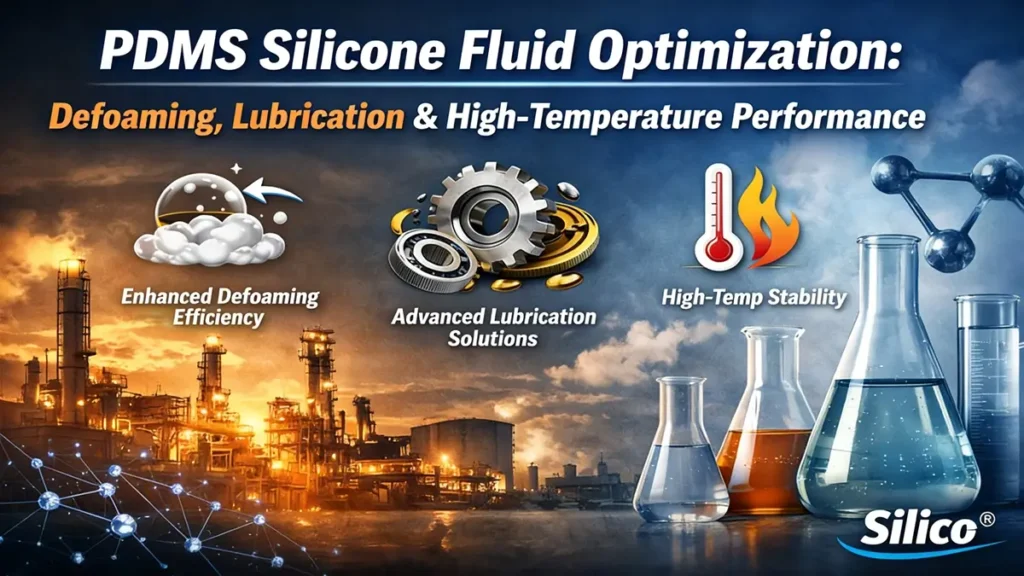
Polydimethylsiloxane (PDMS) silicone fluid is widely used in industrial defoaming agents, high-performance lubricants, and high-temperature fluid systems due to its low surface tension, chemical inertness, thermal stability, and lubrication properties.

Modern industrial demands call for precision PDMS formulations, such as those offered by Silico®, to deliver:

  • Rapid foam collapse without destabilizing emulsions
  • Lubricants that maintain low friction, high wear resistance, and thermal stability
  • High-temperature fluids with stable viscosity under prolonged thermal stress

By fine-tuning PDMS viscosity, molecular weight, and additive synergy, manufacturers can achieve industrial silicone fluid solutions that maximize performance and reliability, while benefiting from the expertise and product range of Silico®.

1. PDMS Fundamentals: Structure, Properties

Molecular Architecture and Key Physical Characteristics

PDMS consists of a linear siloxane backbone terminated with methyl groups, which gives it:

  • Ultra-low surface tension (~18–21 mN/m) enabling rapid foam penetration and collapse
  • Wide thermal stability (–50 °C to +200 °C for standard dimethyl PDMS; higher for phenyl-modified PDMS)
  • Versatile viscosity range from ultra-low (~5 cSt) to very high (>2,000,000 cSt)
  • High chemical inertness, resistant to oxidation and hydrolysis in most industrial systems

These characteristics make PDMS ideal for custom silicone fluid formulations targeting defoaming efficiency, lubrication under high shear, and high-temperature stability.

Application‑Driven Performance Criteria

Application AreaCore Requirements
DefoamersRapid foam collapse, interface spreading, emulsion stability
Industrial LubricantsLow friction, boundary film durability, high-temperature viscosity stability
High-Temperature FluidsOxidation resistance, thermal resilience, low volatility
Personal Care & CosmeticsSafety, skin feel, lubricity

Optimized PDMS formulations achieve a balance of molecular weight, viscosity, and additive synergy to meet these diverse requirements.
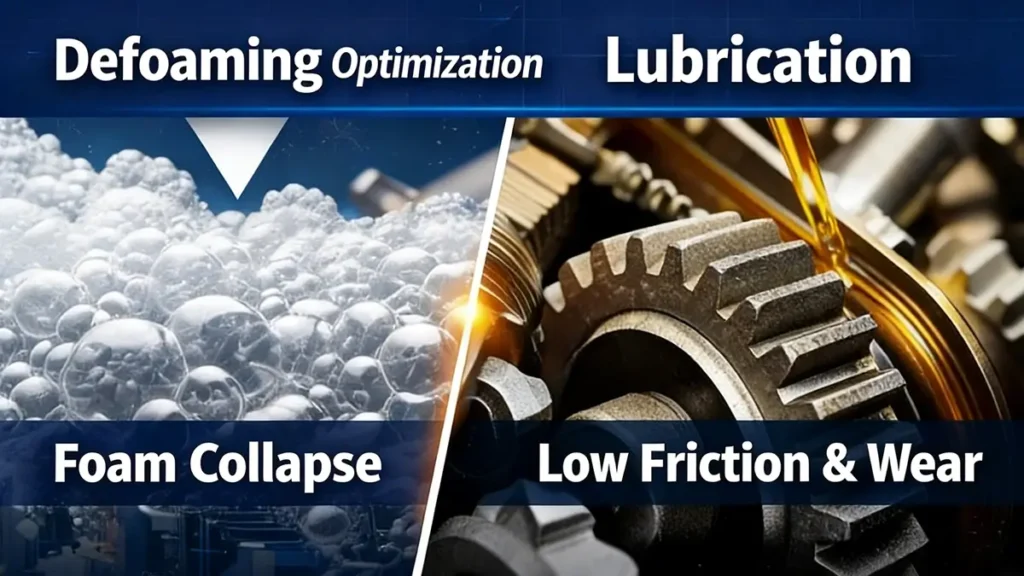
Defoaming Optimization

2. PDMS Defoaming Mechanisms & Advanced Formulation Strategies

PDMS Defoaming Mechanisms & Advanced Formulation Strategies

PDMS acts as an industrial silicone oil defoamer by spreading across foam lamellae, thinning films, and causing rapid bubble collapse. Key features for effective defoaming include:
  • Low surface energy to destabilize foam films
  • Fast migration to bubble surfaces
  • Compatibility with aqueous and oil-based systems

Optimizing Industrial Silicone Fluid Defoamer Performance

1. Viscosity and Molecular Weight Tuning 2. Copolymer and Surface Modification
  • Grafting polyether or organo-functional groups improves dispersion stability and prevents phase separation, enhancing long-term foam suppression.

3. Dosage Optimization
  • Excessive PDMS can cause surface defects; precision dosing based on system shear and temperature ensures maximum efficiency.

Example: In aqueous emulsion defoaming, medium-viscosity PDMS with polyether grafting can accelerate foam collapse while maintaining emulsion stability, achieving optimal industrial silicone oil defoamer performance.

3. Lubrication Optimization: Enhancing Industrial & High-Temperature Performance

Why PDMS Works as a Superior Industrial Lubricant

PDMS provides:
  • Low friction coefficients under high-load conditions
  • Excellent shear stability and temperature resilience
  • High adhesion on metal surfaces forming durable boundary lubrication films

Compared to conventional mineral oils, PDMS-based lubricants maintain stable viscosity at extreme temperatures, improving machinery longevity and energy efficiency.

Additives, Modifiers, and Performance Metrics

  • Extreme Pressure (EP) Additives: Phosphorus or sulfur compounds enhance wear resistance under heavy loads
  • Surface-Active Polymers: Strengthen lubricating films
  • Nanoparticle Dispersions: Improve load-bearing capacity in high-temperature silicone lubricant formulations

Key evaluation metrics:
  • Friction coefficient
  • Wear scar diameter (ASTM tests)
  • Viscosity index and temperature-dependent performance
  • Load-bearing capacity under high shear
Silico®’s high-temperature PDMS lubricants integrate these modifications to achieve precision-tuned lubrication performance for industrial applications.
High-Temperature Stability

4. Enhancing High‑Temperature Stability in PDMS Systems

Thermal Degradation Pathways

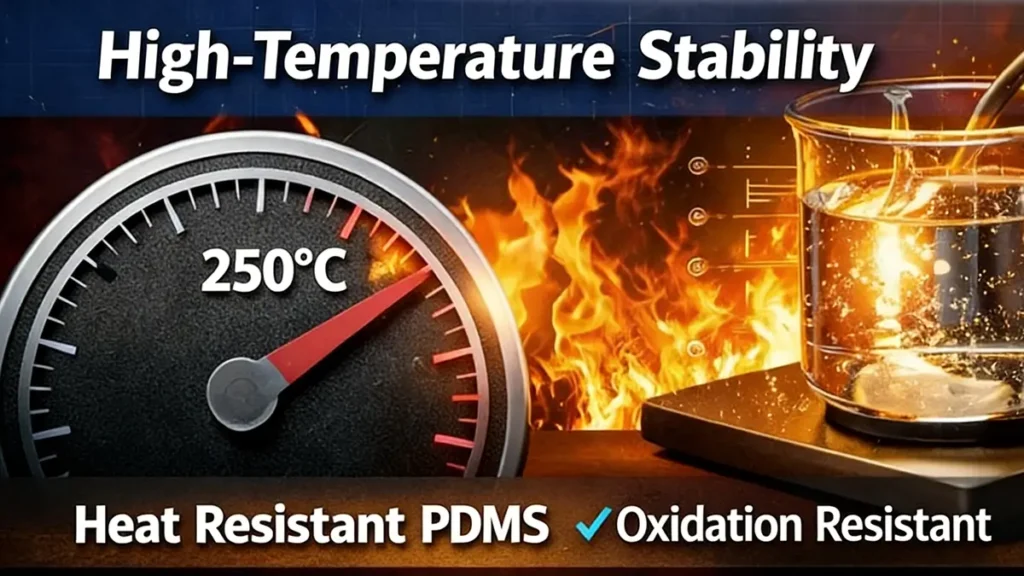
PDMS is thermally stable up to 150°C in air; however, long-term exposure or oxidative environments can lead to:
  • Chain scission
  • Formation of cyclic siloxanes
  • Viscosity and performance decline

Formulation Techniques for High-Temperature Silicone Lubricants

  • Phenyl-Modified PDMS: Increases oxidative resistance, suitable for 200–250°C
  • Thermal Stabilizers: Antioxidants and metal chelators prolong fluid lifespan
  • Viscosity Selection: Higher-viscosity PDMS resists thermal degradation more effectively

Recommended systems:
ApplicationStrategyBenefit
Heat Transfer FluidsPhenyl PDMS + stabilizersHigher thermal limit, prolonged lifespan
High-Temp LubricantsHigh-viscosity PDMS + EP additivesReduced wear, oxidation suppression
Electrical Insulation OilsLow-volatility PDMSSafety, long-term stability

5. Practical Workflow for PDMS Formulation Optimization

  • Define Performance Targets: Defoaming speed, friction limits, high-temperature stability
  • Select Base PDMS: Viscosity, phenyl modification, or functionalized siloxane
  • Screen Additives: Surfactants, EP agents, stabilizers, or nanoparticles
  • Performance Testing: ASTM foaming tests, tribology rigs, thermal aging
  • Iterative Optimization: DOE or response surface methodology for precision PDMS formulation optimization

Case Example:

  • High-temperature lubricant for industrial presses: phenyl-rich PDMS + EP additives, tested at 180–220 °C, showing significant reduction in wear and friction, illustrating the impact of PDMS viscosity tuning for lubrication performance.
Silico Pdms Solutions

Emerging trends in PDMS silicone fluid formulation optimization include:

  • Precision molecular weight distribution control for tailored industrial performance
  • Smart multifunctional additives and nanomodifications to enhance lubrication, defoaming, and thermal stability
  • AI-driven predictive modeling and simulation for faster industrial silicone oil formulation design

By leveraging Silico®’s expertise and product lines, industrial users can achieve next-generation performance in defoaming, high-temperature lubrication, and silicone fluid applications, maximizing efficiency, durability, and cost-effectiveness.

Popular Recommendations

Get a Catalog & Best Price​

  • Quick and helpful reply within 24 hours;
  • Tailored solutions provided for your project;
  • One-stop purchasing service.
Please enable JavaScript in your browser to complete this form.
  • © Copyright 2022 Silico® . All Rights Reserved.
Scroll to Top