2026-02-25

Silicone oil emulsions play a critical role in modern formulation science, serving as a bridge between hydrophobic silicone fluids and water-based systems. Across industries such as textile finishing, personal care, construction chemicals, coatings, and industrial manufacturing, they enable formulators to incorporate silicone functionality into aqueous processes without sacrificing performance.
As a leading silicone solution provider, Silico® focuses on developing high-performance silicone oil emulsions that allow formulators to achieve reliable surface modification, process efficiency, and regulatory-friendly water-based formulations.
By converting silicone oils into stable, water-dispersible systems, silicone emulsions significantly improve handling safety, application uniformity, and environmental compatibility, making them a preferred alternative to solvent-based silicone delivery systems.
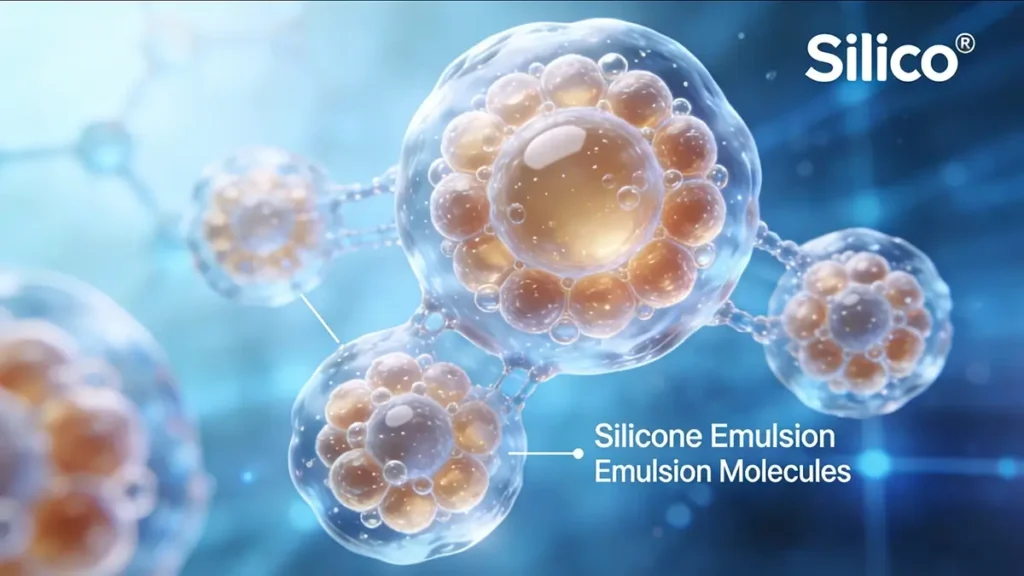
Silicone oils are typically based on polydimethylsiloxane (PDMS) or related siloxane polymers composed of alternating silicon–oxygen backbones with organic side groups. This molecular architecture provides a combination of properties rarely matched by organic polymers:
High flexibility and lubricity across a wide viscosity range
Despite these advantages, silicone oils are inherently immiscible with water, which restricts their direct use in aqueous systems and creates the need for silicone oil emulsions.
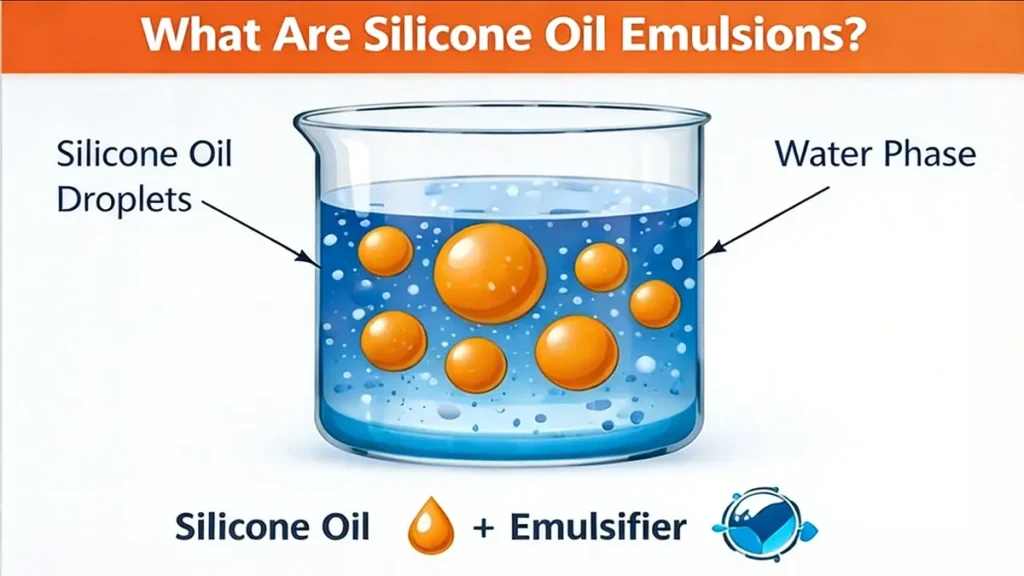
A silicone oil emulsion is a stabilized system in which finely divided silicone oil droplets are uniformly dispersed in water with the aid of emulsifiers. This transformation enables water-insoluble silicone fluids to be used in water-based silicone emulsion formulations without compromising functional performance.
The emulsifier forms a protective interfacial layer around each droplet, preventing separation and ensuring long-term stability during storage, transportation, dilution, and application.
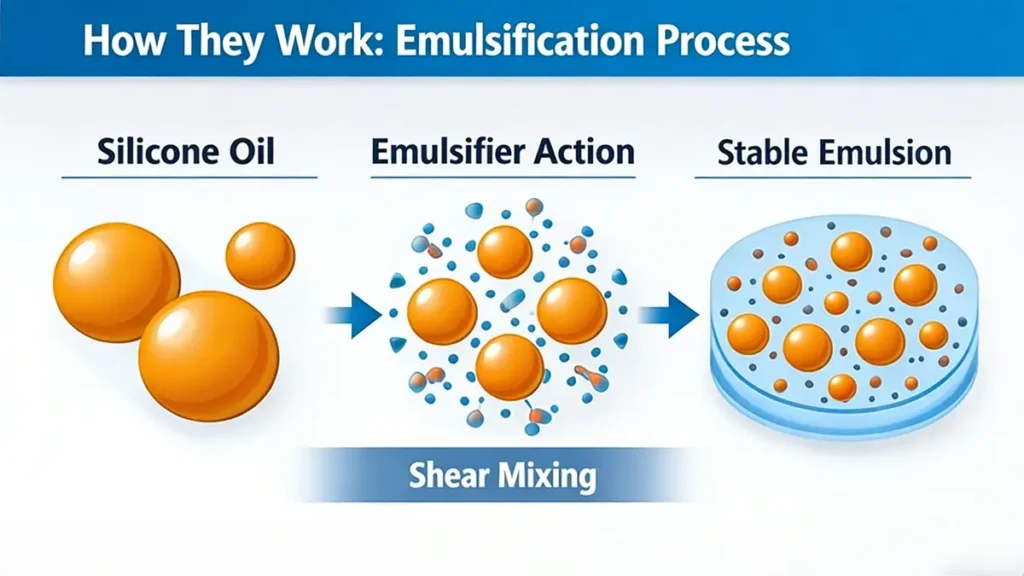
High-shear mechanical energy breaks silicone oil into fine droplets
This process produces a stable silicone dispersion suitable for industrial-scale applications.
Stability in silicone oil emulsions is achieved through interfacial film formation. Emulsifier molecules create a continuous protective layer around droplets, resisting coalescence and phase separation.
At this stage, formulation expertise—such as that applied in Silico® silicone emulsion technologies—is critical to balancing droplet size, emulsifier chemistry, and resistance to shear, heat, and dilution.
Key influencing factors include:Electrostatic and steric stabilization mechanisms

Emulsifier selection directly affects formulation compatibility and end-use behavior.
They can deliver softness, anti-static behavior, abrasion resistance, and release properties depending on formulation design.
The manufacturing process typically includes:
Stabilization and quality control
Precise control of these parameters determines the final emulsion’s performance in real-world applications.
Include defoamers, antistatic finishes, automotive polishes, and specialty coatings.

✔ Water-based, safer handling
✔ High efficiency at low dosage
✔ Broad functional performance
✔ Supports low-VOC and environmentally friendly formulations
Silicone oil emulsions are engineered delivery systems that enable silicone chemistry to perform effectively in water-based environments. Through proper selection and formulation, they provide reliable surface modification, process efficiency, and long-term stability.
Backed by application-driven development and formulation expertise, Silico® silicone oil emulsions help engineers and formulators achieve consistent, high-performance results across industrial, commercial, and specialty applications.