2026-03-11

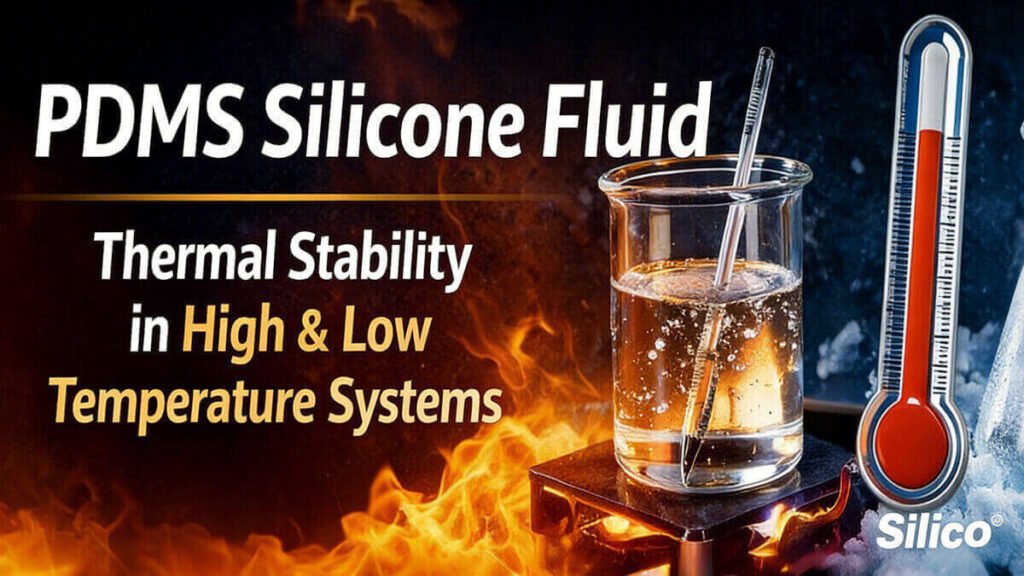
Polydimethylsiloxane (PDMS silicone fluid) is widely recognized as a high-performance material for heat transfer, lubrication, and damping applications due to its exceptional thermal stability, chemical inertness, and wide operating temperature range. In both high-temperature thermal systems and low-temperature environments, maintaining consistent viscosity and structural integrity is critical for long-term reliability.
In industrial practice, PDMS-based silicone fluids — including phenyl-modified and heat-stabilized formulations such as those developed under the Silico® product platform — are increasingly selected for demanding applications including industrial heat transfer systems, temperature control units, aerospace components, and cold-climate instrumentation.
Understanding the thermal behavior of PDMS silicone fluid across extreme temperature conditions is therefore essential for engineers and system designers seeking to optimize performance, safety, and service life.
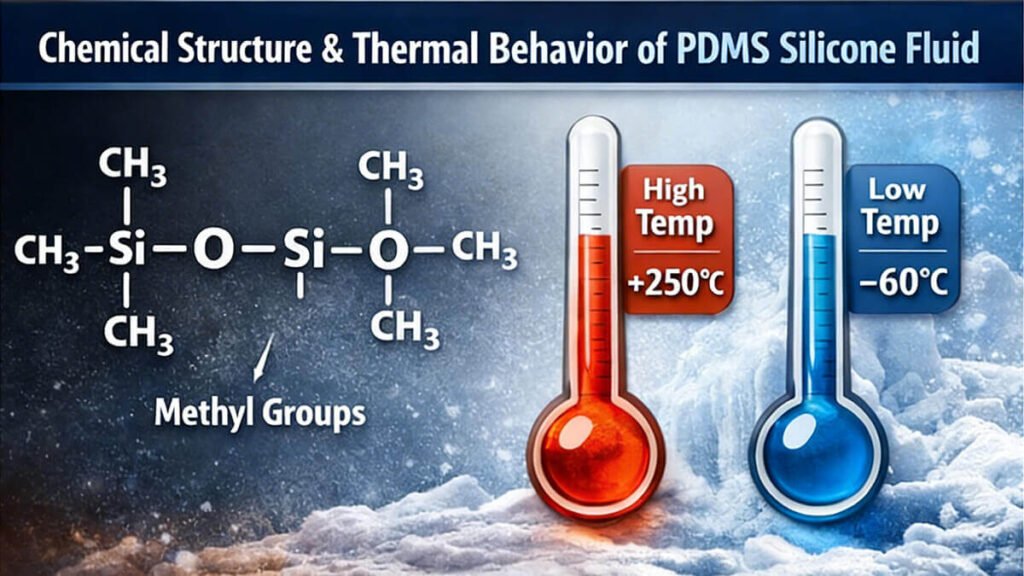
PDMS silicone fluid is composed of a flexible siloxane backbone (-Si–O–Si-) with methyl side groups. This molecular architecture provides excellent rotational freedom, resulting in low glass transition temperatures and stable fluidity over a broad temperature range, typically extending from below –50 °C to above 200 °C, depending on formulation and molecular weight.
At elevated temperatures, thermal stability is influenced by chain length, end-group chemistry, and environmental conditions. Higher molecular weight PDMS grades generally exhibit delayed thermal degradation onset, making them more suitable for prolonged exposure in high-temperature systems.
Thermal degradation of PDMS silicone fluid primarily occurs through backbone scission and cyclic siloxane formation, particularly under prolonged heat stress. These mechanisms can lead to gradual changes in viscosity, volatility, and heat transfer efficiency, especially in open or oxygen-rich environments. Selecting properly stabilized formulations is therefore critical for long-term thermal performance.
Conventional dimethyl PDMS silicone fluids demonstrate good resistance to thermal oxidation under moderate conditions and are generally stable below ~150 °C in air. In closed systems or inert atmospheres, their usable temperature range can be extended.
However, in continuous high-temperature operation, especially in open systems, standard dimethyl silicone fluids may experience accelerated degradation, affecting viscosity stability and overall heat transfer performance.
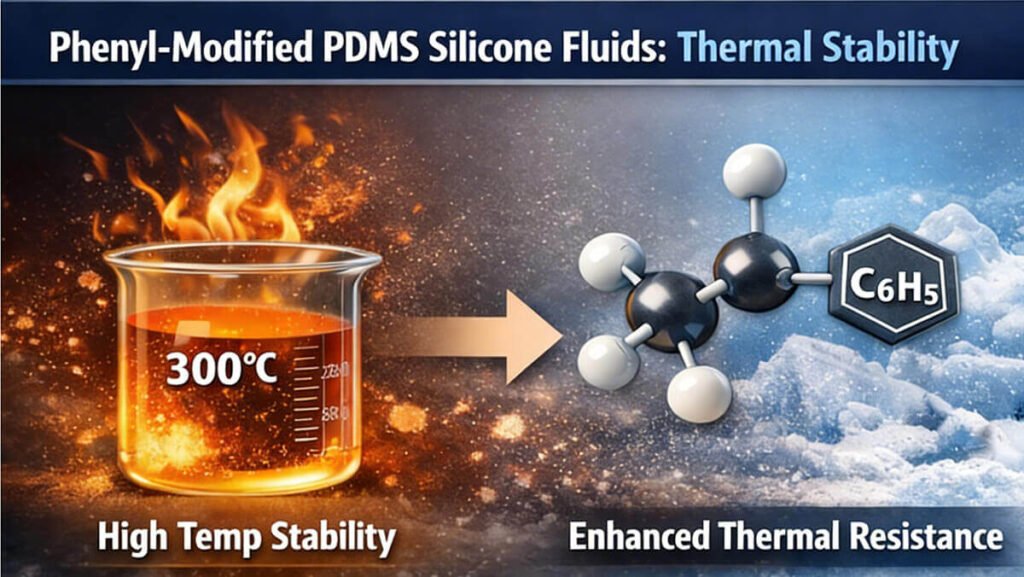
To address these limitations, phenyl-modified PDMS silicone fluids are widely employed in high-temperature applications. The introduction of phenyl groups enhances thermal and oxidative stability, allowing sustained operation at 200–250 °C, and in some closed systems, even approaching 300 °C.
These high-temperature silicone fluids offer higher flash points, reduced volatility, and improved resistance to thermal oxidation, making them suitable for demanding environments such as thermal circulation baths, high-temperature lubrication, and industrial heat transfer systems — a formulation strategy also reflected in advanced Silico® high-temperature silicone fluid solutions.
Comparative studies of heat transfer fluids show that properly formulated silicone fluids can outperform many organic thermal fluids under elevated temperatures, particularly in terms of oxidation resistance and long-term viscosity stability. This makes PDMS-based fluids attractive for applications such as solar thermal systems and precision temperature control equipment.
One of the defining advantages of PDMS silicone fluid is its excellent low-temperature fluidity. Many grades maintain pumpability well below conventional freezing points, with pour points reaching –50 °C to –65 °C, especially for phenyl-containing or specially engineered formulations.
This characteristic is critical for low-temperature heat transfer systems, cold-start industrial equipment, and applications exposed to extreme climate variations.
PDMS silicone fluids exhibit a low viscosity–temperature coefficient, meaning their viscosity changes relatively little across wide temperature swings. Compared with mineral fluids or synthetic hydrocarbon fluids, this ensures consistent flow behavior, predictable heat transfer efficiency, and stable pump performance in both low- and high-temperature operating regimes.
In temperature control and thermal management systems, selecting the appropriate heat transfer fluid directly impacts system efficiency and operational safety. PDMS silicone fluids are commonly chosen for applications requiring:
Electrical insulation and chemical inertness
These properties make silicone-based heat transfer fluids suitable for industrial heat transfer baths, precision temperature control units, and sensitive electronic or chemical processing environments.
Specialized silicone heat transfer fluids are engineered to balance high-temperature durability with low-temperature circulation performance. Advanced formulations may incorporate stabilizing additives or molecular modifications to extend operational limits while maintaining reliable thermal conductivity — a design philosophy reflected in premium-grade Silico® silicone heat transfer fluids.
While PDMS silicone fluids already offer excellent thermal performance, advanced applications continue to push material limits. Copolymerization, controlled crosslinking, and functional group modification are active areas of research aimed at improving thermal resistance and reducing degradation pathways.
Additionally, metal-ion and filler-modified polysiloxane systems have demonstrated potential for enhanced thermal conductivity and improved interfacial performance in composite and specialty thermal materials.
PDMS silicone fluid combines wide operating temperature capability, chemical stability, and predictable rheological behavior, making it a versatile solution for both high-temperature and low-temperature systems. By understanding thermal degradation mechanisms, viscosity behavior, and formulation strategies — including phenyl modification and advanced stabilization techniques — engineers can make informed decisions for demanding thermal environments.
For designers of industrial heat transfer systems, temperature control equipment, and advanced thermal applications, selecting a well-engineered PDMS silicone fluid — such as those available within the Silico® product family — is essential to achieving long-term reliability, efficiency, and performance across temperature extremes.